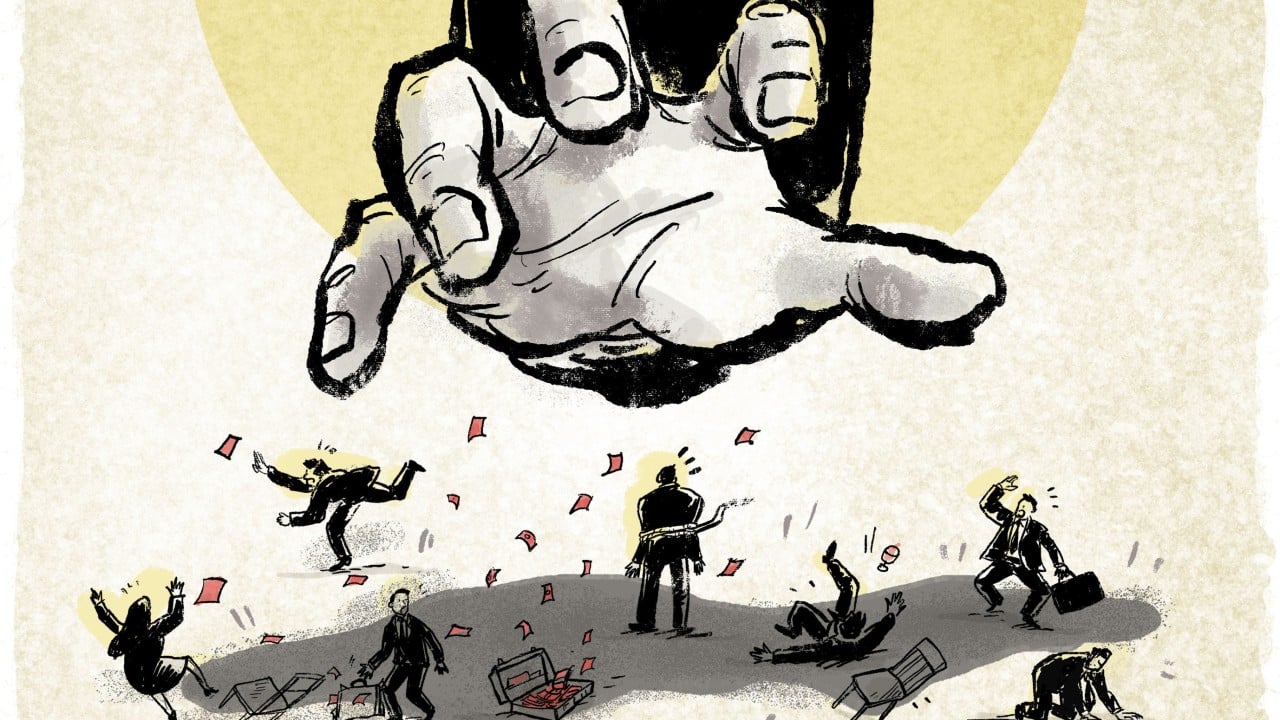
When people look at Beijing's massive disciplinary crackdowns, they usually focus on the money. Piles of cash, hidden offshore accounts, luxury mansions, and disgraced executives making televised confessions dominate global headlines. But tracking only the financial crimes misses the actual engine driving the entire apparatus.
Xi Jinping's sweeping anti-corruption crusade has transformed into something far broader than a hunt for stolen wealth. It is now a totalizing system used to scrutinize how officials exercise power, enforce political loyalty, and manage their entire professional and private lives. If you think this is simply about stopping bribery, you are missing the entire point of modern Chinese governance.
The Shift From Balance Sheets to Political Sins
Economic crimes like embezzlement, graft, and bribery remain the concrete legal basis for criminal indictments. Yet, data compiled from disciplinary watchdogs reveals that pure economic violations tell only half the story.
When the Central Commission for Discipline Inspection (CCDI) investigates high-ranking cadres, the initial public announcements almost always emphasize political infractions before mentioning a single yuan of stolen money. Analysts note that corruption is treated fundamentally as a political sin.
What does a political sin look like in practice? Officials find themselves in hot water not just for taking envelopes of cash, but for:
- Forming private cliques and political factions
- Engaging in superstitious activities
- Saying one thing in public while actively undermining directives behind closed doors
- Failing to properly implement central party mandates
The core requirement is absolute alignment. An official can technically have a clean personal bank account and still fall victim to the purge simply for dragging their feet on key policy initiatives or building an independent power base.
Policing Personal Lives and Family Networks
The reach of modern discipline inspection extends far beyond the office. Modern investigations routinely tear into an official's private life, family arrangements, and post-retirement conduct.
Data tracking disciplinary cases shows a massive surge in penalties tied to personnel management irregularities and post-retirement misconduct. Officials are held directly accountable for family-style corruption. This means using relatives as proxies to hold assets, failing to supervise spouses and children, or allowing family members to leverage political connections for business advantages.
You cannot separate an official from their network anymore. The state assumes that if your family is corrupt, you are corrupt.
Furthermore, behavioral compliance during investigations is heavily policed. Lying during interviews, concealing personal matters, or showing resistance to oversight now form a significant percentage of formal disciplinary charges. The message is clear: resistance or deception is treated as an offense in its own right, completely independent of whatever financial misbehavior investigators might eventually uncover.
The Institutional Machinery of Permanent Supervision
This expanded scope requires permanent institutional infrastructure. The system has moved past temporary campaigns or informal party detention methods like shuanggui, replacing them with formalized legal instruments like liuzhi (retention in custody) operated by the National Supervisory Commission.
By expanding oversight to every person exercising public power—whether inside the party, state bureaucracies, or state-owned enterprises—the apparatus ensures that no administrative tier operates without immediate supervision.
This continuous disciplinary pressure functions as a modern iteration of continuous revolution. Instead of relying on periodic mass mobilizations, the leadership has institutionalized internal purification as a permanent governance tool.
Economic performance alone no longer guarantees career survival or safety. Officials must navigate a labyrinth of political loyalty tests, strict administrative oversight, and continuous behavioral audits. The crusade is no longer about balancing the books. It is about total structural compliance.