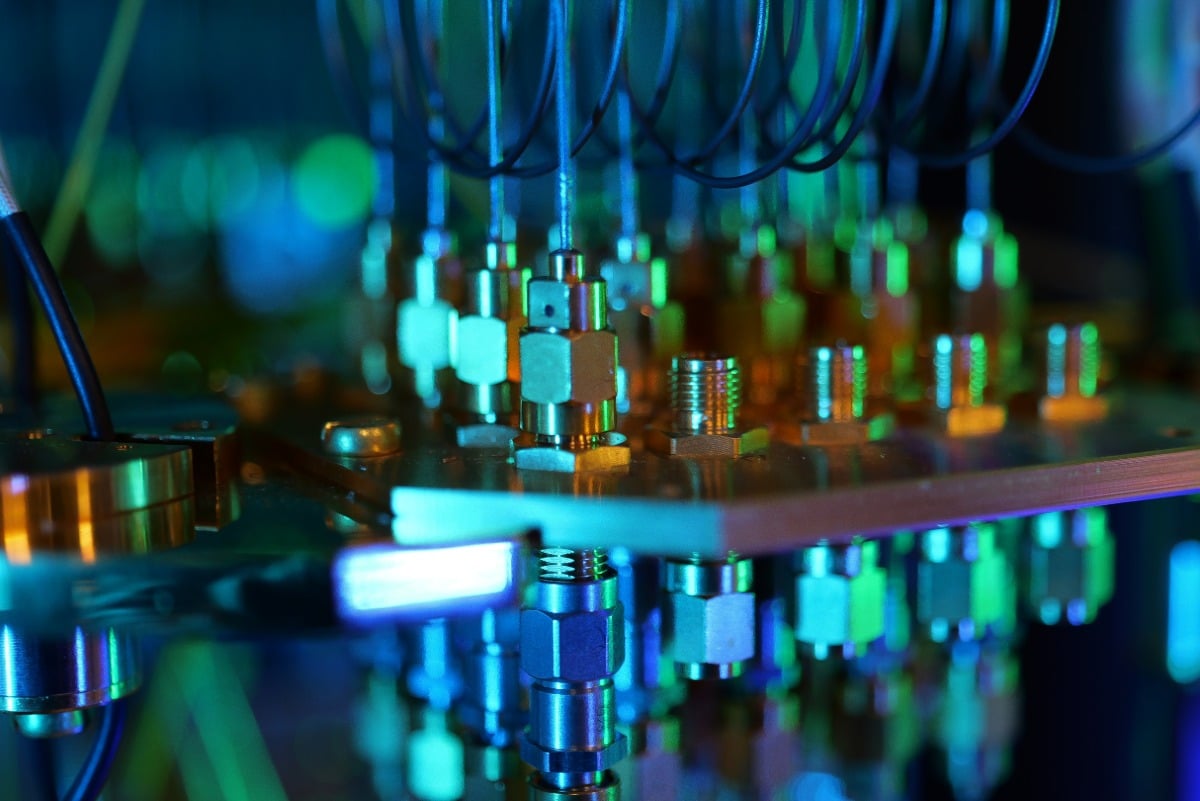
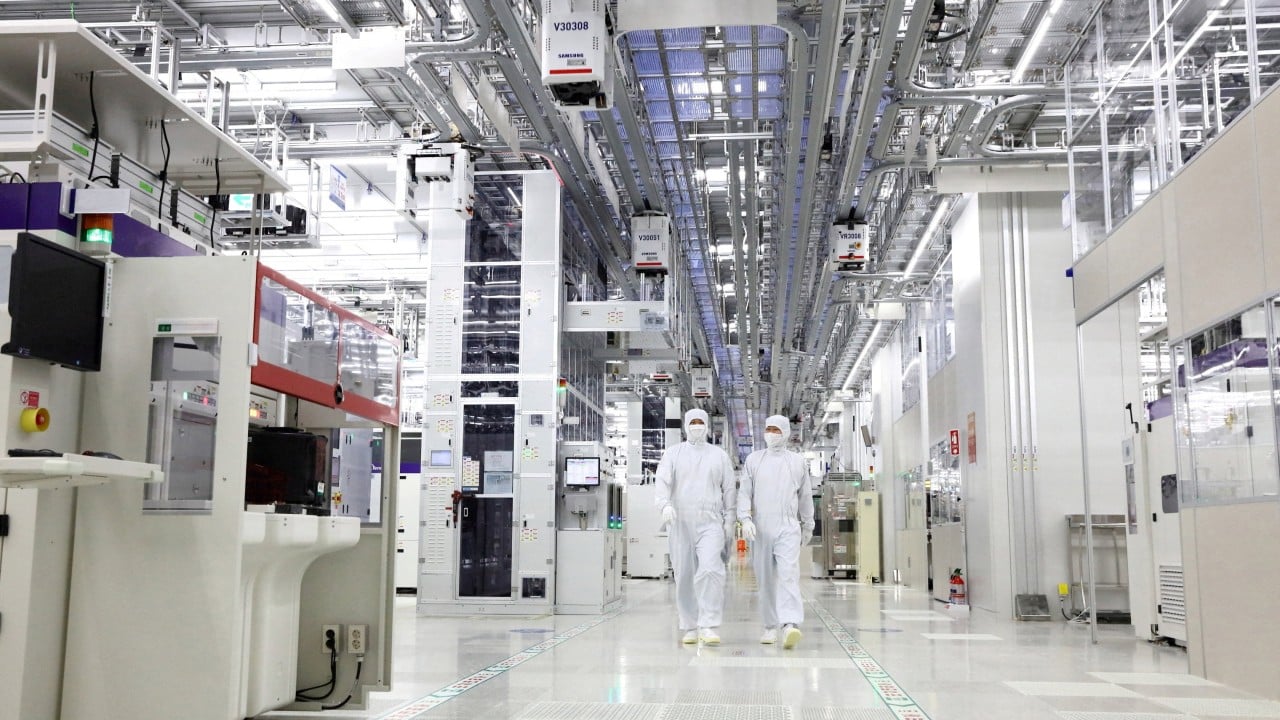
You don't build an empire by playing defense. For years, the global memory chip market has been a cozy club dominated by Samsung, SK Hynix, and Micron. But China's top designer of dynamic random-access memory (DRAM), ChangXin Memory Technologies (CXMT), is about to crash the party in a massive way.
The company is preparing for an initial public offering on Shanghai's STAR Market. But instead of sticking to its original, relatively modest fundraising goal of 29.5 billion yuan, CXMT has nearly doubled its target to a staggering 66.6 billion yuan, or roughly $9.8 billion.
This isn't just a routine corporate expansion. It is a highly aggressive, state-backed power play to secure the specialized hardware that keeps artificial intelligence running. While Washington tries to block China's access to high-end semiconductors, Beijing is realizing that model breakthroughs don't mean a thing if you don't have the memory infrastructure to run them.
Why Memory is the Real Bottleneck in the AI Race
Most of the public attention in the AI war goes to graphic processing units (GPUs) made by companies like Nvidia. People obsess over flops, parameters, and compute speed. But there's a dirty secret in the hardware world: your superfast processor is useless if it has to sit around waiting for data to arrive.
This is where DRAM comes in. It provides the high-speed, short-term memory that servers rely on to store and feed data to AI processors instantly. As AI models transition from the training phase to the daily inference phase—where millions of users ask models to generate code, text, and images—the demand for high-speed memory is exploding.
Without massive amounts of high-bandwidth memory (HBM), even the most advanced AI processors bottleneck. By aiming for a historic $9.8 billion listing, CXMT is looking to secure the massive capital needed to bridge this critical hardware gap.
Breaking Down the Billion-Dollar Spending Plan
A close look at CXMT's updated prospectus reveals exactly where this massive pile of cash is going. They aren't sitting on this money; they're deploying it immediately.
- 13 billion yuan ($1.9 billion) is earmarked directly for DRAM technology upgrades.
- 9 billion yuan ($1.3 billion) is heading straight into research and development.
- 7.5 billion yuan ($1.1 billion) will fund advanced wafer production-line enhancements.
The target? CXMT wants to scale its HBM wafer production from a tiny 5,000 wafers per month to somewhere between 30,000 and 55,000 wafers per month over the next year or two. By the end of this year, the company wants a total monthly wafer capacity of 350,000 units across its entire footprint.
Those are massive manufacturing goals. To put it in perspective, achieving this scale would firmly establish CXMT as a global force, threatening the traditional dominant players who have controlled memory pricing for decades.
The Sanction Dilemma and the Domestic Shield
Operating a semiconductor business in China right now means working under a constant geopolitical cloud. The US Department of Defense has already designated CXMT as a "Chinese Military Company," and the threat of being officially placed on the US Entity List is a constant reality.
These restrictions make it incredibly difficult for CXMT to buy the most advanced lithography equipment from suppliers like ASML. However, the sanctions have also created a highly defensive, captive domestic market.
Because Chinese tech giants like Alibaba, Baidu, and Tencent can no longer rely on unlimited access to Western silicon, they are aggressively diversifying. Chinese authorities are making it clear that using domestic memory is no longer optional—it is a matter of national security. Even if CXMT's memory chips trail Samsung's absolute cutting-edge generation by a step or two, they have a guaranteed customer base willing to buy every single wafer they can produce.
This dynamic is reflected in CXMT's staggering financial performance. The company's revenue for the first quarter jumped by a mind-boggling 719% year-on-year to 50.8 billion yuan.
What This Means for Global Tech and Investors
If you think this is just a local Chinese story, you're missing the bigger picture. CXMT's aggressive scaling is bound to reshape the global memory supply chain.
If CXMT successfully hits its capacity targets, it will flood the market with domestic DRAM, potentially triggering a global price war that could severely hurt margins for Micron, Samsung, and SK Hynix. On the flip side, if CXMT stumbles due to technical hurdles or tighter lithography bans, the global scarcity of AI-grade memory will worsen, driving up costs for data centers worldwide.
For tech leaders and enterprise investors, the takeaway is simple. Keep a close eye on the STAR Market listing on July 27. Track their HBM wafer yield rates rather than just their raw capacity numbers. If CXMT can prove it can build reliable high-bandwidth memory without Western equipment, the global hardware landscape will look completely different in twelve months.