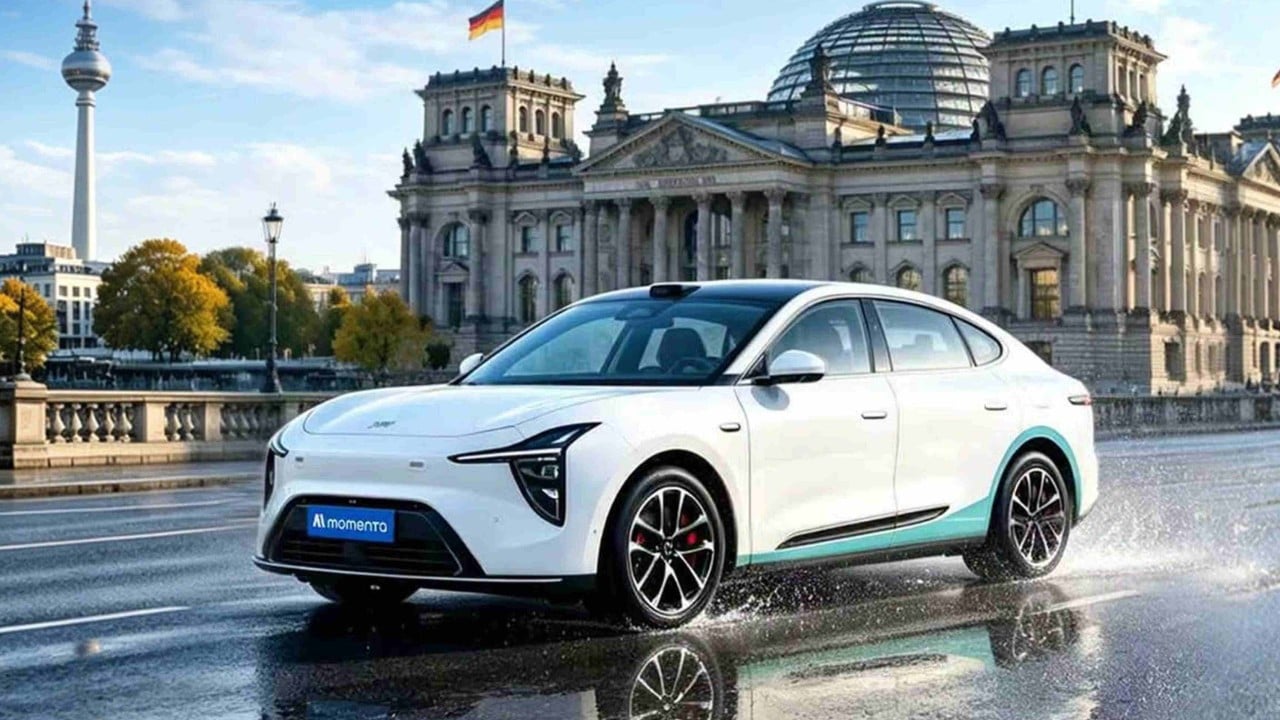
Western automakers spent years laughing off Chinese autonomous driving startups as copycats. They're not laughing anymore.
When companies like Pony.ai and Momenta begin planting flags across European streets, it signals a massive shift in the global mobility market. You're watching a complete rewrite of who actually controls the future of transport. The push isn't just about software tests or experimental pilot programs. It's about aggressive commercial scaling backed by real-world data that American and European competitors struggle to match.
If you want to understand why Chinese autonomous driving firms are winning abroad, look at how they solved the hardest problem first.
The Strategy Behind the European Expansion
Europe has notoriously fragmented regulations, dense historic city centers, and high compliance hurdles. So why are firms like Pony.ai diving in headfirst?
The answer lies in strategic partnerships. Instead of trying to build a local ride-hailing network from scratch, Pony.ai teamed up with Uber to deploy more than 2,000 robotaxis across five European cities, building on their initial commercial footprint in Zagreb, Croatia.
This asset-light model changes everything:
- Technology: Pony.ai supplies the Level 4 autonomous driving system and operational expertise.
- Platform: Uber provides the booking interface, user accounts, payments, and massive consumer reach.
- Operations: Local fleet partners handle day-to-day vehicle maintenance and local regulatory paperwork.
By splitting responsibilities, Chinese autonomous driving developers bypass the brutal capital expenditure required to build a localized transport network. They bring the brains. Others bring the bricks and mortar.
Why Domestic Success Created an Unfair Advantage
You can't talk about this international push without looking at what happened back home. Chinese cities are chaotic. Motorbikes squeeze between lanes, pedestrians ignore crosswalks, and construction zones appear overnight.
Companies like Momenta and Pony.ai spent years surviving that urban chaos. They accumulated tens of millions of kilometers of rigorous testing data in ultra-complex environments.
Western rivals often tested their vehicles in pristine, wide-grid American sunbelt cities like Phoenix. That approach works fine until you drop an autonomous vehicle into a tight medieval European square filled with erratic cyclists and cobblestone streets. Chinese firms built algorithms designed for high-density, unpredictable human behavior from day one. That technical resilience translates remarkably well overseas.
The Economics No One Wants to Admit
Building self-driving cars is a money pit. Silicon Valley startups burned tens of billions of dollars over the last decade with very little commercial return to show for it.
Meanwhile, Chinese autonomous driving leaders optimized their unit economics early. Several firms report reaching city-wide breakeven thresholds in domestic markets because their hardware suites rely on cheaper, mass-produced sensors rather than hyper-expensive proprietary components.
When you can manufacture autonomous driving hardware at scale and run paid robotaxi services profitably in major cities like Beijing, Guangzhou, and Shenzhen, expanding into Europe isn't a desperate gamble. It's a calculated victory lap.
What Happens Next for Local Competitors
European and American automakers are scrambling to respond. Some are trying to fast-track their own software stacks, while others are quietly buying up foreign tech or forming defensive joint ventures.
Don't expect protectionist policies to block this wave entirely either. Local fleet operators in Europe want reliable, working software that generates revenue today, not five years from now. When a proven Level 4 system lands on your doorstep via an app your customers already use every single day, local transit authorities find it very difficult to say no.
Keep an eye on how quickly these robotaxis hit European asphalt over the next year. The transition from testing to mainstream commercial ubiquity is happening much faster than anyone predicted. Stop viewing autonomous vehicles as a distant sci-fi experiment. They're already booked through your phone.