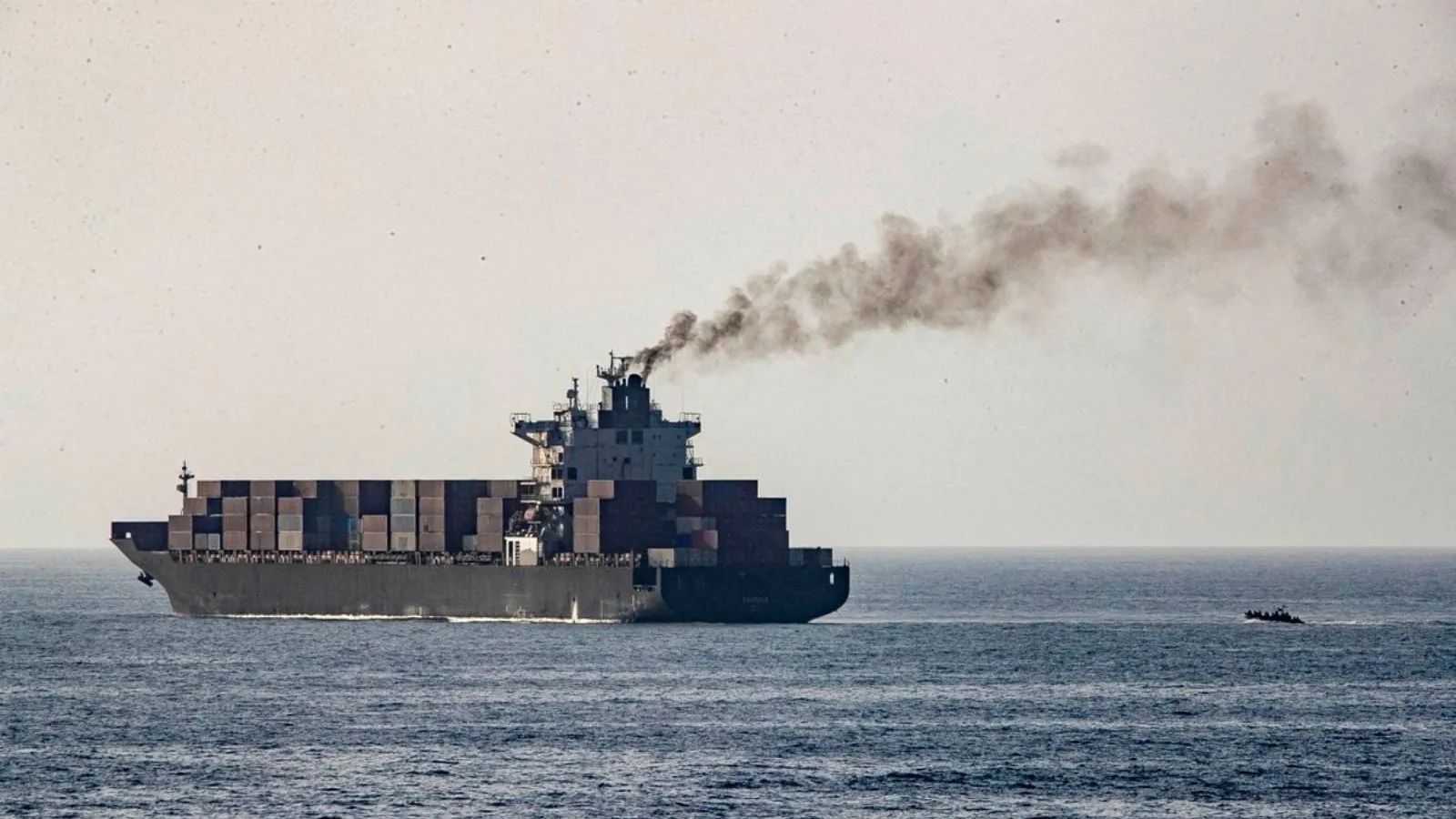
The coffee in the crew mess of the Mariner’s Grace tastes like rust and old copper. It always does when you are sitting idle, engines thrumming a low, anxious vibration through the steel floorboards, waiting for a green light that might never come.
Outside the porthole, the Persian Gulf stretches out like a sheet of hammered pewter. For a deeper dive into similar topics, we recommend: this related article.
To the untrained eye, it is just water. To the global economy, it is the jugular.
When the news filtered down through the satellite feed that the Strait of Hormuz was closed, nobody screamed. Nobody panicked. The silence on the bridge was absolute. Sailors know the math. Twenty percent of the world’s petroleum passes through this twenty-one-mile-wide strip of water between Oman and Iran. Block it, even for a day, and the ripples do not just move the water. They move stock markets. They alter political destinies. They change the price of milk in Kansas. For further information on this development, comprehensive analysis can also be found at Associated Press.
Now, the sky above the horizon is no longer empty. The gray silhouettes of American warships have arrived, slicing through the haze with a grim, purposeful momentum. The United States has hit back. The air smells of salt, heavy fuel oil, and the sharp, metallic tang of impending violence.
The Narrow Gates of the World
We tend to think of modern commerce as something abstract. We view it as data moving through cloud servers, digital transactions flashing across glowing screens, invisible streams of capital flowing effortlessly across borders.
It is an illusion.
Global trade is stubbornly, brutally physical. It relies on massive, rusted hulls of steel scraping through narrow geographic bottlenecks. The Strait of Hormuz is the most volatile of them all. On a map, it looks like a pinched nerve at the base of the Arabian Peninsula.
Imagine a highway where every fifth car is carrying the lifeblood of global industry, and the highway suddenly narrows down to a single, contested lane managed by an unpredictable neighbor. That is the reality of the strait. When Iran made the decision to choke off that lane, it was not just a military maneuver. It was a direct lever pulled against the daily lives of billions of people who have never even heard of Musandam Governorate.
The immediate reaction was a collective intake of breath across the globe. Oil futures spiked instantly. In Tokyo, London, and New York, algorithms whirred into overdrive, calculating the cost of detour routes around the Cape of Good Hope—an extra two weeks at sea, millions of dollars in extra bunker fuel, and a chaotic disruption of tight supply chains.
But the economic math is only the surface layer. The deeper reality is measured in the sudden, sharp spike of adrenaline in the chest of a merchant captain looking at a radar screen filled with fast-attack craft.
The Anatomy of a Friction Point
The tension did not build overnight. It accumulated like silt in a riverbed, layer by layer, year by year, through sanctions, broken diplomatic promises, and the quiet shadow war fought with naval mines and cyber warfare.
Consider the mechanics of the closure. It does not require a massive armada to shut down a strait. A handful of well-placed sea mines, a battery of anti-ship cruise missiles hidden in the rocky cliffs of the Iranian coastline, and a few swarms of fast-moving, armed speedboats are enough to turn a vital commercial artery into a lethal no-go zone. Insurance underwriters at Lloyd's of London immediately revoke coverage for the region. Without insurance, the ships stop moving. Just like that, the world slows down.
The American response was swift, heavy, and calibrated to send a message that echoed far beyond the immediate waters of the Gulf.
It was not a scattering of warning shots. It was a synchronized, precision strike targeting the very infrastructure that enabled the blockade in the first place. Coastal radar installations, missile storage facilities, and command centers were neutralized in a matter of hours. The explosions along the coast were visible from the decks of commercial tankers anchored miles away—sharp, orange blooms of fire tearing through the pre-dawn darkness, followed seconds later by the low, rolling thud of detonations that rattled the glass in the wheelhouses.
The physical damage to the target facilities was extensive, but the true objective was psychological. The strikes were designed to demonstrate an undeniable asymmetry of power. The message from Washington was stark: the freedom of navigation is a non-negotiable foundation of the modern world, and the cost of disrupting it will always be made higher than any domestic political benefit derived from a blockade.
The Human Ledger
Yet, sitting on a ship waiting for the smoke to clear, the grand geopolitical strategy feels distant and hollow. The decisions made in carpeted briefing rooms in Washington and Tehran manifest here as cold sweat and sleepless nights.
The crews of these merchant vessels are not soldiers. They are ordinary people—engineers from Manila, officers from Odessa, cooks from Mumbai—working long contracts to send money home to families they see only a few months out of the year. They are caught in the gears of statecraft, hostages to geography. When a missile flies or a drone detonates, they are the ones on the front line of a war they did not choose.
The uncertainty is the heaviest burden. Will the strait open tomorrow? Will there be a second wave of strikes? Should the ship risk turning around, or stay put and pray the air defenses hold?
Every hour spent waiting is an hour where the global clock ticks louder. The supply chains that keep the modern world functioning are optimized for efficiency, not resilience. They operate on a just-in-time philosophy that leaves zero margin for error. A delay in the Gulf means a factory in Bavaria runs out of components next week. It means a container terminal in California faces a sudden, unmanageable surge of delayed cargo a month from now.
The strike has cleared the immediate obstacle, but it has not cured the underlying chronic condition. The rocks of the strait remain. The political grievances remain. The fundamental vulnerability of our interconnected world remains exposed for everyone to see.
The American warships continue their patrol, gray ghosts against the shimmering heat haze of the Gulf. The Mariner’s Grace receives its updated orders via the satellite terminal. The engines rumble with a new, higher pitch as the propeller bites into the water, turning the massive ship back toward the narrow channel.
The passage will be quiet. The guns are silent for now. But every man on board knows that the water beneath the keel is thin, the land is very close, and the peace we take for granted is as fragile as a pane of glass balanced on the edge of a knife.