Twenty-one miles.
That is the width of the Strait of Hormuz at its narrowest point. To put that in perspective, a marathon runner could cross that distance in just over two hours. Yet, within that slender ribbon of salt water, the entire global economy vibrates with a precarious, bone-deep anxiety. If you are reading this under the glow of a LED bulb, or if you drove to work today, or if you ate fruit that was flown across an ocean, you are tethered to this specific patch of the Persian Gulf by an invisible, unbreakable thread.
The headlines describe "stalled peace talks" and "rising naval tensions" between Washington and Tehran. These are dry phrases. They smell like old paper and government offices. They do not capture the reality of a nineteen-year-old sailor on a destroyer deck, squinting through the haze at a fast-attack craft that is closing the distance far too quickly. They do not capture the frantic calculations of a logistics manager in Rotterdam who knows that a single stray mine could send oil prices screaming toward $150 a barrel by dinner time.
The Ghost in the Machine
We often treat the global supply chain as a mathematical certainty. We assume that because we clicked "buy" or turned the ignition, the world will provide. But the Strait of Hormuz is the place where that certainty goes to die. Roughly one-fifth of the world’s total oil consumption passes through this gateway every single day.
Think of it as the carotid artery of civilization.
When the United States and Iran stop talking—when the diplomatic cables go silent and the back-channel whispers in Geneva or Doha dry up—the pressure in that artery begins to spike. It is not just about ships. It is about the psychology of scarcity. The moment a tanker is harassed or a drone is downed, the "war risk" premiums for shipping insurance skyrocket. These costs do not vanish into the ether. They trickle down into the price of a gallon of milk in Ohio and the cost of plastic medical supplies in a London hospital.
The current deadlock isn't a mere disagreement over policy. It is a staring contest where both sides have forgotten how to blink. The U.S. maintains a "maximum pressure" posture, hoping to squeeze the Iranian economy until the regime pivots on its nuclear ambitions. Iran, in turn, utilizes its proximity to the Strait as its ultimate leverage. They know that while they cannot win a conventional blue-water war against the U.S. Navy, they can make the world's economy bleed.
A Hypothetical Night in the Gulf
Consider a man named Elias. He isn't a politician. He is a third mate on a Very Large Crude Carrier (VLCC) carrying two million barrels of oil. As his ship enters the Traffic Separation Scheme, he isn't thinking about the Joint Comprehensive Plan of Action. He is looking at his radar.
In the dark, the Persian Gulf is a chaotic swarm of lights. Fishing dhows, tugs, and massive tankers all compete for space. Suddenly, a swarm of small, high-speed boats appears on the periphery. They don't identify themselves. They dance around the massive tanker like wolves around a weary elk. Elias knows that if one of those boats carries a limpet mine or a shoulder-fired missile, his ship becomes a floating bomb and an environmental catastrophe.
This is the "human element" the news reports miss. Peace talks are not just about signatures on parchment; they are about de-escalating the heartbeat of men like Elias. When diplomacy stalls, the margin for error evaporates. A misunderstanding—a junior officer on either side misinterpreting a maneuver—could trigger a kinetic chain reaction that no one actually wants but no one can stop.
The Weight of the Silence
The silence from the negotiating tables is deafening. For months, the world has waited for a sign that the U.S. and Iran might find a "less-for-less" agreement—a small easing of sanctions in exchange for a freeze in enrichment. But the political climate in both capitals has soured.
In Washington, the appetite for a deal is non-existent. Domestic politics demand a hard line. In Tehran, the hardliners have consolidated power, convinced that the West is an unreliable partner that will abandon any deal the moment a new administration takes the White House.
So, they wait.
While they wait, the military hardware piles up. The U.S. moves A-10 Warthogs and additional carrier strike groups into the region. Iran conducts "unannounced" naval drills, testing "suicide drones" designed to swarm sophisticated AEGIS defense systems. This is the paradox of deterrence: the more you prepare for a conflict to prevent it, the more inevitable the conflict begins to feel.
The Invisible Cost of Stability
We are currently living through a period of "low-intensity friction." It is a grinding, exhausting state of being. It’s the high cost of freight that never seems to come down. It’s the constant, low-level dread that a major energy shock is just one "accidental" explosion away.
History teaches us that choke points are never truly neutral. From the Peloponnesian War to the Suez Crisis of 1956, the world’s great powers have always been willing to burn the house down to ensure the doors stay open. The Strait of Hormuz is no different. But the weapons are now faster, the economies are more tightly integrated, and the room for maneuver is smaller than it has ever been.
There is a specific kind of heat in the Gulf. It is a wet, heavy heat that clings to your skin and makes every movement feel labored. The sailors there feel it every day. They watch the horizon for the smudge of smoke or the wake of a fast-approaching boat. They are the ones who pay the price for the failure of the men in suits thousands of miles away.
The peace talks haven't just "stalled." They have been replaced by a grim, silent endurance. Both sides are betting that the other will break first. But as they wait for a fracture, the rest of the world sits in the passenger seat of a car heading toward a cliff, watching the two drivers fight over the steering wheel.
A single spark in twenty-one miles of water is all it takes.
The lights stay on for now, but the hum of the grid feels more like a nervous vibration. We are all sailors in the Strait, waiting to see if the next shadow on the radar is a friend, a foe, or the beginning of a long, dark winter.
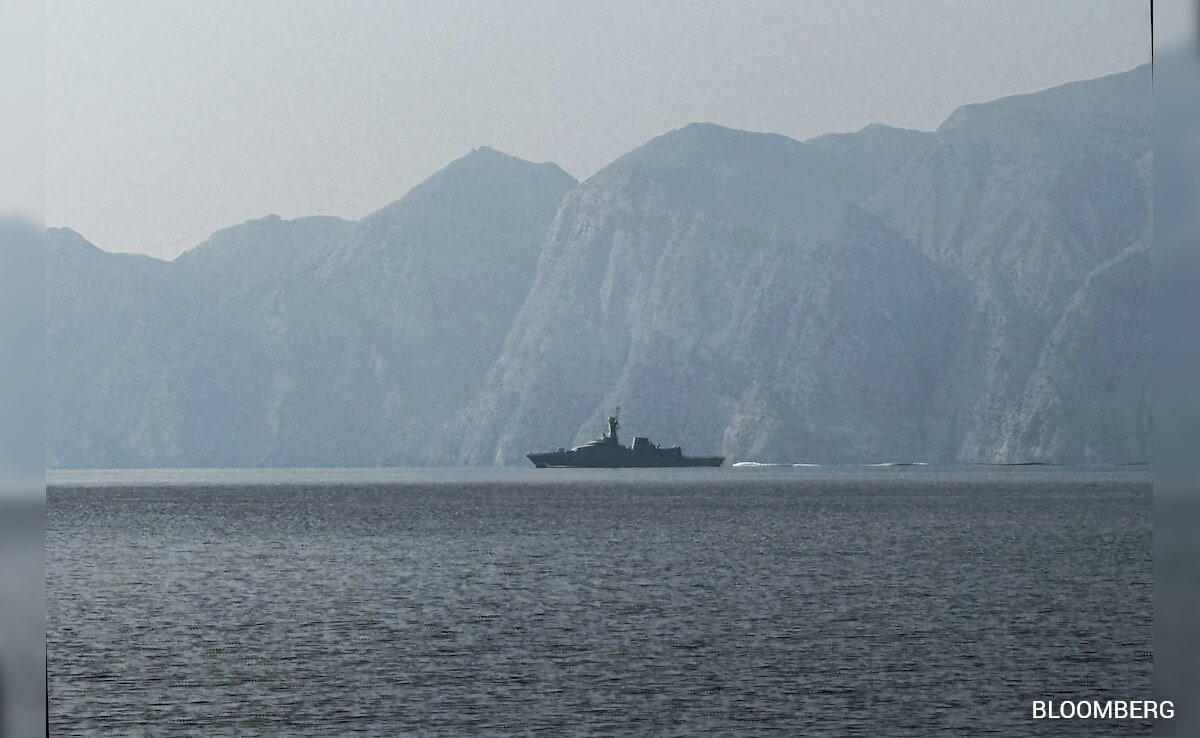
The sun sets over the Gulf, turning the water the color of bruised plums. The tankers continue their slow, heavy crawl. On the horizon, the gray hull of a warship cuts through the swell, a silent reminder that peace is currently nothing more than a lack of open fire.