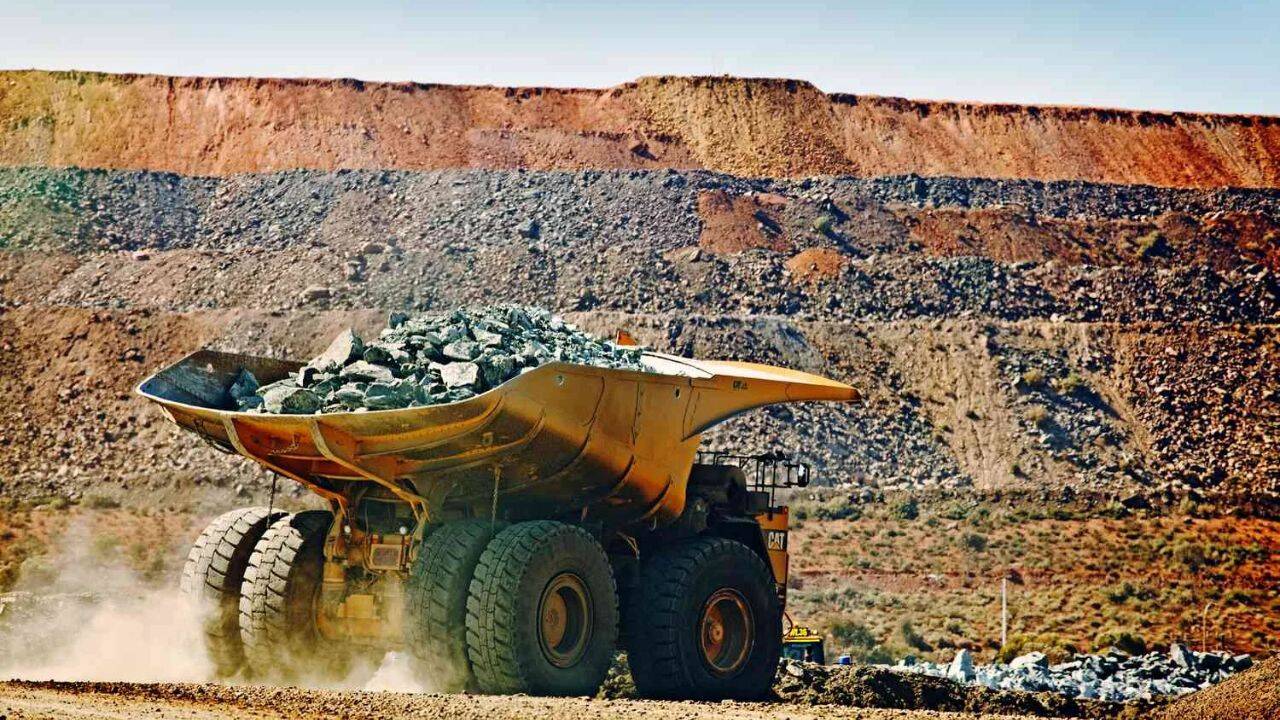
Red dust gets into everything. If you have ever spent a week in the Pilbara region of Western Australia, you know that the iron ore does not merely sit in the earth; it stains your boots, clogs the air filters of LandCruisers, and settles beneath your fingernails like dried blood.
For decades, that dust has been the literal currency of Australian prosperity. It built suburban cul-de-sacs in Perth, funded federal budgets in Canberra, and minted a select class of dynasties whose names are etched onto hospital wings and university libraries.
So when a daughter of that very dust decides to wire A$120 million directly to the people trying to shut the machinery down, the ground shifts.
Quietly. Violently.
The headline numbers look simple enough on a financial ticker. An Australian mining heiress—part of a lineage built on extraction, thermal coal, and bulk commodities—has pledged A$120 million across ten environmental organizations. Within that massive tranche sits a single, jaw-dropping allocation of A$25 million earmarked for Greenpeace.
To read a standard wire report on this transfer is to watch an earthquake described by an accountant. They tell you the sum. They list the recipients. They mention tax deductibility and philanthropic vehicles. What they miss is the sheer, breathless treason of the act—and the quiet desperation of the people receiving the check.
The Anatomy of a Blood Transfusion
Consider a hypothetical campaigner—let us call her Sarah—sitting in a cramped, fluorescent-lit office in inner-city Sydney. For twelve years, Sarah has worked at a mid-sized climate advocacy group. Her job consists of writing grant applications that take six weeks to draft and six minutes to be rejected, organizing rallies where forty people show up in the rain, and watching fossil fuel lobbyists walk into ministerial offices without knocking.
In Sarah’s world, A$50,000 is a windfall. It means hiring a junior researcher for eight months. It means printing placards or commissioning a single hydrologist's report to challenge a proposed coal mine in the Hunter Valley.
Now watch what happens to Sarah’s nervous system when a wire transfer of ten or fifteen million dollars hits her organization's endowment.
The scarcity mindset—the constant, low-grade panic that defines non-profit environmentalism—evaporates overnight. Suddenly, Sarah isn't asking how to keep the lights on until June. She is asking how to hire the best environmental lawyers in Melbourne to tie a gas project up in the Federal Court for half a decade. She is funding satellite surveillance of illegal land clearing in Queensland. She is paying for billboards in marginal electorates.
And for Greenpeace Australia Pacific, that A$25 million injection is nothing short of rocket fuel.
Greenpeace operates on a strict moral code regarding funding: they do not take a cent from corporations or governments. They rely entirely on individual donors. When an individual happens to carry an inherited fortune forged in the furnace of heavy industry, the money arrives untainted by corporate strings, yet heavy with historical irony.
It is the financial equivalent of taking cannonballs melted down from the enemy's own foundry and firing them back across the trench.
Why Guilt Is the Wrong Word
If you spend enough time watching the ultra-wealthy give away money, you learn to spot the difference between reputation laundering and genuine defection.
Reputation laundering is loud. It comes with press releases, ribbon-cuttings, and naming rights on art galleries. It asks you to forget how the money was made by dazzled appreciation of how it is spent. A mining magnate funding a symphony orchestra is buying social license; a mining heiress funding Greenpeace is burning the license to ash.
To understand why, you have to understand the generational fault line running straight through Australia's resource families.
The patriarchs who built these empires in the 1960s, 70s, and 80s operated under an unshakeable frontier ethic. To them, tearing wealth out of the red earth was an act of nation-building. They fought unions, regulators, and environmentalists with equal ferocity because they genuinely believed that every tonne of ore or coal pulled from the ground was a brick in the foundation of modern civilization.
Their children and grandchildren grew up in a different world. They went to elite universities in Melbourne, London, and Boston. They read the IPCC reports not as political manifestos, but as actuarial tables predicting the collapse of the ecosystems they grew up holidaying in. They watched the Great Barrier Reef bleach white in 2016, 2017, 2020, and 2022. They smelled the smoke of the Black Summer bushfires choking Sydney Harbor in 2019, turning the sky a bruised, apocalyptic orange at noon.
Imagine sitting at a Sunday family dinner in a waterfront mansion in Mosman or Peppermint Grove when the air outside tastes like burnt eucalyptus and dead wildlife, knowing that the portfolio paying for the roast lamb is actively accelerating the heatwave.
That isn't just guilt. Guilt is passive. Guilt makes you write a quiet check to plant a few thousand gum trees in a degraded paddock and call it carbon offsetting.
What triggers an A$120 million transfer to ten frontline activist groups is something much sharper: moral vertigo. It is the realization that the wealth you inherited is not neutral capital, and that the only way to neutralize its origins is to weaponize it against the very system that generated it.
The Invisible Stakes of Asymmetric Warfare
To grasp why this specific pledge matters so deeply, you have to look at the sheer asymmetry of the fight over Australia's energy future.
For decades, the battle between resource extraction and environmental protection has been a knife fight where one side brought a tank. Mining and gas lobbies in Australia have historically commanded staggering war chests. They fund think tanks, bankroll political donations across party lines, sponsor major sporting codes, and saturate television networks with advertisements reminding voters that without mining, the lights go out and the hospitals close.
Environmental groups, by contrast, have operated like guerrilla outfits. Even the largest among them—the Australian Conservation Foundation, the Wilderness Society, Greenpeace—have spent vast amounts of their energy simply fundraising to survive. When your annual budget is a rounding error compared to the PR spend of a single multinational energy giant, you cannot plan in five-year arcs. You react. You put out fires. You lose slowly.
A$120 million changes the physics of that conflict.
Consider what happens when ten distinct organizations—ranging from grassroots legal defenders to high-profile direct-action networks like Greenpeace—receive multi-year, unrestricted capital simultaneously.
First, the coordination problem disappears. Historically, non-profits compete for the same shallow pool of philanthropic dollars, which breeds territorialism and duplicated effort. When everyone at the table is suddenly well-funded, they can divide the battlefield. One group handles the shareholder activism and super-fund divestment campaigns. Another litigates under federal environmental protection laws. Greenpeace takes the high-seas direct action and public shaming campaigns. Another group works quietly in regional coal towns to help communities transition without losing their livelihoods.
Second, it buys time. Court battles against major resource projects routinely drag on for three to five years. Corporations rely on this attrition; they know most community groups will run out of money long before a judge rules on water-table contamination or cultural heritage destruction. With A$25 million in the bank, Greenpeace doesn't flinch when a multinational threatens a defamation suit or drags out discovery proceedings. They can afford to stay in the room until the gavel falls.
The Uncomfortable Truth About Dirty Money
Still, we have to be honest about the knot in the stomach this creates—even among the people cheering the loudest.
I remember talking to an old union organizer in Newcastle a few years back, a man whose lungs carried forty years of coal dust and whose politics were forged in picket lines. When we talked about wealthy philanthropists funding green transitions, he spat on the concrete and said, "They take a billion out of our hides, wreck the creek, and hand back ten cents to feel like saints."
He wasn't entirely wrong. That is the central, inescapable paradox of big-ticket climate philanthropy.
There is something deeply unsettling about the fate of our public commons resting on the conscience of a single wealthy heir. Democracy is supposed to decide how we balance economic extraction against ecological survival, not private wire transfers from dynastic trusts. When one person can unilaterally inject A$120 million into the political ecosystem, it highlights just how broken our public policy and campaign finance systems have become. If governments were regulating emissions properly and pricing environmental destruction accurately, Greenpeace wouldn't need a mining heiress to rescue the reef or halt new gas fields.
Moreover, the money carries an inevitable backlash. Conservative commentators and industry executives waste zero seconds pointing out the hypocrisy. How dare you accept money dug up by coal miners while telling those same miners their jobs have to end? It is a potent political club, and it will be swung relentlessly in the months ahead.
Yet, when the house is burning down, you do not interrogate the provenance of the water in the bucket.
The atmospheric physics of carbon dioxide do not care whether the solar farm was financed by a pension fund, a government grant, or an heiress trying to rewrite her family name. What matters is whether the gigawatts get built, whether the old-growth forests remain standing, and whether the reef survives another summer.
The Long Shadow of the Transfer
Look closely at the ripples spreading outward from this pledge, because the A$120 million itself is only the first shockwave.
In the rarefied circles of Australian ultra-high-net-worth families—the closed-door wealth management summits in Sydney, the private family-office briefings in Melbourne—peers watch each other like hawks. Philanthropy at this scale sets a new social benchmark. Suddenly, giving half a million dollars to a conservative arts foundation looks quaint, almost cowardly, next to a peer putting nine figures on the line for planetary survival.
It forces a reckoning among other heirs sitting on fortunes built from pastoral land clearing, fossil fuels, and heavy manufacturing. It strips away the excuse that the problem is too big for private capital to dent.
Meanwhile, inside the boardrooms of major energy and mining companies, the threat assessment matrix just had to be rewritten. You can lobby a minister. You can buy ad space in national newspapers. You can outspend a local council. You cannot easily neutralize an opponent who has just been handed a hundred-million-dollar war chest with no shareholders to appease and no election cycle to worry about.
Think back to that red dust in the Pilbara.
For over a century, the story of Australian wealth has been a one-way street: wealth pulled up from the dark beneath our feet and turned into concrete, steel, and private fortunes. The earth paid the bill, and the heirs collected the dividends.
Now, for the first time at this scale, the current has reversed. The fortune is flowing back toward the living world—not as an apology, and not as a monument, but as ammunition. Somewhere in a Sydney office tonight, a campaigner who spent last week worrying about how to pay for printer ink is staring at a spreadsheet with seven zeros at the end of a column, mapping out the next decade of a fight everyone assumed was already lost.