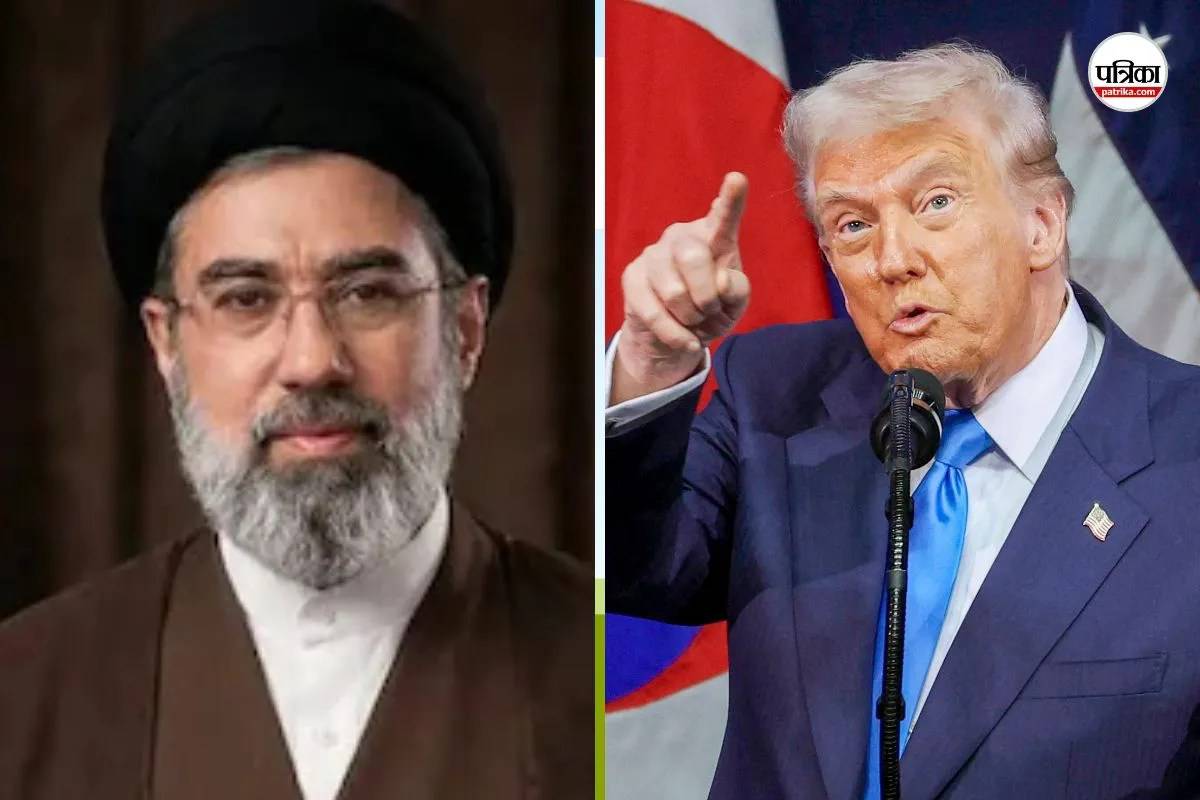
Washington has shifted from diplomatic maneuvering to a hardline containment strategy by issuing a blunt ultimatum to Tehran. The United States is demanding that Iran immediately halt its advanced uranium enrichment operations and transfer 400 kilograms of its highly enriched stockpiles to a neutral third party. This move aims to shut down Iran’s immediate breakout capability, a threshold Western intelligence suggests is narrowing rapidly. By setting five strict conditions, including unhindered international inspections and the dismantling of advanced centrifuges, the current administration is attempting to force Iran into a corner where it must choose between economic survival and its nuclear ambitions.
The policy shift is a calculated gamble. Over the past decade, negotiations have stalled repeatedly because both sides operated under the assumption that time was on their side. Washington believed sanctions would eventually break the Iranian economy, while Tehran gambled that its advancing centrifuges would create a geopolitical fait accompli. This latest move collapses that timeline, forcing a dangerous bottleneck that could either trigger a diplomatic breakthrough or pave the way for open military conflict in an already unstable region. In similar news, take a look at: Why US Navy Midair Collisions Happen and What the Airshow Footage Doesn't Show You.
Moving Beyond the Illusion of the 2015 Deal
To understand why Washington is taking such a drastic step, one must look at the carcass of the Joint Comprehensive Plan of Action (JCPOA). The 2015 agreement was built on the premise that Iran’s nuclear ambitions could be managed through a series of sunset clauses. It was a temporary lease on peace, not a permanent eviction of Iran's nuclear capabilities.
When the US pulled out of the agreement in 2018, it did so under the assumption that "maximum pressure" would force Iran back to the table for a tighter deal. Instead, the strategy backfired. Tehran responded by systematically breaching every single limit set by the accord. They did not just step over the lines; they erased them. TIME has analyzed this fascinating issue in great detail.
Today, Iran is enriching uranium to 60% purity at its fortified underground facilities. That is a short, technical step away from the 90% weapons-grade threshold. The 400 kilograms of enriched material mentioned in the recent US ultimatum represents the critical mass needed, if refined further, to produce multiple nuclear warheads. This is no longer a theoretical debate about a future threat. The threat has arrived, and the old diplomatic playbook is entirely useless.
The Five Conditions and the Mechanics of Compliance
The current US strategy relies on five non-negotiable demands that go far beyond the scope of previous treaties. These are designed not just to monitor Iranian activity, but to fundamentally deconstruct their nuclear infrastructure.
- Surrender of the Stockpile: The immediate transfer of 400 kilograms of highly enriched uranium to a verified third country, effectively resetting Iran's breakout clock.
- Total Access for Inspectors: Granting the International Atomic Energy Agency (IAEA) unrestricted, snap inspections of all declared and undeclared sites, including military complexes.
- Centrifuge Dismantling: The physical destruction or removal of advanced IR-6 and IR-9 centrifuges, which spin fast enough to enrich uranium at an accelerated pace.
- Cessation of Ballistic Development: A complete halt to the development of nuclear-capable ballistic missiles and space launch vehicles that share technology with long-range delivery systems.
- Severing Regional Proxy Ties: Ending financial and logistical support to external militant networks across the Middle East.
The technical reality of these demands is staggering. Take the requirement to surrender 400 kilograms of enriched uranium. In practical terms, moving that volume of hazardous material requires complex logistics, secure transport corridors, and a recipient nation willing to act as a nuclear vault under intense global scrutiny. It is an administrative nightmare, designed deliberately to test Tehran’s genuine willingness to comply under pressure.
Furthermore, dismantling advanced centrifuges is not like turning off an assembly line. These machines are delicate, highly sophisticated instruments engineered to operate at supersonic speeds. Once dismantled, their precision components degrade quickly if not stored in highly specific conditions. For Iran, agreeing to this means destroying years of domestic research and development that cannot easily be replicated.
The Economics of Iranian Defiance
Tehran’s response to Western pressure has historically been wrapped in the rhetoric of resistance, but the internal calculus is purely financial. The Iranian leadership is balancing the pain of crippling economic sanctions against the domestic prestige and strategic leverage of their nuclear program.
+--------------------------------------+--------------------------------------+
| US Sanctions Pressure Points         | Iranian Countermeasures              |
+--------------------------------------+--------------------------------------+
| Oil export embargoes targeting major | Dark fleet tankers bypassing international |
| maritime shipping routes.            | tracking systems via ship-to-ship    |
|                                      | transfers.                           |
+--------------------------------------+--------------------------------------+
| Exclusion from the SWIFT banking     | Alternative financial channels through |
| network, freezing foreign assets.    | regional illicit exchange networks.  |
+--------------------------------------+--------------------------------------+
| Secondary sanctions on third-party   | Expanding bilateral trade with non-  |
| companies trading with Tehran.       | Western economic powers.             |
+--------------------------------------+--------------------------------------+
Sanctions have severely damaged Iran’s currency and ignited domestic inflation, yet the regime has found ways to survive. By utilizing a "dark fleet" of tankers to sell oil to buyers willing to ignore Western restrictions, Tehran has maintained a baseline level of revenue. This economic cushion, thin as it is, gives the regime the confidence to reject ultimatums that look like unconditional surrender.
Western policymakers often misjudge the resilience of an authoritarian state. A government that does not have to answer to voters can tolerate economic misery far longer than a democracy assumes it can. The assumption that economic collapse automatically leads to diplomatic capitulation is a fundamental flaw in Western foreign policy.
The Flawed Logic of Regional Containment
The fourth and fifth conditions of the US ultimatum touch on Iran’s regional footprint and missile capabilities. This is where the American strategy faces its steepest climb. For Tehran, its ballistic missile arsenal and its network of regional proxies are not bargaining chips to be traded away for sanctions relief. They are the core pillars of its national security strategy.
Iran lacks a modern air force. Its military hardware is largely composed of aging Western equipment from the pre-1979 era or domestic modifications of older Russian designs. To compensate for this conventional military weakness, Iran built a massive missile program. These weapons serve as a deterrent against regional adversaries. Asking Iran to give up its missiles is akin to asking a nation to dismantle its primary defensive shield while its neighbors remain heavily armed with advanced Western fighters.
Similarly, the proxy networks provide Iran with strategic depth. By projecting power away from its own borders, Tehran ensures that any potential conflict is fought on foreign soil rather than in the streets of Isfahan or Tehran. The ruling elite views these proxy forces as existential necessities. Erasing that influence to satisfy a Washington ultimatum would require a complete shift in the regime’s worldview, an outcome that no amount of diplomatic pressure has ever achieved.
The Shadow of Alternative Alliances
The geopolitical landscape is vastly different today than it was in 2015. Washington no longer holds a monopoly on international economic leverage. Tehran has actively sought to insulate itself from Western pressure by deepening its ties with Beijing and Moscow.
China remains a primary consumer of Iranian crude, providing a vital economic lifeline that undercuts the efficacy of American sanctions. Meanwhile, military cooperation between Iran and Russia has shifted from a transactional relationship to a deeper strategic partnership. Iranian manufacturing capabilities have found a steady market in Russia's ongoing logistical needs, creating a closed loop of military and economic exchange that operates completely outside the sphere of Western influence.
This new reality invalidates the old assumption that an isolated Iran must eventually bend to the will of the global financial system. When Washington issues an ultimatum today, it is not just speaking to an isolated regime in Tehran; it is speaking to a block of nations that are increasingly committed to constructing a parallel global infrastructure designed specifically to withstand Western dictates.
The True Cost of a Failed Ultimatum
When a superpower sets five strict conditions and attaches an ultimatum to a specific quantity of nuclear material, it draws a line in the sand. The danger of drawing such lines is that your opponent might simply choose to step over them.
If Iran ignores the 400-kilogram ultimatum, the US administration faces a difficult choice. It can either scale back its demands, destroying its own credibility, or it can escalate toward direct kinetic action. Cyber warfare, sabotage, and covert operations have already been deployed for years with mixed success. They slow the clock, but they do not stop it.
The structural flaw in this current high-stakes gamble is the absence of a realistic off-ramp. By making the conditions so absolute, the US has left little room for the grey-zone compromises that characterize successful diplomacy. If Tehran concludes that compliance equals systemic vulnerability, they will choose to accelerate toward a breakout capacity, betting that the West does not have the political will for another war. Washington has laid its cards on the table, but in doing so, it has left itself with no moves left to play if Iran decides to call the bluff.