The coffee in the Grand Kremlin Palace is always served scalding hot, but it does little to thaw the air.
Outside, the Moscow winter presses hard against the reinforced glass. Inside, Vladimir Putin sits at a distance that has become a trademark of his late-era presidency. He is a man who calculates power in meters and minutes. For months, European diplomats have been knocking on his door, carrying briefcases filled with detailed proposals, ceasefire frameworks, and multilateral guarantees. They offer a seat at a crowded table.
Putin has looked at those proposals and politely, coldly, set them on fire.
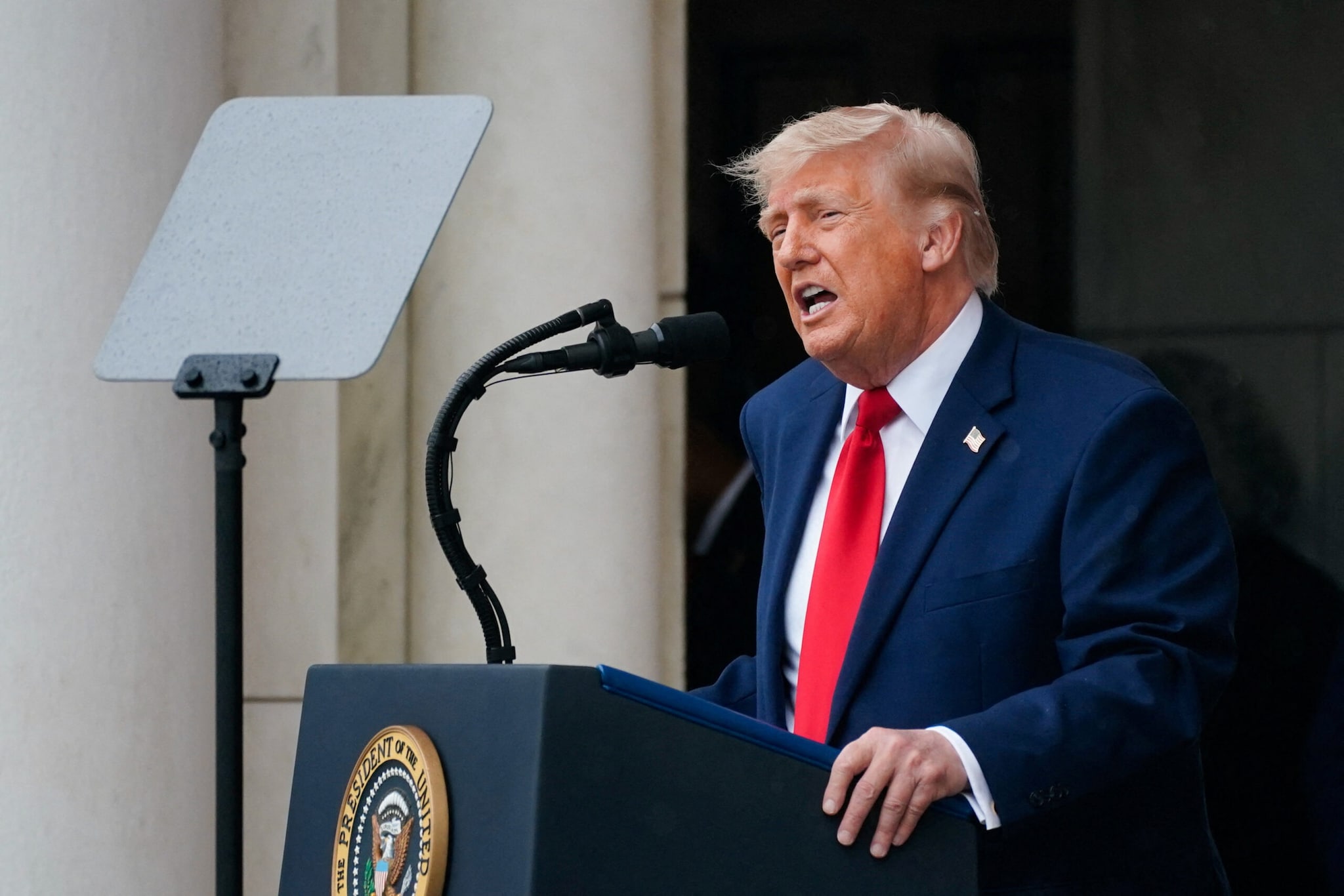
He does not want to talk to Europe. To understand why is to understand the fundamental machinery of modern global power, a reality stripped of diplomatic niceties. He is not interested in a choir. He is waiting for a soloist. Specifically, he is waiting for Donald Trump.
The rejection of European mediation isn't just a tactical snub. It is a profound reassessment of who actually holds the keys to the global order. For the leaders in Paris, Berlin, and Brussels, this is a terrifying realization. They are discovering that in the eyes of the Kremlin, they are not the authors of the script. They are merely stagehands.
The Weight of the Long Table
To grasp the human cost of this diplomatic freeze, you have to look past the official press releases and into the eyes of those who live in the margins of these decisions.
Consider a mid-level European diplomat. Let us call him Thomas. He has spent the last three years living out of a suitcase, flying between Warsaw, Munich, and Kyiv. He has dark circles under his eyes and a stack of half-drafted treaties on his desk that no one will ever sign. Thomas represents an entire class of Western officials who genuinely believed that international institutions, built on decades of precedent, could referee a brutal land war in the 21st century.
When Moscow signals that European initiatives are irrelevant, Thomas doesn't just see a political setback. He feels a quiet, existential dread. It means the millions of hours spent negotiating sanctions, supply lines, and humanitarian corridors are being bypassed.
Putin’s strategy is a calculated gamble on American political volatility. By refusing to engage with European leaders like Emmanuel Macron or Olaf Scholz, the Russian president is making a glaringly obvious statement: Why negotiate with the management when the owner might change next year?
This is the core of the Forex reports and financial intelligence currently rippling through global markets. Traders aren't just watching troop movements; they are watching polling numbers in Ohio and Pennsylvania. The value of the Euro, the price of natural gas, the stability of Eastern European bonds—they are all tied to a single, unspoken premise. The conflict in Ukraine will not be settled by a committee. It will be settled by a transaction.
The Illusion of Collective Security
We were taught to believe in treaties.
For a generation, the consensus was that global stability was maintained by a complex network of alliances. NATO, the European Union, the G7. These acronyms were supposed to be a shield. But the reality on the ground in Moscow reveals a much older, darker view of statecraft.
Putin views the world through the lens of great power chauvinism. In this worldview, there are only two or three real sovereign nations, and everyone else is a client state. Europe, in his estimation, is an economic giant but a geopolitical dwarf. It cannot defend itself without Washington. It cannot print the global reserve currency. Therefore, wasting time on European peace plans is seen by the Kremlin as a sign of weakness, an unnecessary detour on the road to a real deal.
This leaves European capitals in an agonizing position.
They are funding the defense of Ukraine, taking in millions of refugees, and decoupling their economies from Russian energy at immense domestic cost. Yet, they are being systematically excluded from the ultimate boardroom where their fate will be decided. The frustration in Brussels is palpable. It is the anger of a partner who realizes they have been written out of the will.
The Transactional Presidency
What does Putin actually want from a Trump deal?
It is not a secret, nor is it particularly complex. He wants a return to classic sphere-of-influence diplomacy. A division of the map.
- A hard stop to NATO expansion. No more Western military integration on Russia's borders.
- The formal recognition of territorial gains. A line drawn in the dirt that the West promises not to cross.
- A rollback of the sanctions regime. A return to global commerce without the moral baggage.
A multilateral coalition cannot offer these terms. Europe cannot legally or morally sign away Ukrainian territory, nor can it guarantee what Washington will do. But a transactional American administration? That is a different story.
Putin remembers the first Trump term not through the lens of media outrage, but through the lens of a businessman. He saw a leader who questioned the value of NATO, who viewed alliances as protection rackets, and who preferred one-on-one summits to sprawling international conferences. To Moscow, that is a language they understand. It is a marketplace where everything has a price, and everything is up for negotiation.
The risk, of course, is immense. It is a high-stakes poker game played with the lives of millions. If Putin miscalculates, and a future US administration decides to double down on support for Kyiv rather than cut a deal, the conflict escalates into an unpredictable spiral. But for now, the Kremlin is content to wait. They are willing to let the front lines bleed, to let Europe exhaust its ammunition supplies, and to let inflation eat away at Western political will.
The View from the Trenches
While the chess pieces move in Moscow and Washington, the reality remains agonizingly human for those caught in the gears.
Imagine a Ukrainian soldier named Artem. He is thirty-two, an architect before the war, now standing in a muddy trench in the Donbas. He doesn't read the diplomatic cables. He doesn't care about the nuances of the Forex market. He knows only the weight of his rifle and the sound of incoming artillery.
For Artem, the debate over who sits at the negotiating table is not academic. It is a matter of life and death. If the decision-making power shifts entirely to a bilateral deal between Washington and Moscow, his country's sovereignty becomes a bargaining chip. The fear isn't just defeat on the battlefield; it is betrayal in a room he will never enter.
This is the hidden cost of the current diplomatic stalemate. The longer Russia holds out for an American deal, the longer the meat-grinder operates. The refusal to talk to Europe isn't just a diplomatic posture; it is a license to continue the violence until the political calendar shifts in the West.
The markets understand this. They are pricing in a prolonged conflict, a frozen winter of attrition where the only certainty is uncertainty. Investors dislike ambiguity, but they dislike irrelevance even more. Europe is fighting a desperate battle to remain relevant in its own backyard.
The ultimate tragedy of the situation is that Europe’s exclusion might become a self-fulfilling prophecy. By treating European leaders as bystanders, Putin forces them to behave like bystanders. They are left to watch the horizon, waiting to see what kind of world will be constructed for them by two men in a room thousands of miles away.
The snow continues to fall over the Kremlin. The long tables remain empty, the European emissaries are sent home with polite rejections, and the world waits for an election cycle to determine the fate of a continent. Power, in its most brutal form, is the ability to choose your opponent. Right now, Moscow has chosen, and Europe is left standing outside in the cold.