The basement of any sports complex smells the same. It is a mixture of floor wax, rubber-soled shoes, sweat, and cheap glue. To anyone else, the rapid-fire ping-pang-ping-pang of a celluloid ball hitting lacquered wood is just background noise, a frantic heartbeat of a minor sport. But to those who live by the paddle, it is a language.
For nearly three years, a quiet silence hung over certain tables.
When the International Table Tennis Federation (ITTF) barred Russian and Belarusian athletes from international competition following the invasion of Ukraine, the decision was handed down in a sterile press release. It was wrapped in the grand language of global solidarity. But on the ground, where the rubber meets the wood, the impact was intensely personal.
Imagine a nineteen-year-old athlete. Let us call her Elena. She is not a politician. She does not draft foreign policy, nor does she command battalions. Her entire existence, since the age of six, has been measured in forty-millimeter spheres rotating at nine thousand revolutions per minute. She has spent her youth in drafty sports halls, her knees aching, her mind focused entirely on the microscopic adjustments of her wrist. Suddenly, the door slams shut. The tournaments she trained for vanish. Her peers across the net become ghosts.
Now, the door is creaking open again. The ITTF has decided to allow Russian and Belarusian players back into the fold under a strict neutral flag. But this is not a simple story of a return to sport. It is a delicate, agonizing tightrope walk across a geopolitical chasm.
The Weight of a Blank Shirt
To understand the complexity of this return, you have to look at what these athletes will wear. Or, more accurately, what they will not wear.
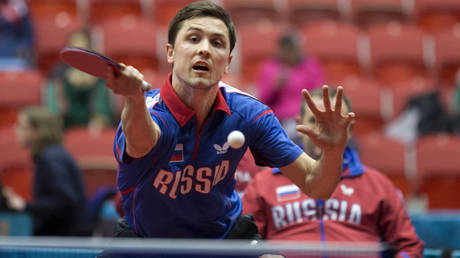
The ITTF executive committee did not just wave a green flag. They laid down a gauntlet of conditions. Players from Russia and Belarus can only compete as individual neutral athletes. No flags. No national anthems. No state symbols of any kind.
Consider the psychological weight of stepping onto a world-class stage wearing a completely blank shirt. In international sports, your jersey is your armor. It carries the weight of your home, the cheers of your neighbors, the history of your country's sporting legends. To strip that away is to turn an athlete into a nomad. They are physically present, yet nationally invisible.
And the scrutiny is suffocating. To even qualify for this neutral status, players must undergo rigorous vetting. They must prove they have no connection to the military or national security agencies. In many Eastern European nations, major sports clubs are historically tied to military branches—like the famous CSKA clubs. For a young athlete, accepting sponsorship or training facilities from these clubs is often the only path to survival. Now, that very survival mechanism is a black mark that can bar them from the table.
More demanding still is the requirement that athletes must not have actively supported the war. Every social media post, every interview, every casual "like" on a digital platform is scrutinized. A single double-tap on a photo three years ago can dismantle a lifetime of training.
The ITTF is trying to thread an impossible needle. They want to uphold the principle that athletes should not be punished for the actions of their governments, while simultaneously respecting the profound pain and anger of Ukrainian athletes who are playing while their hometowns are under fire.
The Friction in the Dining Hall
It is easy to watch a match on a screen and see only the game. The camera focuses on the white ball, the blur of the paddle, the sweat dripping from a chin. But the real tension of international sport does not happen under the bright lights of the television court.
It happens in the hotel lobby. It happens in the breakfast buffet line, where players from warring nations must stand side-by-side, waiting for the same toaster.
When the ban was first lifted, the immediate concern was not how these returning athletes would play, but how they would be received. For Ukrainian players, the return of their Russian counterparts is not a sporting debate. It is a raw, open wound. They are being asked to shake hands with citizens of a country that is actively attacking their families.
The locker room, once a sanctuary of shared athletic struggle, becomes a minefield. How do you share a warm-up table with someone whose country's missiles forced you to train in a dark, unheated gym in Kyiv? How do you maintain the polite etiquette of table tennis—raising a hand in apology when a ball clips the net and trickles over—when the stakes of life and death are waiting for you back home?
The ITTF’s decision is a gamble that sport can transcend politics. But sport is made of people, and people carry their trauma onto the court.
The Fragile Geometry of Peace
There is a beautiful, fragile geometry to table tennis. It is a game of angles, anticipation, and spin. If you miscalculate by a fraction of a millimeter, the ball flies wild.
The administration of the sport is currently trying to play its own high-stakes match. By allowing neutral athletes back, the ITTF is aligning itself with the International Olympic Committee’s recommendations. They argue that sport must be a unifying force, a place where humanity can meet even when diplomacy fails.
It is a noble sentiment. Yet, the reality is messy. The return of these players is not a neat resolution. It is a compromise that pleases almost no one. Critics of the war argue the reinstatement is too soft, a betrayal of Ukraine that allows a path for sportswashing. Supporters of the athletes argue the restrictions are humiliating and discriminatory, forcing blameless competitors to jump through bureaucratic hoops just to earn a living.
But perhaps there is something to be said for the sheer grit of those who will step up to those tables.
When the first neutral athlete serves the ball to an opponent who may despise what their passport represents, the air in the arena will be thick. The silence will be deafening. The first few rallies will be stiff, fueled by a tense, nervous energy that has nothing to do with tactics and everything to do with survival.
Then, inevitably, the game will take over.
The subconscious reflexes, trained over millions of repetitions, will kick in. The mind will focus on the spin of the ball, the dip of the shoulder, the bounce of the wood. For a few minutes, the geopolitical noise will fade into the background, replaced by the rhythmic, relentless cadence of the sport.
It will not heal the wounds. It will not rebuild ruined cities or bring back lost lives. But in that small, green-surrounded space, two human beings will look at each other across a net. They will play because they must. And the world, holding its breath, will watch the ball cross the line, waiting to see where it lands.