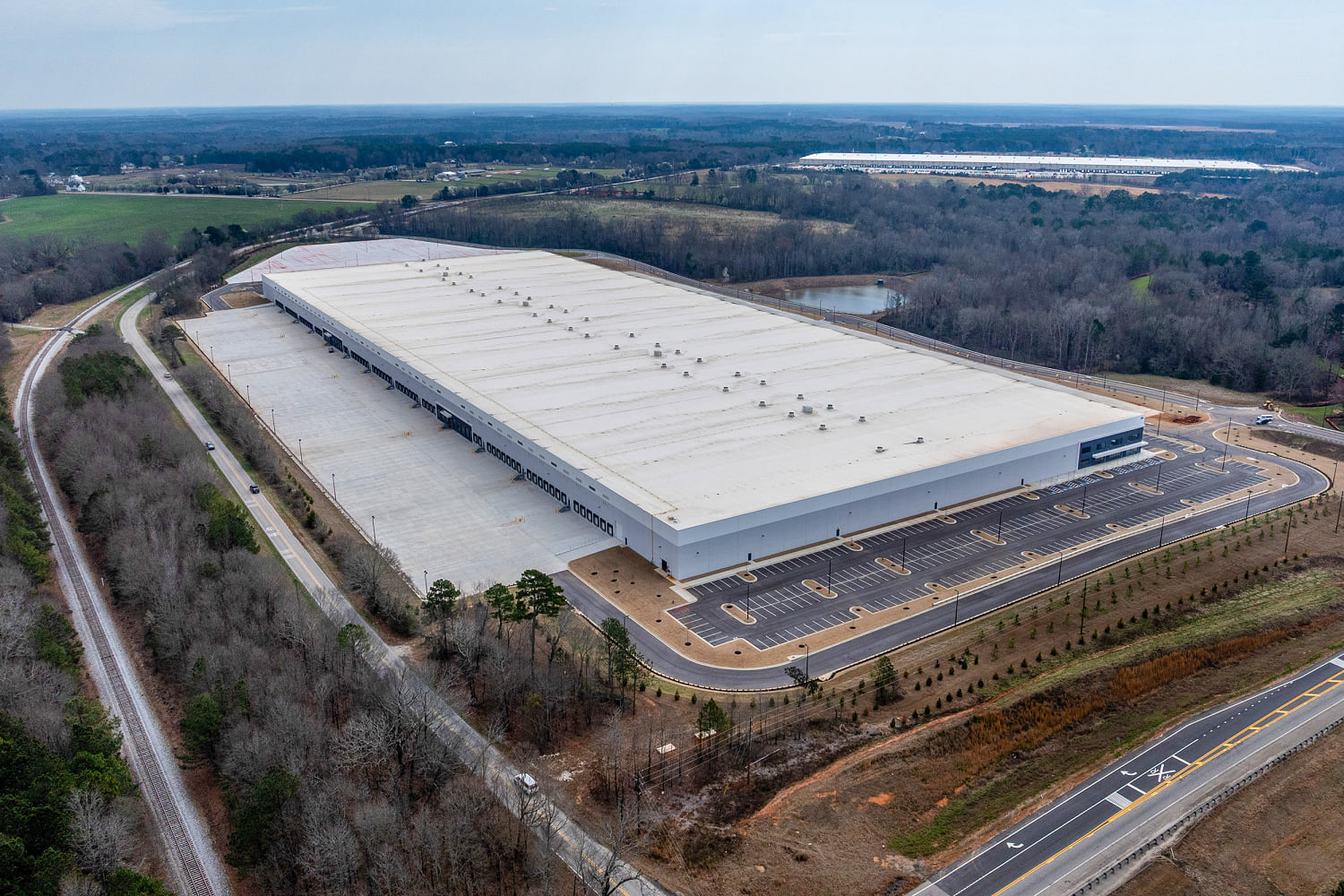
The air in the morning smells of damp pine needles and asphalt. If you stand on the edge of the newly cleared lot just outside the city limits, you can hear a lawnmower humming a few blocks over. It is the defining sound of suburbia. Predictable. Safe.
Then the dump trucks arrive. Meanwhile, you can explore related events here: BRICS is Not an Alliance but a Geopolitical Pressure Valve.
They bring with them a different kind of noise—the grinding of gears, the heavy thud of shifting earth, and the uneasy realization that the place you call home is about to change forever.
A quiet legal war is unfolding in a sleepy patch of land just outside Atlanta. The Department of Homeland Security wants to build an Immigration and Customs Enforcement facility. It is not a small office. It is a massive, sprawling complex designed to hold up to 10,000 people. To the bureaucrats in Washington, it is a line item on a budget spreadsheet, a logistical solution to a systemic pressure point. To the families living across the street, it feels like an occupying army. To understand the complete picture, we recommend the recent article by TIME.
The local township did something desperate. They sued the federal government.
It is a classic David and Goliath story, but without the neat, cinematic certainty of a slingshot victory. This is a story about zoning laws, federal supremacy, and the invisible lines we draw between our private lives and the massive, grinding machinery of national policy.
The Weight of Ten Thousand
Numbers lose their meaning when they get too large. We read about a 10,000-person capacity and our brains treat it as an abstract data point.
Let us ground that number in reality.
Imagine a Friday night high school football stadium in Georgia. The stands are packed. The lights are blindingly bright. The noise is a deafening roar of cheers, whistles, and marching bands. That entire stadium, every single person in the bleachers, represents the human capacity of this proposed facility. Now, strip away the stadium lights. Replace the cheers with concrete walls, chain-link fences, and the heavy silence of waiting.
That is what is being dropped into a neighborhood where the biggest weekend traffic jam happens in the church parking lot.
The local city council did not file this lawsuit out of a sudden burst of partisan ideology. They did it because of infrastructure. Think of a town as a living organism. It breathes through its traffic flow. It drinks through its water lines. It flushes through its sewage system.
When you suddenly drop a small city of 10,000 people—plus guards, administrative staff, lawyers, and visiting families—into an area designed for single-family homes, the organism chokes. The water pressure drops. The local roads, already cracked and straining under the weight of daily commutes, turn into gridlock. The local hospital’s emergency room, which already operates on a razor-thin margin of empty beds, faces the terrifying prospect of overwhelming demand.
The federal government operates on a different wavelength. They see a geographic necessity. The Atlanta hub is a critical node in the southeastern transport network. From a purely operational standpoint, putting a massive holding facility here makes sense. It cuts down on transit times. It centralizes operations. It streamlines a system that is notoriously fractured.
But efficiency looks very different depending on which side of the chain-link fence you stand.
The Sovereignty of the Backyard
There is a legal concept that sounds dry but feels deeply personal: federal supremacy.
In the United States, if the federal government decides it needs to build something for national security or federal operations, local zoning laws usually crumble like dry leaves. If a town says, "You can't build a commercial structure here, this is zoned for residential homes," the federal government can simply wave a hand and bypass the local board.
This power dynamic creates a profound sense of helplessness.
Consider the local business owner who spent twenty years building a diner down the road. They invested their life savings, woke up at four in the morning to brew coffee, and memorized the names of every regular customer. They did everything right. They followed the local ordinances, paid their city taxes, and contributed to the community fabric. Now, through no fault of their own, the character of their neighborhood is shifting. The diner will no longer serve construction workers and local teachers; it will become the default waiting room for anxious families waiting for news from inside the concrete walls.
The lawsuit filed by the suburb argues that the Department of Homeland Security skipped crucial steps. It alleges that the environmental impact study was flawed, that the economic disruption was ignored, and that the federal government failed to consult the very people who will have to live with the consequences.
It is a legal Hail Mary.
The lawyers representing the town know the odds. Winning a lawsuit against a federal agency on its own turf is like trying to stop a landslide with a wooden shield. But the lawsuit is not just about a legal victory. It is a scream into the void. It is a demand to be seen, a public declaration that a community is more than just a convenient blank space on a federal map.
The Unseen Human Cost
Arguments about these facilities usually devolve into political theater. One side talks about border security and law enforcement; the other side talks about human rights and systemic cruelty. Both sides retreat into their ideological bunkers, firing talking points at each other over the heads of the people actually affected.
Step away from the television cameras. Look at the ground.
The real tension is not ideological; it is existential. It is the anxiety of a parent wondering if the bright, stadium-grade security lights will shine through their toddler’s bedroom window all night. It is the worry of a homeowner who watches their property value—the only real wealth they have to pass on to their children—evaporate as the shadow of the facility grows.
There is a psychological weight to living next to an institution of confinement. A school brings the sound of laughter and recess bells. A hospital brings the quiet reassurance of healing. A prison or a detention center brings a heavy, ambient stress. It is a physical reminder of human friction, of displacement, of a world broken in ways that a local suburb cannot fix.
The federal government promises jobs. They talk about construction contracts, permanent security positions, and the economic injection that a massive facility brings to a local economy. They point to empty pockets of land and see dollar signs and employment statistics.
But a community is not merely an economy.
A town is a collection of shared memories, of quiet evenings, of a collective agreement that this specific piece of earth is a safe harbor from the chaos of the wider world. When that agreement is broken by executive fiat, something vital snaps. Trust erodes. The relationship between the citizen and the state turns sour and adversarial.
The dump trucks keep coming.
The legal briefs will be filed, the judges will offer their rulings in cold, precise language, and the politicians will issue press releases full of sound and fury. The lawsuit might delay the project. It might force a few modifications to the blueprints. It might even force the federal government to look for a different plot of land a few counties over.
But the scar on the community is already there. The illusion of insulation has vanished. The residents of this quiet Atlanta suburb now look at the empty fields not as places of future promise, but as territory waiting to be claimed by a power that does not know their names.
The sun begins to set, casting long, distorted shadows across the freshly graded red clay. The construction equipment sits idle for the night, giant yellow beasts resting before the next day's work. Across the street, a porch light clicks on. A front door closes with a soft, familiar click, locking out the noise of the world, if only until tomorrow morning.