The map of eastern China is redrawing itself, not from the slow creep of global tides, but from the heavy footfall of industrial expansion.
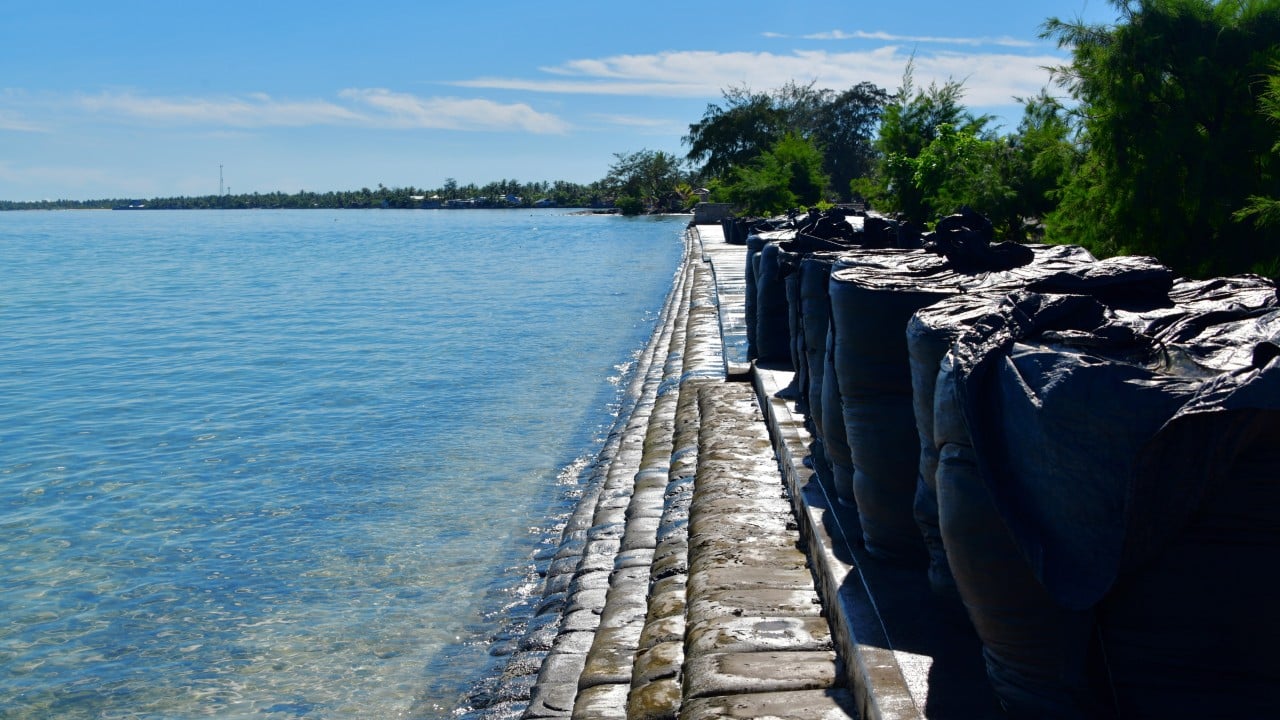
For decades, the standard response to rising waters and shrinking coastlines was simple: build higher walls, pour more concrete, and push the ocean back. That calculus has broken down. Recent empirical assessments published in scientific literature demonstrate that localized development choices and industrial land-use policies drive coastal flood exposure far more aggressively than global sea-level rise itself. Beijing is waking up to an uncomfortable reality. The real threat to the nation's littoral economic engine is not merely melting polar ice, but the unchecked ambitions of municipal planners who paved over the very natural buffers meant to protect them.
When economists talk about China's economic miracle, they are talking about the coast. The Pearl River Delta, the Yangtze River Delta, and the Bohai Economic Rim generate an outsized share of the country's GDP. They also happen to be sinking. Heavy groundwater extraction and the sheer weight of vertical urban expansion have accelerated land subsidence, causing certain industrial hubs to drop at rates that dwarf baseline oceanic changes.
Municipal governments faced a perverse incentive structure for years. Filling in wetlands, reclaiming tidal flats, and erecting rigid seawalls unlocked immediate commercial real estate value. It also traded long-term regional security for short-term balance sheet expansion. When a storm surge hits a heavily subsided, over-reclaimed shoreline, the water does not gently lap against the concrete. It funnels into industrial parks and logistics hubs with devastating kinetic force.
The debate in policy circles has consequently shifted from a passive defense model—how many meters of concrete must be poured to block a rising tide—to an active battle over zoning and spatial governance. Ministries in Beijing are pushing back against local authorities who treat coastlines as infinite blank slates for manufacturing plants and container ports.
Consider a hypothetical coastal manufacturing zone designed under older economic priorities. Under a high-intensity development framework, factories, chemical storage facilities, and worker housing are pushed directly to the water's edge, relying entirely on a monolithic seawall for protection. If that wall breaches during a once-in-a-decade typhoon, the economic cascade halts regional supply chains within hours. The modern revisionism circulating through policy think tanks in Beijing argues for a managed retreat and the restoration of ecological buffers—mangroves, wetlands, and permeable zoning—that absorb wave energy rather than attempting to block it with brute force.
This pivot is fraught with institutional friction. Local officials are measured by quarterly GDP growth and employment figures, metrics that penalize the decision to leave land vacant or turn industrial parks back into salt marshes. For central planners to override these municipal impulses, they must dismantle a decades-old consensus that equated physical construction with progress.
The debate over shrinking coastlines is ultimately a test of state capacity. Can a top-down governance model correct the accumulated errors of hyper-rapid local urbanization before extreme weather events outpace bureaucratic adaptation? The concrete walls are getting higher, but the ground beneath them is dropping faster. How Beijing resolves this tension will determine the stability of the nation's economic heartland for the remainder of the century.