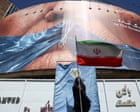
The air inside a conference room in Geneva smells faintly of stale carpet and decades of quiet panic. Men in dark suits slide papers across mahogany tables. They adjust their glasses. They talk about deterrence, about uranium enrichment centrifuges spinning in subterranean mountain bunkers, about sanctions that bite and squeeze until ordinary kitchens run cold. They use numbers to measure hostility. Ten percent enrichment. Sixty percent. Ninety.
Numbers are clean. Numbers do not bleed. Recently making headlines in this space: The Fracture Point Across the Border.
Step outside that room. Walk through the bustling alleys of Tehran where the afternoon sun beats down on dusty storefronts, or stand behind the heavy iron gates of Washington where motorcades idle on wet asphalt. You will find that geopolitics is not a math problem. It is a collision of stubborn human pulses. It is two separate worlds staring across an unbridgeable chasm, each convinced that time is the ultimate weapon.
For years, the script has followed a familiar, exhausting rhythm. A new American administration steps into the Oval Office. They carry blueprints for absolute containment. They bring maximalist demands wrapped in the language of economic strangulation. The goal is simple on paper. Bring the Islamic Republic to its knees. Force a proud, ancient nation to surrender its ambitions at a crowded diplomatic podium. Further details regarding the matter are detailed by Reuters.
History suggests a different outcome.
Consider how a state survives decades of isolation. When you box a government into a corner, you do not create a reformer. You create a bunker. You hand total control to the hardliners who thrive on siege mentalities. Every sanction becomes proof of foreign malice. Every threat justifies the tightening grip of security forces in the streets.
To understand this dynamic, imagine a hypothetical merchant in the grand bazaar of Isfahan. Let us call him Reza. For forty years, Reza has watched the currency fluctuate wildly against the dollar. He has watched his savings dissolve into the humid desert air. When foreign leaders announce a new round of maximum pressure campaigns, Reza does not pack his bags to overthrow his government. He lowers his metal shutter, counts his dwindling inventory, and figures out how to survive another month. The pressure intended to change a regime's behavior often does nothing more than crush the person standing at the very bottom of the economic ladder.
Statecraft often forgets Reza.
When Donald Trump pursued a policy of maximum pressure during his presidency, tearing up the landmark nuclear deal in 2018, the strategy operated on a stark premise. Hit them hard enough, isolationists argued, and the system will snap. The leadership in Tehran will crawl back to the table on Washington's terms.
It did not snap. It hardened.
When you tell an adversary that nothing short of total capitulation will suffice, you remove their incentive to compromise. Why negotiate if the prize for compliance is the same as the penalty for defiance? Iran answered the rollback of diplomacy by accelerating its nuclear program. The centrifuges spun faster. The underground facilities dug deeper into the bedrock of Natanz and Fordow.
This is the hardball paradox. When two inflexible forces meet, neither can blink without losing its identity.
To watch this unfold from the outside is to feel a creeping sense of vertigo. We track troop movements in the Persian Gulf like sports fans reading box scores. We look for oil tankers detained in the Strait of Hormuz. We wait for the next cyberattack to cripple a water treatment plant or a banking network. Beneath these headlines lies a human reality that rarely pierces the diplomatic bubble.
Young Iranians, born long after the 1979 revolution, carry a profound sense of exhaustion. They are educated, connected to the global internet through virtual private networks, and deeply cynical about the ideological fires that consumed their parents' generation. They want what young people everywhere want. A decent job. A chance to love without fear. The freedom to walk down the street without checking over their shoulder for morality police.
Yet every time foreign powers tighten the economic vise, those same young people find their horizons shrinking. Their dreams of travel, of artistic expression, of connecting with the wider world, evaporate in the heat of escalating geopolitical tensions. The hardline establishment in Tehran uses the external threat as a permanent shield, branding every domestic dissident as an American asset, every cry for reform as foreign subversion.
Geopolitical confrontation becomes a self-fulfilling prophecy.
Look closely at the architecture of modern power. It relies on the assumption that states are rational actors driven purely by cost-benefit analyses. Economists build models showing how inflation rates and oil export drops should logically force a government to alter its foreign policy. But governments are run by humans. Humans are driven by ego, historical grievance, religious fervor, and the primal need to save face.
When a leader in Tehran looks at Washington, they do not see a benevolent partner offering a fair deal. They see an empire trying to erase a sovereign identity. When a leader in Washington looks at Tehran, they see a rogue actor sponsoring proxy militias and threatening regional stability.
Both narratives contain elements of truth. Both narratives trap the actors inside a prison of their own making.
There is an old Persian proverb about a weaver who spends his entire life working on the underside of a carpet. All he sees are tangled knots, loose threads, and endless frustration. Only when the carpet is finished and turned over does the grand design appear.
Right now, the world is staring at the underside of the carpet.
We see the tangled knots of proxy wars in Yemen, Lebanon, and Iraq. We see the flashpoints in the Red Sea. We see the quiet hum of centrifuges spinning enriched uranium in the dark. It is easy to look at these threads and conclude that a catastrophic clash is inevitable.
History, however, is rarely a straight line. It is a series of sudden, jagged turns driven by exhaustion. Empires do not usually fall in a single day of fire; they bleed out through a thousand small friction points until the cost of maintaining the posture outweighs the prize.
The friction between Washington and Tehran has lasted nearly half a century. Generations of politicians have promised a definitive resolution. Yet the wall remains. The clock keeps ticking.
Consider what happens next when the current strategies reach their absolute limits. If maximum pressure fails to yield surrender, and military strikes risk igniting a regional conflagration that no one can contain, what is left?
Diplomacy is messy. It requires sitting across the table from people whose actions turn your stomach. It requires offering concessions to adversaries you believe deserve punishment. It demands patience in an era obsessed with instant outcomes.
Yet the alternative is a slow, grinding march toward a conflict that will burn everything in its path, leaving behind only the ruins of cities and the ashes of human potential.
The concrete wall does not care about your ideology. The clock does not pause for your elections. Somewhere in Tehran, a young woman looks out her window at the Alborz mountains, wondering if tomorrow will bring war or just another day of waiting. Somewhere in Washington, an analyst types out a memo that will be read by someone who will ignore it.
The story is not over. The ink is wet. The only question left is whether the authors of this crisis will recognize the cliff before they take the final step.