The wind over Sanrizuka doesn't carry the scent of jet fuel. Not yet. If you stand in the middle of a small organic vegetable patch, the air smells of damp earth and fertilizer. It is quiet. Then, the sky cracks open. A Boeing 777 shrieks overhead, its landing gear reaching down like talons, a silver belly passing so low you can count the rivets.
This is the most contested patch of dirt in Japan.
To the global traveler, Narita International Airport is a gateway of glass and polished floors. To the Japanese government, it is a vital engine of a $20 trillion economy. But to a handful of stubborn, aging farmers, this land is not "infrastructure." It is home. And as the airport prepares for its largest expansion in decades, the old ghosts of the Sanrizuka Struggle are waking up.
The Ghost in the Terminal
Japan is a country of exquisite politeness and deep-seated order. Yet, Narita was born in blood. In the 1960s and 70s, the decision to build an airport here was made without consulting the people who lived on the land. What followed was a civil war in miniature. Students and farmers built fortresses. Thousands of riot police charged with shields. People died.
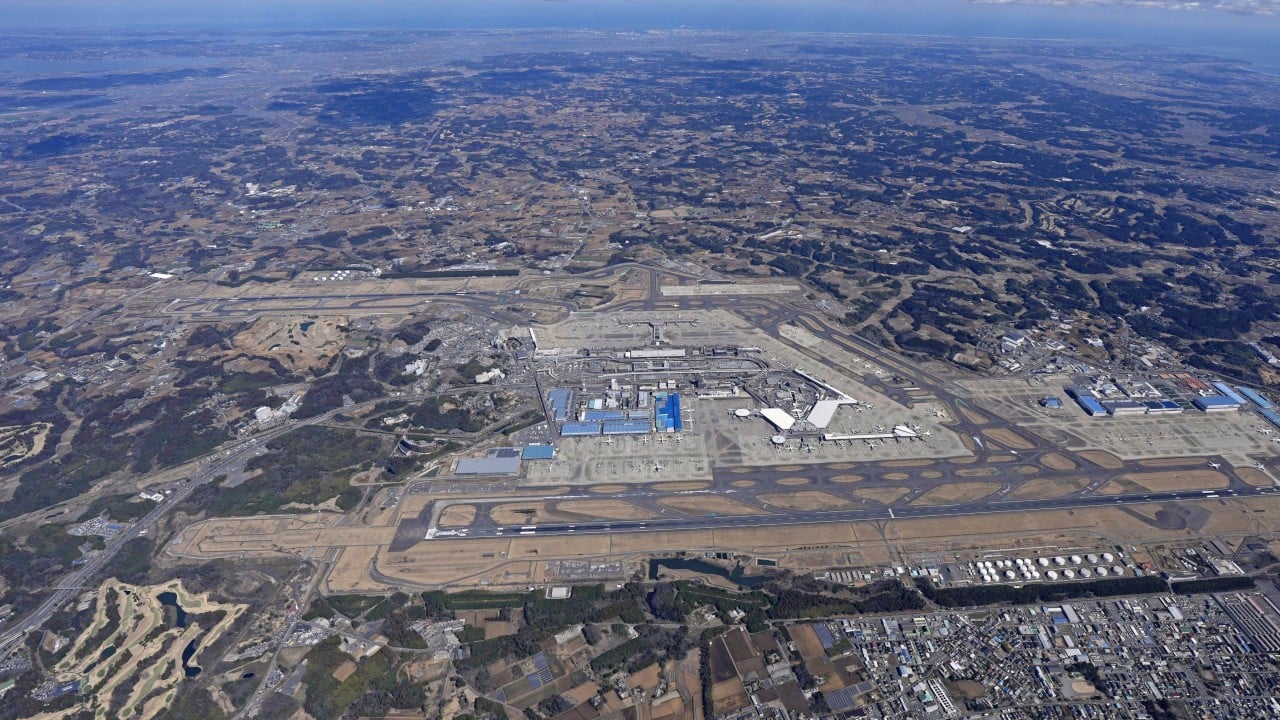
Decades later, the scars are literal. If you look at a satellite map of Narita, it looks broken. The taxiways curve awkwardly around "islands" of farmland that shouldn't be there. These are the holdouts. For fifty years, these families have refused millions of dollars to move. They live in the middle of the noise, a middle finger made of soil and sweat, pointed at the sky.
Now, the pressure is mounting again. The government wants a third runway. They want to extend existing ones. They want Narita to handle 500,000 flights a year. To do that, they need more land. And the law is moving in a direction that hasn't been seen in years: forced sales.
The Arithmetic of Displacement
Consider a hypothetical farmer named Kenji. He is 75. His father bought this land after World War II, clearing the brush by hand. To the Ministry of Land, Infrastructure, Transport and Tourism, Kenji’s farm is a coordinate on a blueprint. It is a mathematical obstacle to "national interest."
The logic is simple. Japan is aging. Its population is shrinking. Tourism is one of the few reliable growth sectors left. If Narita doesn't expand, Haneda will choke, and Tokyo will lose its status as a global hub to Seoul or Shanghai. In the cold light of a boardroom, one old man’s cabbage patch is not worth the loss of billions in trade.
But Kenji doesn't live in a boardroom. He lives in a house where the windows rattle every six minutes. He has endured the noise, the harassment, and the isolation. For him, selling isn't about the money. It’s about a sacred trust with the ancestors who bled for this dirt. When the government uses words like "compulsory land acquisition," it sounds like a clinical legal process. To the person on the ground, it feels like an execution.
The Invisible Stakes
The conflict at Narita is a microcosm of a much larger struggle playing out across the developed world. It is the friction between the "Anywheres" and the "Somewheres."
The "Anywheres" are the people in the business lounges. They value mobility, speed, and connectivity. To them, a runway is a bridge to opportunity. The "Somewheres" are rooted. They value heritage, local ecosystem, and the specific memory of a landscape. When these two worlds collide, the "Anywheres" almost always have the law on their side.
In the past, the Japanese government stepped back from the brink. In the 1990s, officials actually bowed in apology to the farmers, admitting that the original plan was high-handed and cruel. There was a period of "symbiosis." But that era of apology is ending. The hunger for growth has returned, and the patience for dissent has worn thin.
The real tragedy isn't just the loss of the land. It’s the erosion of the idea that someone can simply say "no" to the state.
The Cost of a Second Saved
We often talk about the "efficiency" of travel. We want shorter layovers and more direct flights. We rarely calculate the human cost of that saved hour.
To build the new runway, entire hamlets will be erased. It’s not just the holdouts this time; it’s the surrounding communities that will be made unlivable by the roar of increased traffic. The government offers compensation, yes. They offer new houses in quiet suburbs. But you cannot transplant a ninety-year-old’s sense of belonging.
When a community is dismantled, something invisible dies. The local shrine loses its practitioners. The specific knowledge of the soil—which corner gets the best morning sun, where the drainage fails in July—is evaporated. It is replaced by a flat, gray sheet of asphalt.
History tells us that when you push people into a corner, they fight. The original Narita protests weren't just about land; they became a lightning rod for every grievance against a government that felt like it was moving too fast toward a cold, industrial future. By reviving the threat of forced sales, the state is playing with fire. They are betting that the modern generation has forgotten how to rebel.
The Silent Night
There is a strange phenomenon at Narita. Because of the lingering sensitivity of the land dispute, the airport has a strict curfew. At midnight, the planes stop. The roar dies. For a few hours, the farmers can hear the insects in the grass.
It is a fragile peace.
The expansion plans seek to push that curfew further back. They want more hours. More noise. More "utilization." Every minute added to the flight schedule is a minute stolen from the sleep of a human being on the ground.
We are told this is progress. We are told that a nation must grow or die. But as you sit in the terminal, sipping a latte and checking your gate number, look out the window. Look past the fuel trucks and the baggage handlers. Somewhere out there, behind a high wire fence and a line of trees, a light is on in a farmhouse.
That house shouldn't be there. It is a miracle of defiance. It is a reminder that while a government can buy a man’s time and his labor, and eventually his land, it can never quite buy his silence.
The concrete is coming. It always does. The cranes are already visible on the horizon, skeletal and waiting. The government will get its runway, and the world will get its flights. But as the last of the Sanrizuka farmers are pushed off their plots, we have to ask ourselves: what happens to a culture when the "national interest" becomes a steamroller that ignores the heart?
The next time you land at Narita, listen closely. Below the whine of the engines, there is a silence waiting to be reclaimed. It is the silence of a patch of earth that remembers what it was like to grow something other than steel.