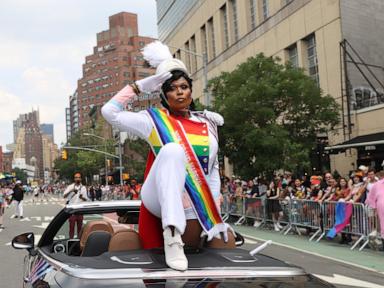
Every June, major news outlets publish identical photo essays showcasing vibrant, rainbow-drenched crowds dancing through the streets of New York, London, and Tokyo. These curated images present a specific narrative: a global celebration of unchecked progress, backed by multi-billion-dollar corporate sponsorships and municipal partnerships. But behind the bright pigments and floating confetti lies an escalating, high-stakes battle over the very soul of the movement. The glossy photos broadcasted to the world do not capture the profound ideological fracturing occurring behind the barricades.
The true state of global Pride is not a uniform party. It is a civil war between commercialized, state-sanctioned parades and a growing underground network of radical, non-permitted protest marches. While major festival boards rake in millions from defense contractors, fossil fuel giants, and predatory lenders, grassroots organizers are actively pulling the plug on corporate participation. They are reclaiming the movement’s origins as an anti-police riot, exposing a deep rift between Western commercial complacency and the lethal realities faced by activists outside the affluent bubble.
The Monetization of Radical History
To understand how a liberation movement transformed into a highly profitable marketing season, one must look at the shifting financial structures of major organizing committees. Interpride, the international organization that coordinates WorldPride, oversees events that generate hundreds of millions of dollars in local economic impact. What began at the Stonewall Inn in 1969 as a spontaneous uprising against systemic state violence has been neatly packaged into a tourist attraction.
Municipalities view these events primarily through the lens of economic optimization. Hotels, bars, and airlines experience massive demand surges. To secure the permits required to shut down major metropolitan arteries for a day, organizing committees face skyrocketing security and logistical costs imposed by city governments. A grassroots committee cannot easily afford a million-dollar city bill for sanitation and policing without external help.
Enter corporate capital. Over the past twenty-five years, the funding model shifted fundamentally. Corporations realized that the purchasing power of this specific demographic—often referred to in marketing circles as the "pink dollar"—was immense and fiercely loyal. Sponsorship packages for tier-one festivals now cost up to six figures per float. In exchange, brands receive prominent logo placement, marching slots near the front of the procession, and the highly coveted cultural clearance that protects them from accusations of discrimination.
This financial dependence creates a distinct conflict of interest. When an organizing board depends on a multinational bank or a major airline to clear its municipal debts, the event's political edge is inevitably blunted. Radical demands for systemic healthcare reform, housing equity, and decriminalization are quietly replaced by palatable, generalized slogans about love and acceptance. The parade ceases to be a challenge to power; it becomes a validation of the existing economic order.
The Underground Counter Movement
The response to this hyper-commercialization has been quiet but fierce. In major cities across the globe, alternative marches are drawing tens of thousands of participants who refuse to walk alongside corporate floats. These counter-demonstrations operate under various names—the Queer Liberation March in New York, Radical Pride in various European hubs, and independent grassroots actions across Latin America.
They share a strict set of operating principles that contrast sharply with the main parades.
- Zero Corporate Sponsorship: No logos, no branded merchandise, and no financial contributions from corporate entities are permitted under any circumstances.
- No Police Presence: Organizers refuse to coordinate with law enforcement, relying instead on internal community safety teams and de-escalation training.
- No Fenced Barricades: Traditional parades force spectators behind metal police barriers, creating a stark division between performers and the public. Alternative marches occupy the streets dynamically, eliminating the barrier entirely.
- Explicitly Political Mandates: Banners focus on immediate, material issues such as systemic discrimination, immigrant detention, and trans healthcare access rather than abstract marketing taglines.
Consider the structural contrast. A mainstream parade requires participants to register months in advance, pay wristband fees, and pass through airport-style security checkpoints managed by state law enforcement. The alternative march simply occupies a public square, moving through the city as an unpredictable, fluid political statement.
This is not merely an aesthetic preference. It is a tactical rejection of the idea that civil rights should be negotiated through public relations departments. Grassroots activists argue that the inclusion of police contingents and corporate sponsors in official parades actively harms the most vulnerable members of their community, who remain disproportionately targeted by state surveillance and economic inequality.
The Global Illusion of Safety
The standardized photo galleries published by Western media outlets create a dangerous illusion of universal safety. A viewer scrolling through images of a colorful festival in Stockholm or Toronto might easily conclude that the global struggle is largely won, leaving only minor legal adjustments to be made. This perspective is a luxury born of extreme geographic and economic privilege.
Outside of a few dozen secular, high-income democracies, organizing any public demonstration remains an act of extreme physical bravery. In dozens of jurisdictions across Eastern Europe, Africa, the Middle East, and Asia, state authorities utilize sophisticated surveillance apparatuses to track, detain, and prosecute organizers.
| Region | Primary Organizing Hurdle | State Mechanism Used |
|---|---|---|
| Eastern Europe | Public assembly bans | Anti-propaganda legislation |
| East Africa | Violent vigilante crackdowns | Colonial-era penal codes |
| Middle East | Digital entrapment campaigns | Cybercrime and morality laws |
| Southeast Asia | Bureaucratic denial of permits | National security directives |
In these environments, there are no corporate floats or celebrity endorsements. Activists frequently change meeting locations at the last minute to evade plainclothes intelligence officers. They utilize encrypted communication channels to coordinate small, lightning-fast public actions that last only a few minutes—just long enough to photograph a banner and upload it to international media before the riot police arrive.
Even within nations that celebrate commercialized festivals, the legal landscape is fracturing rapidly. The proliferation of state-level legislative bans targeting drag performances, trans healthcare, and inclusive school curricula in the United States demonstrates that legal gains are highly reversible. The corporate entities that paint their social media logos in rainbow hues each June frequently donate millions of dollars to the political campaigns of the very lawmakers drafting these restrictive bills. This dual-track strategy allows companies to extract profit from a progressive consumer base while simultaneously funding a conservative legislative agenda that protects their tax structures.
The Hard Logistics of Moving Forward
The romanticized view of activism suggests that passion alone can sustain a movement. The reality is a matter of cold logistics. As the divide between the commercial factions and the radical factions deepens, the entire movement faces a structural crisis that cannot be resolved with platitudes.
Mainstream organizing committees are finding themselves trapped in an unsustainable cycle of rising costs. As security requirements intensify and municipal fees escalate, these boards become even more dependent on corporate capital to avoid bankruptcy. If they alienate their corporate patrons by allowing radical anti-war or anti-capitalist contingents to take center stage, the funding vanishes, the city permits are denied, and the event ceases to exist in its current form.
Conversely, the underground, non-permitted marches face distinct vulnerabilities. Relying entirely on mutual aid and volunteer labor makes long-term institutional survival incredibly difficult. Without legal permits, participants face the constant risk of arrest, dynamic crowd control tactics, and physical violence from counter-protestors. Mutual aid funds can cover medical supplies and legal defense for a time, but they cannot easily scale to match the massive logistical infrastructure required to protect large crowds in hostile urban environments.
This leaves the movement at a permanent crossroads. The path of corporate integration offers safety, immense public visibility, and financial stability, but it demands the total elimination of genuine political defiance. The path of radical autonomy preserves historical integrity and centers the most marginalized voices, but it operates under constant threat of state suppression and financial exhaustion.
The glossy media imagery will undoubtedly continue to focus on the corporate spectacle, because a highly sanitized, colorful party is easy to monetize and simple to cover. But the real trajectory of the movement is being written by the people walking away from the branded floats, stepping past the metal police barriers, and moving into unpermitted streets to face an uncertain future.