The air in a VA hospital wing doesn't smell like victory. It smells of antiseptic, floor wax, and the metallic tang of blood that has been scrubbed but never quite forgotten. For those who have actually stood in the mud of a foreign theater, the "smell of war" isn't a poetic metaphor to be tossed around in a soundbite. It is a physical weight. It is the scent of burning trash, diesel exhaust, and the copper-sweet aroma of a friend’s life leaking onto a dusty road.
When a politician stands behind a mahogany podium and claims to know that scent without ever having worn the uniform, something deeper than a political gaffe occurs. A bridge collapses.
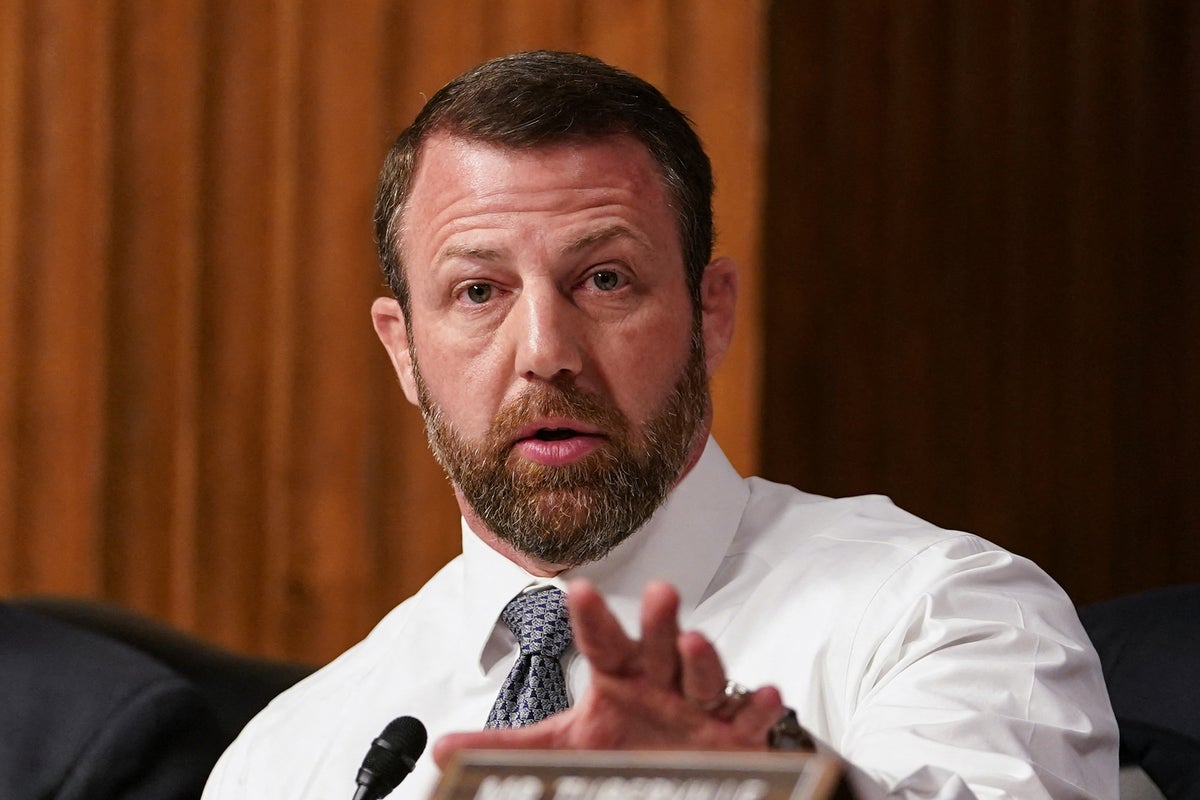
Senator Markwayne Mullin recently found himself at the center of a firestorm for doing exactly that. During a heated exchange, he invoked the sensory experience of combat to bolster his authority on foreign policy. The blowback was instantaneous and visceral. It wasn't just partisan bickering; it was the collective groan of a veteran community that knows the difference between a costume and a calling.
Words have weight. In the halls of power, they are the only currency that matters. But when you spend currency you haven't earned, you go into a moral deficit.
The Geography of the Uninitiated
Imagine a man who has studied every map of the Himalayas. He knows the elevation of every peak, the average wind speed at the North Col, and the chemical composition of the snow. He speaks with authority on the dangers of frostbite. But he has never felt his lungs scream for oxygen at twenty-six thousand feet. He has never watched his fingernails turn blue.
If that man starts telling a Sherpa what it "feels like" to be on the mountain, the Sherpa doesn't just get annoyed. He loses trust.
This is the chasm currently widening in American discourse. We have a political class increasingly adept at mimicking the language of sacrifice while remaining insulated from its consequences. Mullin, a businessman and former MMA fighter, is undoubtedly a person of grit. But grit in a cage is not the same as grit in a trench. One is a choice made for sport; the other is a duty accepted for a nation.
The criticism leveled against the Senator wasn't about his policy positions. It was about the appropriation of a sacred sensory memory. War is a transformative trauma. To claim its "smell" as a rhetorical device is to treat a tragedy as a prop.
The Invisible Stakes of Rhetoric
Why does it matter if a Senator uses a bit of flowery language?
Because policy is the child of perception. If the people making the decisions about where to send young men and women believe they already understand the "smell" and "feel" of the outcome, they become dangerous. They lose the healthy fear that should accompany the power to declare or fund a conflict.
History shows us that the most hawkish voices often belong to those who stayed home. They see war as a grand chess match—a series of tactical maneuvers and "smells" that can be summoned for a press conference. They miss the human element: the shaking hands of a nineteen-year-old holding a rifle, the silence of a house when a telegram arrives, and the decades of quiet struggle that follow the homecoming.
When a leader who has never served claims the sensory authority of a soldier, they are practicing a form of "stolen valor Lite." It isn't a crime under the law, but it is an offense against the social contract. It tells the veteran that their unique, harrowing experience is actually quite common—so common, in fact, that a politician can pick it up and wear it like a lapel pin.
The Anatomy of an Apology That Never Came
True authority doesn't need to be shouted.
Consider the veterans who sit in our legislature. Often, they are the ones most reluctant to describe the "smell of war." They know that some things are beyond the reach of English adjectives. They understand that to speak of it flippantly is to diminish it.
The public reaction to Mullin wasn't just about his specific words. It was a reaction to a culture of performance. We live in an era where "vibes" replace "vocation." If you look the part, talk the part, and get angry at the right people, the assumption is that you are the part. But the military is one of the few remaining institutions where the barrier to entry is physical, mental, and documented. You cannot "identify" as a veteran. You either are, or you aren't.
By claiming the sensory memories of the battlefield, Mullin tried to bypass the gate. He tried to claim the wisdom of the scar without the pain of the wound.
The Ghost in the Room
There is a hypothetical soldier we should consider. Let's call him Miller.
Miller doesn't care about Senator Mullin’s polling numbers. Miller is currently sitting in a small apartment in a suburb of Tulsa or Oklahoma City. He’s trying to figure out why a car backfiring makes his stomach drop. When he hears a man on television talk about the "smell of war" to win a debate point, Miller feels a peculiar kind of loneliness.
It is the loneliness of being seen but not understood. It is the realization that his most difficult years are being used as a seasoning for someone else’s political steak.
The "smell" Mullin referred to wasn't a factual observation. It was a brand. In the modern political landscape, "toughness" is a product. To sell it, you need the right imagery. You need the tactical gear, the rugged backdrop, and the evocative language of the front lines. But without the DD-214 to back it up, the brand is just a thin veneer.
The Fragility of Truth in Public Service
We are losing the ability to say "I don't know."
There is immense power in a politician saying, "I have never served, so I cannot imagine the horrors our troops face. But I will listen to those who have." That statement builds a bridge. It acknowledges a limit. It shows a respect for the truth that transcends party lines.
Instead, we get a theater of the absurd where everyone is an expert on everything, and every experience is up for grabs. If we allow the language of war to be colonized by those who have never fought, we lose the ability to describe war at all. It becomes just another word, like "synergy" or "robust," drained of its blood and its meaning.
The backlash against Mullin is a hopeful sign. It suggests that, despite our deep divisions, there is still a baseline of respect for the reality of service. It suggests that the public can still tell the difference between a man who has smelled the cordite and a man who has only smelled the makeup in a green room.
The next time a leader tries to describe the scent of a battlefield they never walked, we should ask them to describe the silence of the aftermath instead. Silence is much harder to fake. It requires a humility that isn't found in a talking point. It requires the realization that some smells are meant to be carried only by those who paid the price to breathe them in.
The veteran in the VA wing knows the smell. The gold star mother knows the smell. The senator in the suit is just catching a whiff of his own ambition.