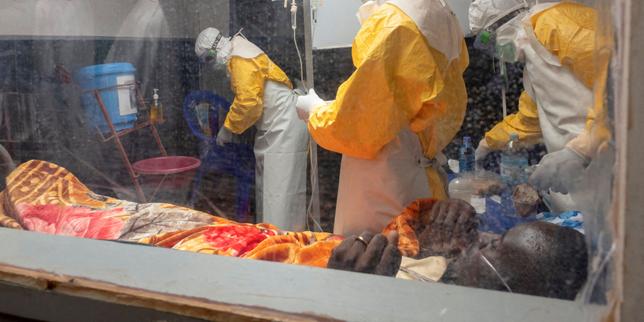
Every major health desk covered the grim milestone in the Democratic Republic of the Congo. The headlines practically wrote themselves. Another outbreak crosses another horrific threshold, the death toll climbs past four thousand, and international donors scramble to throw money at the body count. We are fed the same tired narrative about an unstoppable pathogen tearing through Central Africa, leaving public health experts wringing their hands while local populations suffer in silence.
It is lazy journalism. Worse, it is deadly policy. Recently making headlines in this space: Measuring Climate Mortality Why The Standard Metrics Are Broken.
Focusing exclusively on the final mortality tally misses the entire architecture of why outbreaks in Kivu and Ituri behave the way they do. I have watched international response teams deploy with military precision, armed with millions of dollars in cold-chain logistics and experimental therapeutics, only to watch local communities actively hide patients from them. The standard narrative blames ignorance, fear, and misinformation. That explanation is insulting. People are not fleeing treatment centers because they are superstitious. They are fleeing because the international public health apparatus treats outbreaks like biological containment zones rather than human crises embedded within a profound political vacuum.
The Misdiagnosis of Mistrust
Public health literature loves to talk about community engagement as a nice-to-have PR strategy. If villagers are throwing stones at ambulances, the conventional diagnosis is a failure of communication. You need better radio spots. You need respected local elders to vouch for the doctors. You need pamphlets explaining viral load in Swahili. Further insights regarding the matter are detailed by World Health Organization.
This is fundamentally backwards.
When an international medical brigade rolls into a marginalized region escorted by armed state forces or UN peacekeepers, the local population does not see healers. They see the enforcement arm of a state that has exploited, taxed, and abandoned them for generations. The resistance to Ebola response units is not a medical skepticism; it is a political referendum. When your village has lacked clean water, passable roads, and basic primary healthcare for decades, the sudden arrival of millions of dollars for one specific hemorrhagic fever—while children continue to die of malaria and measles in droves—looks less like humanitarian aid and more like a targeted foreign occupation.
We need to stop calling this a community relations problem. It is a structural governance failure. Until global health bodies understand that virus containment is inextricably tied to political legitimacy, every dollar spent on advanced therapeutics will bounce off a wall of entrenched cynicism.
The Myth of the Monolithic Epidemic
Another persistent fiction is the idea of a unified national health crisis. The Democratic Republic of the Congo is roughly the size of Western Europe, featuring shattered infrastructure and multiple active localized conflicts. Treating an outbreak in a densely populated trading hub like Beni the same way you treat a forest encampment near the Ugandan border is administrative malpractice.
Epidemiological models often treat human populations like billiard balls on a frictionless table. In reality, population movement in eastern Congo is dictated by militia checkpoints, artisanal mining rushes, and agricultural cycles. When responders impose quarantine zones without securing supply lines for basic food and commerce, they force people into hiding. A farmer cannot choose between starving in a locked-down neighborhood or slipping past a checkpoint to feed his family. He will take his chances with the virus every single time. Survival economics will always defeat public health mandates if the two are placed in opposition.
The data proves this out. The moments when transmission rates actually plummeted were not when the most advanced treatments arrived in central clinics. They dropped when local civil society groups took over contact tracing, decentralized care into neighborhood health posts, and decoupled disease surveillance from state security forces.
What Actually Works
If we want to stop treating the symptoms of medical bureaucracy while ignoring the disease, a few uncomfortable truths must be accepted.
First, stop centralizing care in fortress-like treatment centers. When a family member enters a high-security isolation ward and often emerges days later in a body bag, without traditional mourning rites, the psychological incentive is to hide the sick. Decentralizing low-level care and empowering local health workers who speak the language, understand the social structures, and hold actual community trust is the only model that yields compliance.
Second, tie epidemic response to structural infrastructure investment. You cannot separate a viral outbreak from the absence of potable water and sanitation. Pouring resources into emergency response while ignoring the foundational public health deficit is like bailing out a sinking ship with a thimble while refusing to patch the hull.
Third, remove armed actors from the clinical workflow. Health workers should never be coupled with military enforcement. The moment a vaccine or a contact-tracing team requires armed guards, the mission has already failed on a fundamental human level.
The four-thousand-death milestone is a tragedy, but it is also an indictment. It measures not just the lethality of a filovirus, but the bankruptcy of a global health model that refuses to look past the microscope. Until we treat the political and structural rot beneath the pathogen, we will keep counting bodies while wondering why the numbers refuse to drop.