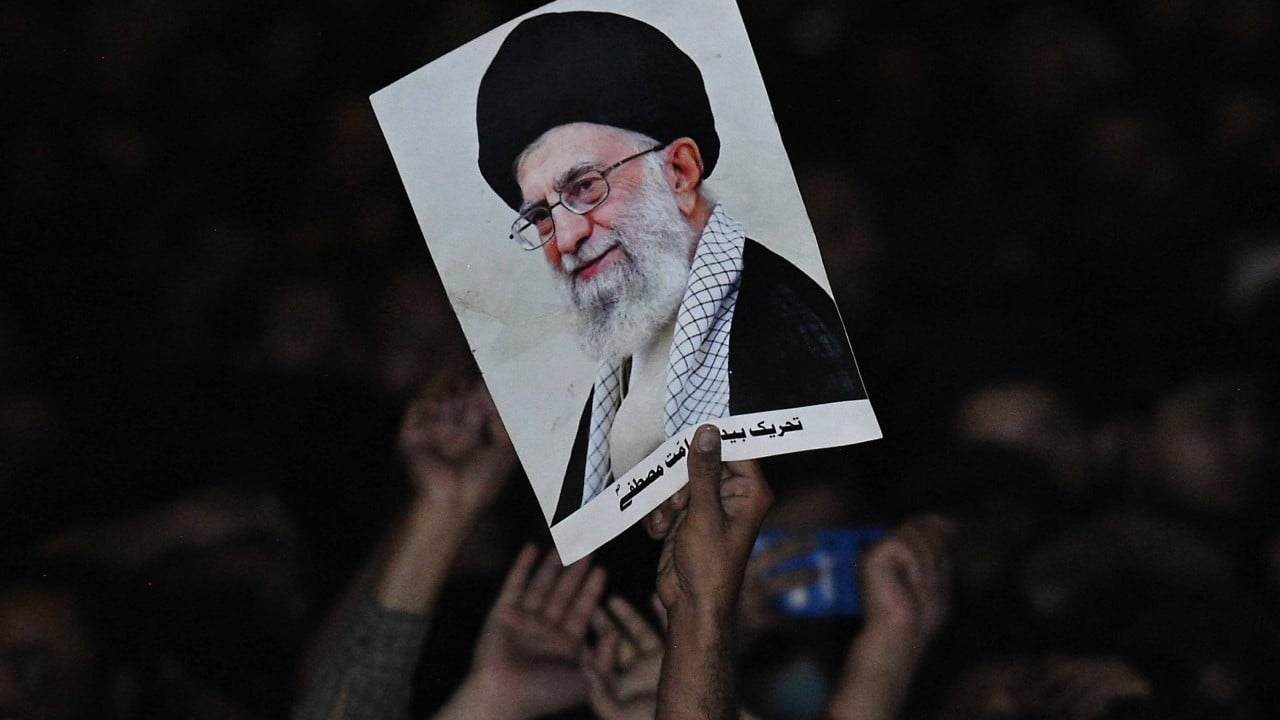
The death of ten individuals in Karachi during pro-Iran demonstrations is not a localized lapse in law enforcement but a failure to calibrate security responses to the mechanics of transnational ideological spillover. When domestic protests align with the foreign policy objectives of a regional power—specifically the Iranian "Axis of Resistance" framework—the resulting unrest operates under a different set of physical and psychological constraints than typical civil disobedience. The escalation in Karachi, mirrored by simultaneous eruptions across major Indian urban centers, reveals a synchronized kinetic pattern that leverages sectarian identity as a force multiplier for geopolitical signaling.
The Triad of Escalation Factors
The transition from peaceful assembly to a mass-casualty event requires the convergence of three specific operational variables. Meanwhile, you can find similar events here: The Cold Truth About Russias Crumbling Power Grid.
- Proximal Friction Points: In Karachi’s dense urban geography, the proximity of protest routes to high-value diplomatic assets or rival sectarian enclaves creates a compressed "kill zone" where crowd control tactics become ineffective.
- Information Lag: The delay between the spark of violence in one province and the reactionary mobilization in another—often referred to as the contagion effect—is now near-zero due to encrypted messaging platforms that bypass traditional media filters.
- The Martyrdom Incentive: Pro-Iran mobilizations often incorporate a theological framework where physical confrontation is viewed as a merit-based sacrifice, fundamentally altering the risk-reward calculus for the individual protester and rendering standard deterrents, such as tear gas or water cannons, obsolete.
Structural Vulnerabilities in the Karachi Security Grid
Karachi’s failure to contain the violence stems from a reliance on static defense rather than fluid intervention. Security forces frequently treat these protests as monolithic entities, ignoring the internal hierarchy of the crowd.
The kinetic breakdown in Karachi can be modeled as a Cascading Failure of De-escalation. The first fatality typically acts as the "ignition event," which transforms a grievance-based protest into a revenge-based riot. In this specific instance, the presence of armed elements within the protest ranks suggests a high degree of tactical infiltration. When state actors use live ammunition to disperse a crowd that contains ideologically committed vanguards, the state inadvertently provides the very "martyrs" required to sustain a long-term insurgency. To explore the bigger picture, we recommend the recent article by NBC News.
The India Pakistan Divergence
While the Karachi events resulted in high lethality, the protests across Indian cities like Mumbai and Lucknow followed a different trajectory of containment. This divergence is explained by the Secularization of Public Order. In the Indian context, the state frequently utilizes preemptive administrative detention and digital blackouts to sever the logistics of the protest before it reaches the street. Pakistan’s hesitation to deploy similar measures stems from the deep-seated integration of these ideological groups within the domestic political fabric, creating a "paralysis of enforcement."
Geopolitical Signaling and the Cost of Unrest
These protests serve as a low-cost, high-impact tool for Tehran to project influence without direct military engagement. By activating "sleeper" ideological networks in Karachi and India, Iran demonstrates its capability to destabilize the internal security of neighboring nuclear powers.
The economic cost of this unrest is quantifiable through the Infrastructure Disruption Index. Karachi, as Pakistan’s primary maritime and financial hub, suffers a compounding loss when protest-related shutdowns occur.
- Logistical Friction: Blockades of the Port Qasim and Karachi Port arteries result in a direct hit to daily container throughput.
- Capital Flight: Recurrent sectarian violence lowers the threshold for foreign direct investment (FDI), as the "stability premium" for operating in Karachi increases.
- Human Capital Erosion: The loss of ten lives, particularly if those individuals were productive members of the urban workforce, represents a permanent depletion of the city’s socioeconomic potential.
Tactical Architecture of the Protests
The synchronized nature of the protests in Pakistan and India suggests a centralized command-and-control structure, likely operating through digital intermediaries.
The Logistics of Mobilization
Pro-Iran groups utilize a "cell-based" mobilization strategy. Unlike traditional political parties that rely on mass rallies organized weeks in advance, these groups can pivot from religious gatherings to political protests within hours. This agility is achieved through a pre-existing network of community centers and religious schools that provide the physical infrastructure for rapid deployment.
The Role of Counter-Intelligence
The failure to intercept the escalation in Karachi points to a critical gap in signals intelligence (SIGINT) regarding non-state actors. Security agencies appear focused on conventional militant threats, often overlooking the "grey zone" activities of legitimate political organizations that harbor radicalized fringes.
The Logistics of Crowd Lethality
When analyzing why ten people died, the physics of the environment must be considered. In the narrow corridors of Karachi’s older districts, the Crowd Crush Factor becomes a lethal variable. When security forces deploy kinetic energy (baton charges or gunfire) into a high-density, enclosed space, the resulting panic creates a stampede that is often as deadly as the weapons themselves.
The "force-to-space" ratio in Karachi’s protest zones is frequently exceeded. If 50,000 people are funneled into a street designed for 5,000, any sudden movement triggers a lethal chain reaction. The Karachi fatalities appear to be a mix of ballistic trauma and blunt force injuries, suggesting that the "safety valve" of the protest route was either non-existent or intentionally blocked.
Strategic Divergence in Indian Responses
India’s management of pro-Iran sentiment is dictated by its delicate balancing act between Tehran and its strategic partners in the West and the Middle East. The Indian state allows for symbolic protest—preserving its image as a pluralistic democracy—while simultaneously using a "containment ring" of paramilitary forces to prevent the movement from gaining any territorial foothold.
The Karachi model is reactionary; the Indian model is preventative. By mapping the social media influencers who lead these movements, Indian agencies can apply "surgical" pressure to the leadership, effectively decapitating the movement's logistical head before the body reaches the street.
The Risk of Sectarian Feedback Loops
The primary danger of the Karachi incident is not the initial ten deaths, but the Sectarian Feedback Loop it initiates. In a hyper-polarized environment, a pro-Iran protest inevitably triggers a counter-mobilization from rival sectarian groups. This creates a permanent state of low-level urban warfare that the police are ill-equipped to manage.
This loop functions as follows:
- Action: A pro-Iran protest occurs, resulting in casualties and state-sponsored "martyrs."
- Reaction: Rival groups perceive the protest as an expansion of Iranian influence and launch counter-demonstrations.
- Escalation: The state is forced to intervene against both sides, exhausting its resources and losing legitimacy with both constituencies.
Operational Limitations of Current Security Frameworks
The standard operating procedures (SOPs) for the Sindh Police and other regional law enforcement agencies are derived from mid-20th-century riot control theories. These theories assume a rational crowd that will disperse when faced with escalating levels of pain or discomfort. However, when a crowd is fueled by transnational religious fervor, the psychological baseline shifts.
The current frameworks lack:
- Real-Time Predictive Modeling: Using AI-driven sentiment analysis to predict where a crowd will congregate 24 hours before the first person arrives.
- Non-Lethal Saturation: The use of advanced technological barriers and acoustic deterrents that prevent physical contact between protesters and security personnel.
- Intelligence Integration: The failure to link the domestic protest leadership with their international financial and ideological sponsors.
Mapping the Financial Underpinnings
Unrest of this scale is not organic; it requires significant funding for transport, signage, communication tools, and medical support. The "hawala" system and other informal value transfer systems (IVTS) likely facilitate the movement of funds from external sponsors to local organizers. Tracking these financial flows is the only way to move from managing the symptoms of the protest to neutralizing the cause.
The economic disruption in Karachi must be viewed through the lens of Strategic Sabotage. If the goal is to signal to the central government that its foreign policy alignment is unacceptable, then paralyzing the nation’s economic heart is the most effective method. The loss of life is, in this cold calculation, a necessary byproduct to ensure the event stays in the international news cycle.
Calibrating the Response
The resolution of this crisis cannot be found in traditional policing. It requires a fundamental shift in how the state views the intersection of religion and geopolitics.
The immediate tactical requirement is the implementation of Dynamic Exclusion Zones. Rather than defending a specific building (like a consulate), security forces must move the friction point to the periphery of the city, away from high-density residential and commercial hubs. This requires a mobility-based strategy where the police use armored transport to outpace the crowd’s movements.
Furthermore, the state must address the "Information Vacuum." When the government remains silent during the first four hours of an outbreak, the narrative is seized by radicalized influencers on TikTok and X (formerly Twitter). This narrative usually frames the state as an "enemy of the faith," which justifies further violence. The government must deploy an aggressive, factual counter-narrative in real-time to strip the ideological cover from those inciting violence.
The Karachi deaths represent a failure of intelligence to anticipate the volatility of the "martyrdom" narrative in a high-density urban environment. Future stability depends on the state’s ability to decouple domestic religious expression from foreign geopolitical agendas. This is achieved not through the barrel of a gun, but through the systematic dismantling of the logistical and financial pipelines that turn a theological affinity into a kinetic threat.
The strategic play now is a transition to "Intelligence-Led Policing" where the focus shifts from the street to the server—monitoring the digital orchestration of these movements and intervening at the point of funding and command, rather than at the point of maximum physical friction.