The air in Florida doesn’t just sit; it clings. On that afternoon, the humidity felt like a physical weight, the kind that makes the collar of a dress shirt go limp within minutes. Donald Trump stood on the manicured green of his golf course, a place where the world usually narrows down to the physics of a dimpled white ball and the quiet thud of a well-placed iron shot. But the silence wasn't peaceful. It was hollow.
Ryan Wesley Routh was waiting in the brush. Recently making headlines in this space: The Sprint Fallacy Why Nuclear Containment in Iran is a Strategic Ghost.
We often talk about political violence as a series of data points—dates, charges, calibers, and court filings. We see the headline: Suspect charged with attempted assassination. We process the fact that a 58-year-old man allegedly poked the barrel of an SKS-style rifle through a chain-link fence. We note the distance, the Secret Service response, and the swiftness of the arrest on I-95. But the data hides the jagged reality of the moment. It hides the sheer, terrifying fragility of a republic where the distance between a normal Tuesday and a national catastrophe is measured in the few hundred yards of a sightline.
The metal of the fence was hot. The backpack hung with ceramic plates was heavy. Routh wasn't just a man with a gun; he was the physical manifestation of a fever that has been burning through the American psyche for years. He represented the point where rhetoric stops being sound and starts being a projectile. Additional details into this topic are covered by Al Jazeera.
The Anatomy of a Narrow Escape
When the Secret Service agent spotted that barrel peeking through the foliage, the world shifted. It wasn't a movie. There was no slow-motion dive. There was the sharp, percussive crack of a duty weapon and the frantic rustle of a man fleeing into a Nissan SUV.
Consider the logistical terrifying simplicity of it all. To disrupt the course of global history, Routh didn't need a manifesto or a battalion. He needed a Go-Pro, some digital files, and a willingness to sit in the dirt for twelve hours. The criminal complaint later revealed he had been lurking since roughly 2:00 AM. While the rest of the country slept, while the former President was likely dreaming of rallies or polls, a man was sitting in the dark with a rifle, watching the sun rise over the palm trees, waiting for a target to enter the frame.
The charges filed against him—attempted assassination of a major presidential candidate—carry the weight of a lifetime in a cage. But the legal papers don't capture the adrenaline. They don't capture the way a witness’s hands shake when they realize they just took a photo of a getaway car that might have changed the century.
The Late Night Shield
While the federal prosecutors were busy cataloging evidence in West Palm Beach, another kind of drama was unfolding three thousand miles away in a darkened television studio. This is where the American story gets complicated. We are a nation that pivots from the brink of tragedy to the comfort of the monologue in the span of a commercial break.
Jimmy Kimmel stood before his audience, the blue lights of the set reflecting the usual late-night gloss. But the air was different. He had a task that felt increasingly impossible: how do you find the humor in a week where the Secret Service is firing shots at a would-be assassin?
The tension centered on a joke Kimmel had made regarding Melania Trump. In the hyper-oxygenated atmosphere of a post-attempted-assassination news cycle, every word is a potential spark. Critics were screaming. Supporters were defensive. Kimmel, a man whose career is built on the sharp edge of a punchline, found himself explaining the mechanics of a joke while the secret service was explaining the mechanics of a security perimeter.
"I’m not the one who’s the problem," he essentially argued, though in more colorful, televised terms. He was pointing out the absurdity of the outrage. He was navigating the bizarre reality where a comedian's monologue is scrutinized with the same intensity as a sniper’s nest.
It is a strange, uniquely modern vertigo. We watch the news of a rifle in the bushes, and then we argue about whether a late-night host was "too mean" to the former First Lady. We treat the bullet and the joke as if they belong to the same category of offense. They don't. One is a threat to life; the other is a threat to our comfort. Yet, in the digital colosseum, they both bleed the same way.
The Invisible Stakes
Why does this matter? Why should we care about the intersection of a criminal complaint and a comedy set?
Because it reveals the disintegration of our shared floor.
When a man decides that the only way to participate in the political process is through a scope, it’s a failure of the imagination. It’s a sign that the story we tell ourselves about how we solve problems—through debate, through voting, through messy, frustrating compromise—has broken down for someone. Routh wasn't a phantom. He was a man who had been vocal, who had traveled to Ukraine, who had written a book, who had tried to find a "cause" that was bigger than his own quiet life. He was looking for a narrative to belong to, and he chose the most violent one available.
On the other side, the comedy-club-as-political-battlefield shows how thin our skin has become. We have lost the ability to distinguish between a satirist’s needle and a murderer’s blade. We react to both with the same high-pitched frequency of indignation.
Imagine a bridge. On one side, you have the raw power of the state and the terrifying potential of political violence. On the other, you have the culture—the jokes, the memes, the dinner-table arguments. Usually, the bridge is long and sturdy. But lately, it feels like we’re all standing right in the middle, and the supports are creaking.
The Weight of the Evidence
Federal investigators found a handwritten note in a box Routh had dropped off months earlier. It was a chilling insurance policy against failure. "This was an assassination attempt on Donald Trump but I failed you," it read. He offered money to whoever could "finish the job."
That isn't the language of a "lone wolf" in the traditional sense. It’s the language of a man who views himself as a character in a grand, tragic epic. He wanted to be the protagonist of a history book, even if he only made it into the footnotes of a court transcript.
The FBI agents who processed his phone found Google Maps searches from North Carolina to Florida. They found a trail of digital breadcrumbs that told the story of a man who had been planning this for a long time. It wasn't a snap decision. It was a slow, deliberate walk toward a fence line.
The Echo in the Room
As the court proceedings move forward, the political noise will only get louder. There will be more jokes from Kimmel, more rebuttals from the Trump campaign, and more frantic analysis from talking heads who get paid to tell us why we should be angry today.
But if you strip away the layers of partisan screaming, you are left with two images.
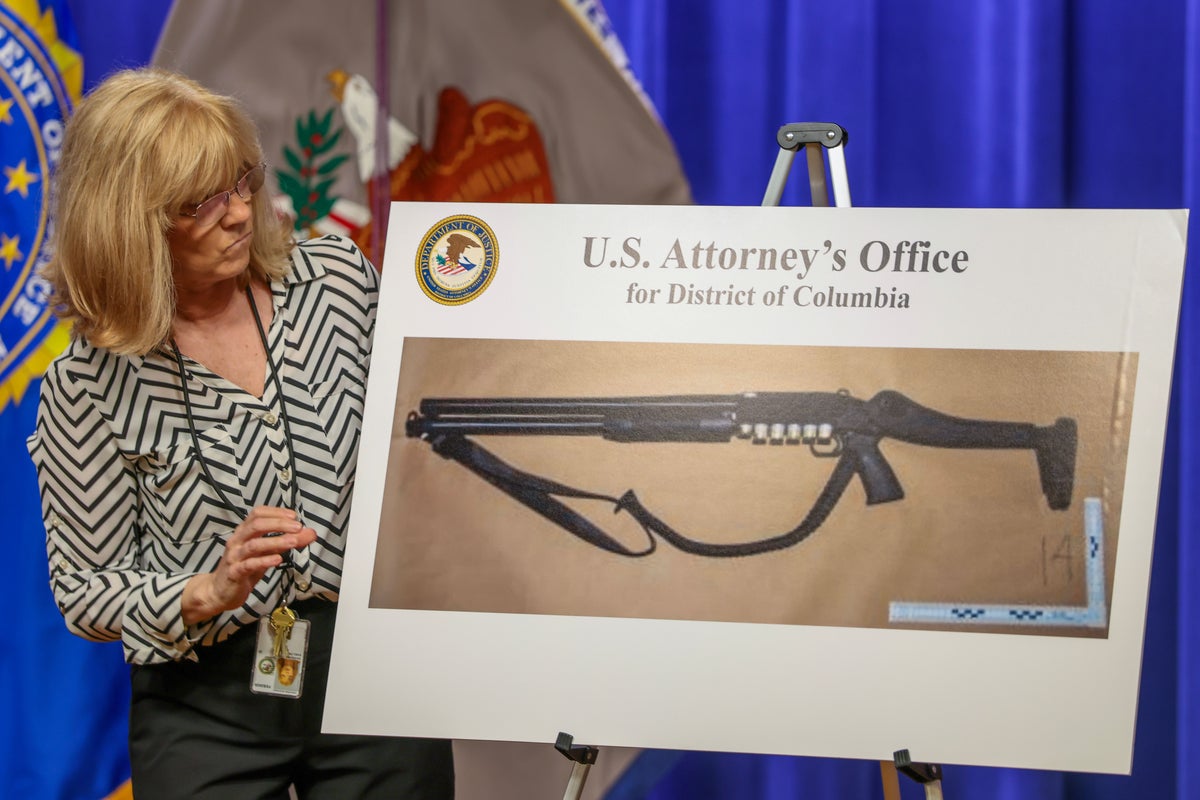
One is a rifle left in the grass, a silent testament to a tragedy that didn't happen but very nearly did. The other is a man on a stage, trying to make sense of a world where the jokes are treated like crimes and the crimes are treated like campaign fodder.
We live in the space between those two things. We live in the tension of a country that is trying to decide if it wants to be a place of laws and laughter or a place of scopes and silence. The tragedy isn't just that a man tried to kill a president; the tragedy is that we are no longer surprised by it. We have become accustomed to the smell of the gunpowder and the sting of the monologue.
The SUV sped away from the golf course, leaving behind the rifle and the ceramic plates. For a moment, the silence returned to the palms. But it wasn't the silence of peace. It was the heavy, breathless pause of a runner who has just tripped on the edge of a cliff and realized, with a sudden, sickening jolt, exactly how far down the drop really goes.
The trial will happen. The jokes will continue. The humidity in Florida will remain. But the sight of that barrel through the fence stays burned into the collective retina—a reminder that the distance between "lately" and "never again" is much shorter than any of us want to admit.