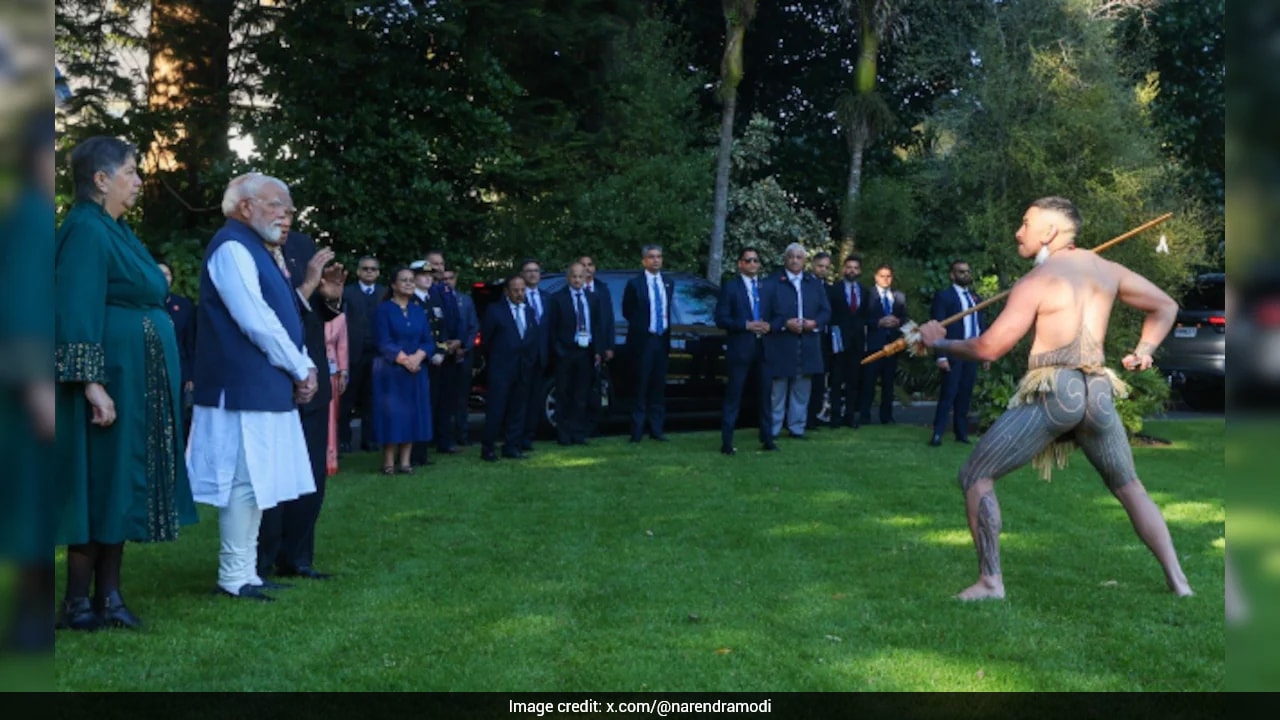
Mainstream media loves a good photo-op. When a foreign leader touches down, the script writes itself. There are flashing cameras, traditional garments, and solemn faces. The recent coverage of Indian Prime Minister Narendra Modi receiving a traditional Maori welcome in New Zealand followed this exact playbook. Commentators gushed over the deep mutual respect. Analysts claimed the ceremony marked a new era of bilateral cooperation.
It did nothing of the sort.
Geopolitics is not a cultural exchange program. The optics of a welcome ceremony cannot hide the cold reality of diplomatic stagnation. For over a decade, relations between New Delhi and Wellington have been stuck in an economic deadlock. Dressing up political inertia in indigenous tradition is a classic misdirection. It allows both governments to pretend they are making progress while avoiding the hard, uncomfortable work of real statecraft.
The Dairy Deadlock That Culture Can Not Fix
Strip away the ceremonial performances and you find an economic relationship that is remarkably thin. New Zealand wants access to India’s massive consumer market. Specifically, Wellington wants to export its dairy products. India, protective of its millions of small-scale farmers, has repeatedly shut that door.
This is not a minor disagreement. It is a fundamental structural wall.
+------------------------------------+------------------------------------+
| New Zealand's Trade Objective      | India's Protectionist Reality      |
+------------------------------------+------------------------------------+
| Open market access for dairy       | Safeguarding 150 million domestic  |
| and agricultural exports.          | dairy farmers from foreign influx. |
+------------------------------------+------------------------------------+
Wellington has spent years pushing for a high-quality Free Trade Agreement. New Delhi has made it clear that dairy is off the table. No amount of cultural goodwill changes the math of domestic politics in India. A politician in New Delhi will never sacrifice the livelihood of rural voters to please trade negotiators from Wellington.
I have watched trade delegations burn through millions of dollars chasing these illusions. They fly across the hemisphere, exchange gifts, smile for the cameras, and return with nothing but a joint statement full of empty platitudes. The mainstream analysis refuses to admit this fundamental truth: the trade talks are effectively dead, and they have been for years.
Weaponizing Indigenous Culture for Corporate PR
There is a deeper, more cynical mechanism at play here. Using indigenous ceremonies to grease the wheels of international diplomacy reduces sacred traditions to a corporate branding exercise.
The Maori welcome is a profound ritual of encounter, challenge, and peace. Yet, in the hands of government press secretaries, it becomes a tool to soften the image of hard-nosed political players. It creates a convenient distraction from the lack of substantive policy achievements.
When a state visit yields no new defense treaties, no trade breakthroughs, and no major immigration accords, the press release pivots entirely to culture. The media eats it up because visuals sell better than tariff schedules. This is a disservice to both the public and the culture being showcased. It treats ancient heritage as a cosmetic layer to cover up diplomatic failure.
The Flawed Premise of People Also Ask Queries
If you look at what people search regarding this relationship, the questions themselves reveal how thoroughly the public has been misled by this performance.
- How does cultural diplomacy strengthen New Zealand India ties? It does not. It merely hides the weakness of those ties. True diplomatic strength is measured in shared intelligence, integrated supply chains, and aligned voting patterns in international bodies. On those fronts, the needle is barely moving.
- Will this visit accelerate the Free Trade Agreement? Absolutely not. An FTA requires structural economic concessions that neither side is willing to make. Thinking a ceremony can bypass agricultural tariffs is like thinking a handshake can balance a budget.
- What is the strategic significance of the Modi New Zealand visit? The strategic significance is minimal compared to India's relationships with Washington, Canberra, or Tokyo. New Zealand is a secondary priority for New Delhi's foreign policy machine, which is focused heavily on the broader Indo-Pacific maritime theater.
The Asymmetry Nobody Wants to Mention
The biggest lie of bilateral diplomacy is the myth of equal partnership. New Zealand needs India far more than India needs New Zealand.
New Delhi is navigating a complex geopolitical chess match involving major global superpowers. It is managing border tensions, securing energy corridors, and positioning itself as the voice of the Global South. In that grand strategy, a small island nation focused primarily on exporting milk and apples simply does not command top-tier attention.
Wellington, on the other hand, is desperate to diversify its export markets to reduce its economic reliance on Beijing. This desperation blinds local policymakers. They mistake polite hospitality from Indian officials for genuine strategic alignment.
Consider the defense sector. While Australia and India are deeply integrated through security frameworks, New Zealand’s defense ties with India remain superficial. There are occasional naval visits and low-level dialogues, but little operational integration. The hard truth is that New Zealand's traditional independent foreign policy often sits uncomfortably with the aggressive, realpolitik approach currently favored by New Delhi.
Stop Celebrating the Smoke and Look at the Mirror
If New Zealand and India want a relationship that actually matters, they must stop hiding behind cultural performances.
First, New Zealand needs to drop its obsession with a comprehensive FTA that includes dairy. It is a fantasy. Instead, negotiators should focus on niche sectors where India actually wants cooperation: technology transfer, education, aviation, and specialized services.
Second, both nations must be honest about their strategic differences. New Zealand has historically been hesitant to take a hard line on maritime security in ways that align perfectly with India’s priorities. Acknowledging these differences is the only way to build a relationship based on reality rather than romance.
Relying on photo-ops is a lazy strategy. It creates a false sense of accomplishment while the rest of the world builds real, concrete alliances. The ceremony in New Zealand was a beautiful display of heritage, but as a diplomatic milestone, it was completely hollow. Stop reading the government press releases. Look at the trade data, track the defense spending, and judge the relationship by its substance, not its staging.



