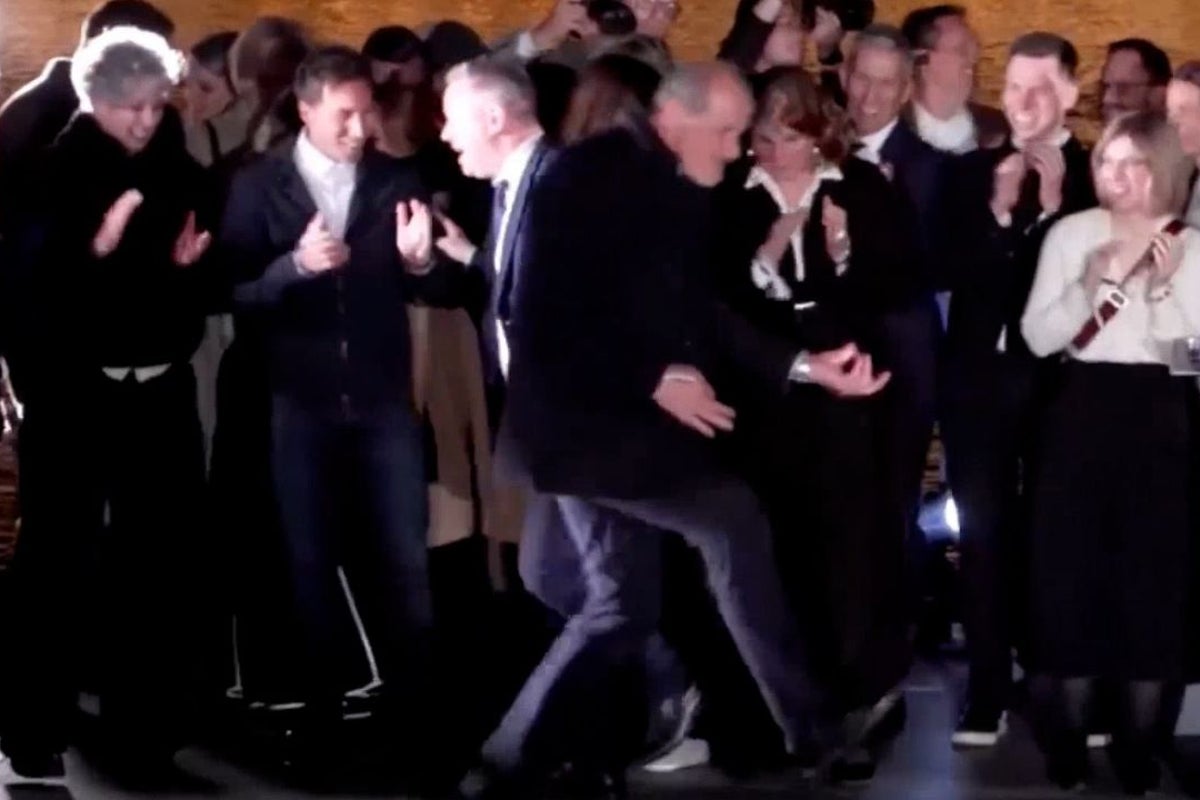
The media wants you to look at the dancing. They want you to stare at the viral clip of a Hungarian lawmaker cutting a rug in the wake of Viktor Orban’s supposed political demise. It’s an easy narrative. It’s clean. It suggests that a dark era has ended and a new, joyful one has begun.
They are lying to you. Or, at the very least, they are so blinded by the aesthetics of "victory" that they’ve forgotten how power actually works in Central Europe. Meanwhile, you can explore other stories here: The Brutal Truth Behind the Hormuz Blockade and the Failure of American Diplomacy.
Political change isn't a disco. It’s a messy, grinding, often ugly realignment of institutional levers. When a strongman is "ousted," the machine he built doesn't just evaporate because someone did a choreographed shuffle for a TikTok audience. If you think a dance marks the return of liberal democracy, you haven’t been paying attention to how deep the roots of illiberalism actually go.
The Performance of Progress
We live in an age where optics have completely cannibalized outcomes. The competitor’s coverage of this event treats the MP’s dance as a symbolic liberation. It’s the same trap western observers fall into every time there’s a "color revolution" or a sudden regime shift. We mistake the celebration for the solution. To see the bigger picture, we recommend the detailed analysis by Associated Press.
I have spent years watching political transitions. I have seen activists pop champagne in town squares only to realize, six months later, that the mid-level bureaucrats, the judges, and the media owners are still the same people who were there during the "dictatorship."
In Hungary, the Orban era wasn't just about one man. It was about a total capture of the state apparatus. If the successor government thinks they can waltz over that reality with a few viral moments, they are in for a brutal awakening. This isn't just a party; it’s a distraction from the fact that the constitutional structures have been rigged for over a decade.
Dismantling the Ousted Narrative
Let’s talk about what "ousted" actually means in this context. Usually, when the press uses that word, they imply a total rejection of the previous ideology. But look at the numbers. Look at the fragmentation of the opposition. Orban’s departure—if it holds—is often more about internal fatigue or specific economic blunders than a sudden national epiphany about the wonders of Brussels-style governance.
The "lazy consensus" is that the people have spoken and they want "normalcy."
The nuance? Normalcy is dead.
The successor is inherited a house with a compromised foundation. If the new leadership spends its first hundred days focusing on PR wins and "vibes," the ghost of the previous administration will haunt every piece of legislation they try to pass.
Why the Premise of the Question is Flawed
People often ask: "Will Hungary return to the EU fold now?"
That is the wrong question. The real question is: "Can any leader govern a country where 40 percent of the population still views the previous administration as the only legitimate defenders of the nation?"
You don't fix a polarized nation with a dance-off. You fix it by addressing the economic grievances that Orban exploited. He didn't rise to power by accident. He rose because he spoke to a segment of the population that felt ignored by the cosmopolitan elite. If the "dancing MP" represents that same elite, the pendulum will swing back faster than you can say "referendum."
The Infrastructure of Influence
To understand why this celebration is premature, you have to understand Deep State Capture. This isn't a conspiracy theory; it's a political science reality.
- Media Ownership: When 80 percent of the media is controlled by foundations loyal to the old guard, a new leader is fighting an uphill battle for the narrative every single day.
- The Judiciary: You can change the Prime Minister, but you can’t easily change the life-tenured judges who were appointed specifically to block your agenda.
- The Economy: Orbanomics created a class of "national capitalists"—oligarchs who own the construction firms, the telcos, and the energy sectors. They aren't going to start playing fair just because there’s a new face in the parliament building.
The Danger of Viral Politics
The "Dancing MP" is a symptom of a larger disease: the gamification of governance.
We see a politician acting like a "real person" and we project all our hopes onto them. It’s a cheap high. It creates a false sense of security. While you are watching the video and hitting the heart icon, the remnants of the old regime are in backrooms, moving assets, shredding documents, and planning their comeback.
I’ve seen this movie before. In 2011, the "vibe" in Tahrir Square was electric. By 2013, the old structures had reasserted themselves with a vengeance. Celebration without structural reform is just a funeral for your own movement.
Stop Looking for Heroes
The competitor's article wants to give you a hero. It wants to give you a protagonist to root for.
I am telling you to be skeptical of heroes.
Politics in the 21st century is about systems. If the system is broken, the person at the top doesn't matter as much as we think. We need to stop rewarding politicians for being "relatable" and start holding them accountable for their plan to dismantle the patronage networks that actually run the country.
The Actionable Reality
If you are a citizen in a post-populist state, or an observer trying to make sense of it, do these three things:
- Ignore the Stunts: A politician dancing, crying, or eating a hamburger is a calculated move to humanize them. It tells you nothing about their policy.
- Follow the Money: Watch the public tenders. If the same companies that got rich under the old regime are still winning contracts, nothing has changed.
- Check the Appointments: Watch the mid-level civil service. If the "loyalists" are staying in place, the "ousted" leader is still effectively in charge.
The dance is a curtain. Look behind it.
The music will eventually stop. When it does, the people of Hungary—and the world watching them—will realize that the floor they were dancing on is still owned by the man they thought they defeated. Victory isn't a moment. It's a decade of boring, difficult, un-viral work.
Stop cheering for the performance and start demanding the demolition of the machine.