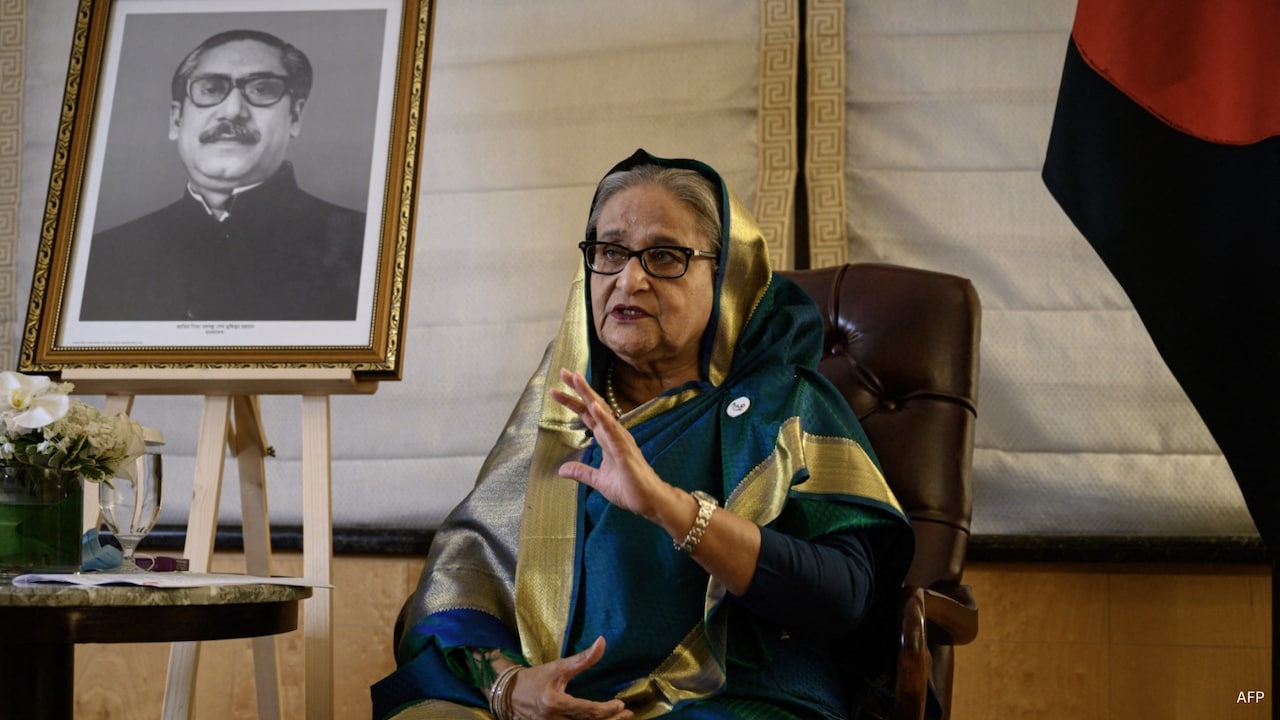
Former Bangladeshi Prime Minister Sheikh Hasina has set a definitive timeline for her return to Dhaka from exile in India, shifting the political calculus across South Asia. Facing an active death sentence passed in absentia by the International Crimes Tribunal in November 2025, Hasina announced her intention to return voluntarily this December to surrender to the courts. The administration of Prime Minister Tarique Rahman, which took office in February 2026 following two years of severe unrest, has declared she will be immediately jailed. This high-stakes legal and political gamble threatens to destabilize a fragile government trying to secure its authority.
The announcement marks a sharp turn in the regional dynamic. For nearly two years, the official stance from Dhaka focused heavily on seeking her formal extradition under the 2013 treaty with India. By declaring she will walk across the border voluntarily, Hasina bypasses the diplomatic deadlock and forces the state to handle her physical presence. The move is less an act of submission and more a calculated political mobilization designed to test the judicial credibility of the new administration.
The Legal Trap and the December Calculation
By scheduling her return for December, Hasina is targeting a period of predictable economic and political friction. The newly elected administration has struggled to stabilize consumer inflation and rebuild institutional confidence after the 2024 uprising that ended the Awami League's two-decade grip on power. Introducing a high-profile political prisoner into the state apparatus under these conditions presents massive logistical challenges.
Dhaka's current leadership maintains that the judicial path is straightforward. Shama Obaed Islam, the State Minister for Foreign Affairs, explicitly stated that Hasina remains a convicted criminal under the current legal framework. The law dictates that an individual sentenced in absentia must be taken into state custody immediately upon entering the jurisdiction.
Yet, execution of that law is complicated. A fast-tracked trial that concluded in late 2025 has faced scrutiny from international legal observers who question the procedural haste. The International Crimes Tribunal resolved capital charges against her in less than five months, using evidence that included intercepted communications without the traditional verification processes. The defense has consistently argued that these proceedings lacked essential constitutional protections. By showing up at the courthouse door, Hasina forces the domestic judiciary to either enforce a controversial capital sentence or risk looking hesitant on the global stage.
The administration finds itself walking a thin line. Information and Broadcasting Adviser Zahed Ur Rahman noted that the government would welcome her return because it fulfills their stated objective of accountability. However, the operational reality of holding a former prime minister with deep-seated networks inside the civil service and security apparatus remains highly volatile.
The Diplomatic Dilemma for New Delhi
India has housed Hasina since she fled Dhaka in an army helicopter in August 2024. This arrangement strained bilateral relations between New Delhi and the post-uprising leadership in Bangladesh. Dhaka has repeatedly sent formal letters demanding her extradition, leaving Indian diplomats in a difficult position regarding their long-term regional strategy.
The legal framework of the India-Bangladesh Extradition Treaty contains specific clauses that allow either country to refuse a request if the underlying offense is deemed to be of a political character. International law experts have long argued that India would likely use this clause to deny extradition, claiming that the trial in Dhaka was politically motivated. Hasina's decision to return voluntarily removes this diplomatic shield from India, shifting the burden entirely back to Bangladesh.
[Extradition Treaty Variables]
├── Political Offense Exception (Article 6) -> India's primary ground for refusal
└── Voluntary Return -> Bypasses treaty entirely, neutralizing diplomatic gridlock
The domestic fallout within India is also a factor. New Delhi wants to engage constructively with the Rahman administration to protect its economic investments and secure its northeastern borders. Simultaneously, completely abandoning a long-term ally like Hasina damages India's reputation as a reliable partner for regional leaders. Her voluntary departure allows New Delhi to reset its relationship with the new Bangladeshi government without explicitly violating its tradition of offering asylum to displaced leaders.
Re-mobilizing a Banned Political Apparatus
The Awami League was systematically dismantled and officially banned following the 2024 protests, which the United Nations estimated resulted in at least 1,400 deaths. Most top-tier party officials either fled the country or went deep underground to escape prosecution. Hasina's public statements from exile appear specifically designed to reassemble these fractured pieces.
In her recent communications, she explicitly instructed fugitive party workers and leaders hiding abroad to prepare for a coordinated return. The strategy relies on safety in numbers. If hundreds of former officials, including high-profile figures like former Home Minister Asaduzzaman Khan Kamal, surrender simultaneously, the prison system and the courts could face a massive administrative logjam.
Hasina's Strategic Timeline:
[July 2026: Announcement] ──> [Aug-Nov 2026: Party Regrouping] ──> [December 2026: Mass Surrender]
The current government views this timeline as a deliberate provocation. State officials have openly called the planned return an attempt to mobilize underground cadres and trigger street-level confrontations. If the state uses excessive force to prevent these mass surrenders, it risks mirroring the exact heavy-handed tactics that led to the ousting of the previous regime. If it fails to act decisively, it looks weak to the student groups and coalition partners that put it in power.
Institutional Fragility Inside Bangladesh
The structural integrity of Bangladesh's governing institutions remains uncertain. The transition from an interim authority to the elected parliament in early 2026 did not automatically resolve deep systemic weaknesses. The police force, which faced severe criticism and mass desertions after the 2024 crackdown, is still undergoing a slow restructuring process.
Economic indicators add another layer of vulnerability. The country’s garment export sector, the backbone of its foreign currency reserves, has experienced intermittent disruptions due to labor disputes and energy shortages over the past two years. Managing a major political trial involving a former leader who still commands loyalty from segments of the population could trigger fresh labor strikes and security curfews, harming economic recovery.
The state’s approach to transitional justice is under intense pressure. The government granted blanket immunity to individuals who participated in the 2024 uprising, while pursuing capital punishments for members of the former ruling party. While this choice was politically necessary to satisfy the domestic base, it created an asymmetric legal system that international human rights organizations continue to criticize. Hasina’s legal team intends to exploit these inconsistencies during any future domestic appeals.
The Upcoming Confrontation
The winter months will test whether the current administration can maintain public order while adhering to the rule of law. The state has five months to prepare the legal and security infrastructure required to detain and try a figure who dominated the country’s politics for a generation.
A smooth judicial process requires absolute transparency, a condition that will be difficult to guarantee given the intense public anger surrounding the casualties of the 2024 uprising. The government’s challenge is to ensure that the trial does not transform into a political spectacle that revitalizes the opposition. Hasina is gambling that the state will stumble under the weight of its own internal contradictions, using her imprisonment as a catalyst to expose the limits of the new government's authority.