Two weeks without electricity changes the human timeline. Refrigerators transform into biohazards. Sump pumps go silent, turning basements into stagnant indoor ponds. Traffic lights blink out of existence, replaced by the law of the aggressive driver at four-way stops. In Gary, Indiana, this was not a brief inconvenience following a summer thunderstorm. It became an endurance test of survival, exposing structural fractures in public utilities that run far deeper than fallen oak branches and snapped utility poles.
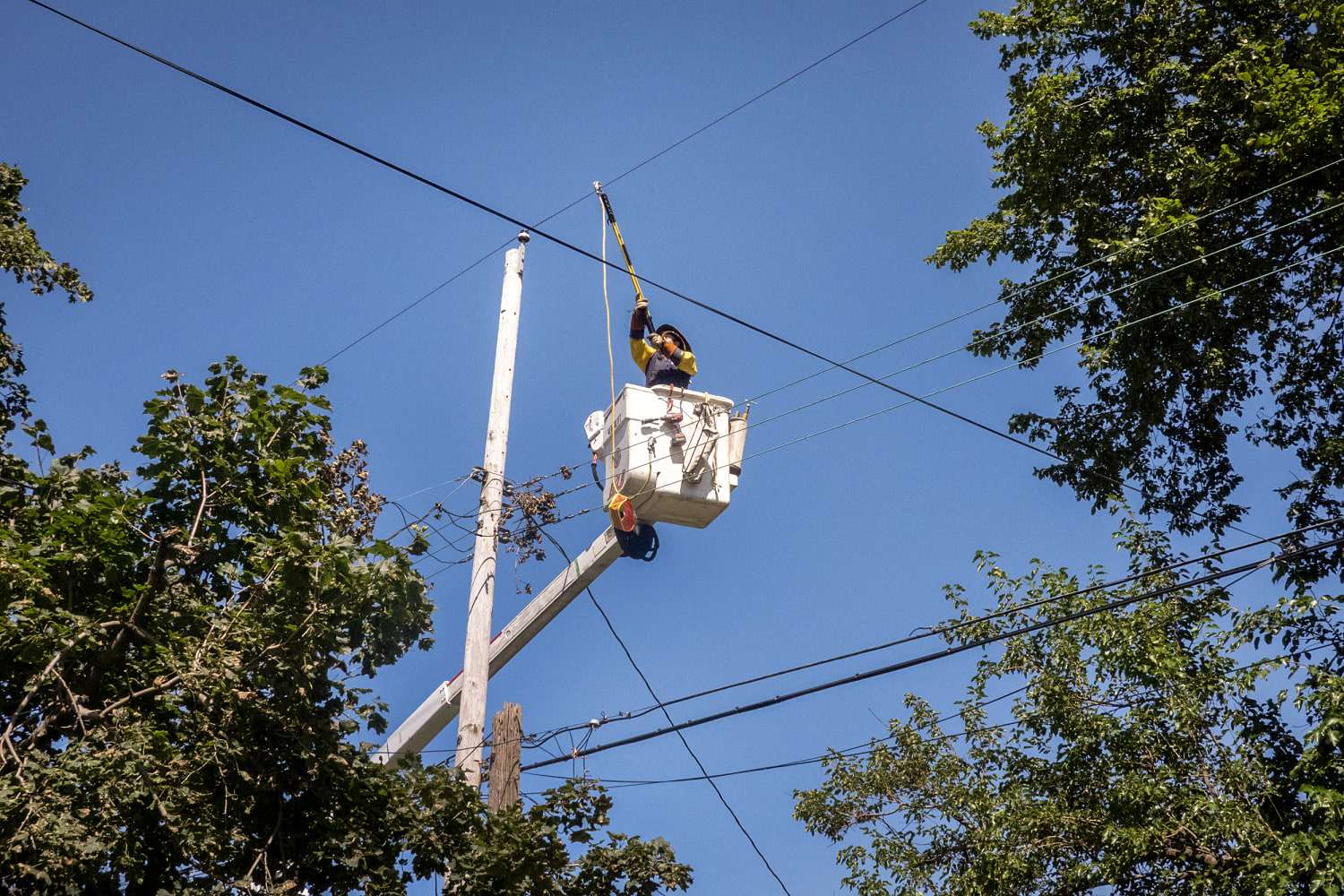
When severe weather knocks out transmission lines, the immediate public anger focuses on the utility crews. Homeowners stare out dark windows, waiting for a bucket truck that never arrives. Yet treating a two-week blackout as a simple logistical failure of storm cleanup ignores decades of deferred infrastructure investment, municipal neglect, and corporate consolidation. The Gary, Indiana power outages exposed a regional energy grid that was already running on borrowed time. For a more detailed analysis into this area, we suggest: this related article.
Utility accountability remains elusive when monopolies operate without meaningful local oversight. When a major storm hits Northwest Indiana, the response depends heavily on corporate triage. Urban centers with shrinking tax bases and declining median household incomes frequently find themselves pushed to the back of the queue. Private investor-owned utilities prioritize capital allocation toward growing suburban markets where infrastructure returns higher yields. Gary residents spent fourteen days in the dark while neighborhoods twenty miles away had their power restored within hours. This disparity is not an accident of geography. It is the predictable outcome of a utility model that treats electricity as a commodity rather than a public utility.
The Anatomy of a Grid Failure
Storms do not create vulnerabilities; they reveal them. The severe weather events that battered Lake County packed winds strong enough to topple mature trees onto aging distribution lines. But utility engineering standards have failed to keep pace with changing weather patterns. Decades ago, companies built overhead radial networks to minimize initial capital costs. These systems feature single points of failure. When one critical branch goes down, entire neighborhoods lose power instantly. For additional context on this issue, comprehensive coverage can be read on The Guardian.
Modernization requires massive capital expenditure. Underground cabling, automated sectionalizing switches, and smart-grid sensors can isolate outages in seconds rather than days. Investor-owned utilities operating in Indiana have historically resisted these upgrades unless forced by state regulators. Rate cases filed before the Indiana Utility Regulatory Commission often reflect a push for higher shareholder dividends rather than aggressive grid hardening.
The physical reality on the ground in Gary tells the story clearly. Wooden utility poles dating back to the mid-twentieth century line residential streets, their bases rotting and compromised by decades of moisture and road salt. Transformers sitting on those poles operate past their designed life expectancy. When high-velocity winds sweep across the industrial corridor and nearby Lake Michigan, these legacy assets shatter.
Maintenance budgets tell the rest of the story. Tree trimming programs, designed to clear branches away from high-voltage lines, face chronic underfunding. Utilities often slash vegetation management budgets to boost short-term earnings reports. When a severe weather event hits an unmanaged corridor, the damage multiplies exponentially. A storm that should cause minor flickers instead triggers catastrophic grid collapse.
The Human Toll of Extended Blackouts
The statistics of a blackout capture numbers and percentages, but they miss the human friction of daily survival. Insulin requires refrigeration. Oxygen concentrators require a steady electrical current. Elderly residents living in multi-story apartment buildings without working elevators found themselves trapped on upper floors, reliant on neighbors carrying jugs of water up darkened stairwells.
Small businesses bore an entirely different financial catastrophe. Restaurants lost thousands of dollars in perishable inventory within the first forty-eight hours. Without backup generators—expensive assets that smaller operations in economically distressed areas cannot afford—local diners, markets, and shops faced permanent closure. Insurance claims for spoilage are notoriously difficult to collect, and policy deductibles often exceed the value of the lost goods.
Public safety infrastructures also buckle under extended darkness. Streetlights powered by the main grid went black, plunging entire commercial and residential districts into shadow. Police departments stretched thin across municipal boundaries had to manage erratic traffic patterns and increased property crime risks. The psychological weight of prolonged isolation wears down a community already dealing with systemic disinvestment. When the lights finally flickered back on, the celebration was muted by the bitter recognition that nothing structural had actually changed.
Regulatory Failure and Corporate Accountability
State-level oversight in Indiana provides minimal protection for utility consumers. The Indiana Utility Regulatory Commission functions as a quasi-judicial body that weighs utility requests for rate increases against consumer interests. Critics frequently argue that the commission leans heavily toward corporate interests, approving rate hikes while imposing minimal penalties for prolonged service interruptions.
When a utility fails to restore power for two weeks, regulators have the authority to launch investigations and levy fines. Yet these fines are often treated by major corporations as a routine cost of doing business. They are absorbed into operational budgets and eventually passed back to the ratepayers through future rate increases. There is no direct financial incentive for a private monopoly to invest heavily in proactive grid resilience for low-income urban areas.
Municipal leaders in Gary found themselves largely powerless during the crisis. Investor-owned utilities are regulated at the state level, severely restricting local governments from demanding immediate operational changes or bypassing corporate channels. Mayors and city councils can hold press conferences and demand answers, but they lack the legal jurisdiction to dispatch their own crews or redirect corporate resources. This jurisdictional gap leaves residents caught between a local government with no authority and a corporate entity with no local accountability.
Municipalization—the process of a city buying out private utility assets to create a public power district—is occasionally floated as a radical solution. Publicly owned utilities, such as public utility districts or municipal electric departments, answer directly to local voters rather than Wall Street shareholders. Their primary mandate is reliable service, not quarterly profit growth. Yet the upfront costs of acquiring transmission and distribution infrastructure are astronomical, making it a distant dream for cities facing severe budget constraints.
The Path Toward Grid Resilience
Fixing a broken power grid requires abandoning the fiction that private markets will naturally solve public infrastructure crises. Several concrete steps are necessary to prevent future blackouts from paralyzing cities like Gary.
First, state regulators must tie utility profit margins directly to reliability metrics. If a utility fails to meet specific restoration timeframes during severe weather, or allows infrastructure in specific districts to deteriorate past established safety thresholds, shareholder dividends should face mandatory reductions. Financial pain is the only language corporate monopolies understand.
Second, federal and state funding must be prioritized for undergrounding distribution lines in vulnerable urban corridors. While burying power lines is expensive, it eliminates the annual cycle of tree-related outages and significantly reduces long-term maintenance costs. Combined with automated grid switching technology, undergrounding transforms a fragile radial network into a resilient loop system.
Third, decentralized microgrids and localized solar-plus-storage installations offer an alternative to centralized vulnerability. By outfitting critical community facilities—such as hospitals, community centers, water treatment plants, and grocery stores—with independent solar arrays and battery banks, neighborhoods can maintain essential functions even when the main transmission lines go down.
The residents of Gary should not have to brace for a total societal shutdown every time a severe summer storm rolls off the lake. Electricity is an essential foundation of modern life, health, and economic stability. Until policymakers treat infrastructure resilience as a non-negotiable civil right, the next severe weather event will simply repeat the cycle, leaving families sitting in the dark while corporate spreadsheets balance the cost of human endurance.