The morning started with an eerie, pumpkin-orange glow.
There was no sunrise. Not really. Just a heavy, suffocating dome of copper-colored fog that pressed down on the CN Tower, swallowing its concrete spire whole.
Elena stood by her apartment window on the twelfth floor of a high-rise in downtown Toronto. She did not open it. She did not have to. The smell had already found its way inside through the building’s old ventilation system. It was the acrid, unmistakable stench of a campfire, but stripped of any cozy, nostalgic warmth. This was the smell of a million black spruce trees burning to death hundreds of miles to the north. It smelled like charred earth, plastic insulation, and ruin.
For most of her life, Elena viewed wildfires as a distant tragedy. They were things that happened on television screen, consuming isolated boreal forests in northern Ontario or sweeping through dry valleys in British Columbia. They were not supposed to conquer the financial capital of Canada.
But on that Tuesday, the distant became intimate.
By noon, Toronto’s air quality index bypassed "unhealthy" and entered the realm of the apocalyptic. The city, known for its clean lake breezes and sparkling skyline, officially held the title of having the worst air quality of any major city on the planet. Worse than Beijing. Worse than Delhi. Worse than Dhaka.
Air is something we only think about when it hurts to breathe. On a normal day, an adult inhales about eleven thousand liters of it. It is a silent, subconscious transaction with the atmosphere. But when the atmosphere turns toxic, every single breath becomes a conscious, calculated risk.
Think of your lungs as a delicate, sprawling tree. The windpipe is the trunk, branching off into smaller bronchi, which eventually terminate in tiny, grape-like air sacs called alveoli. This is where the magic happens—where oxygen crosses a microscopic barrier into your bloodstream.
The smoke drifting down from the northern forests carried a silent assassin known as PM2.5. These are fine particulate matters, less than 2.5 micrometers in diameter. To understand just how small that is, imagine a single strand of human hair. You could line up about thirty PM2.5 particles across its width.
Because they are so incredibly small, our body’s natural filtration systems—the hairs in our noses, the mucus in our throats—are utterly useless against them. They bypass the defenses entirely. They travel deep into the lungs, settling in those fragile alveoli, and some even cross directly into the bloodstream.
Elena felt it as a scratch at the back of her throat. Then came the dull, persistent throb behind her eyes. It was her body's inflammatory response, a systemic alarm bell ringing out in response to foreign invaders.
Outside, the streets of Toronto looked like a sci-fi film set.
The bustling pavement of Yonge Street, usually packed with commuters, tourists, and buskers, was ghostly quiet. The few people who braved the outdoors walked quickly, heads down. Many wore N95 masks—a jarring, unwelcome throwback to the darkest days of the pandemic. Others pressed damp cloths or collars against their faces, a futile shield against the microscopic soot.
Even the birds had stopped singing. The pigeons huddled under concrete overhangs, quiet and still. The silence was heavy.
We often talk about climate change as a future threat, a problem for the next generation to solve. We look at graphs of rising global temperatures, melting ice caps, and sea-level projections. But those are cold, abstract numbers. They lack a heartbeat.
The true face of climate change is not a statistic. It is a six-year-old child with asthma, trapped indoors on a beautiful June afternoon, clutching an inhaler while watching a sickly orange haze press against the living room glass. It is the construction worker, forced to choose between losing a day's pay or inhaling a pack of unfiltered cigarettes' worth of toxic smoke during an eight-hour shift.
The fires raging in northern Ontario were fueled by a winter of historic drought and a spring of unprecedented, baking heat. The wilderness had been transformed into a tinderbox, waiting for a single spark—a lightning strike, a discarded cigarette, a hot ATV exhaust—to ignite a fury that could not be contained.
And once those fires started, they created their own weather systems. Massive columns of heat pushed smoke high into the jet stream, where powerful winds grabbed the toxic plumes and carried them south, draping them over millions of unsuspecting citizens.
It was a stark reminder of our radical interconnectedness.
We like to draw lines on maps. We create borders, zoning laws, municipal boundaries, and provincial divides. We believe we can isolate ourselves from the chaos of the natural world inside our air-conditioned offices and concrete fortresses.
But the wind recognizes no borders.
The smoke did not care about municipal tax brackets or provincial jurisdictions. It did not stop at the city limits of Toronto. It kept drifting, crossing the Great Lakes, smothering New York, Philadelphia, and Washington D.C. under the same copper shroud. The lungs of a banker on Bay Street and a child in Harlem were suddenly processing the exact same charred remains of the northern boreal forest.
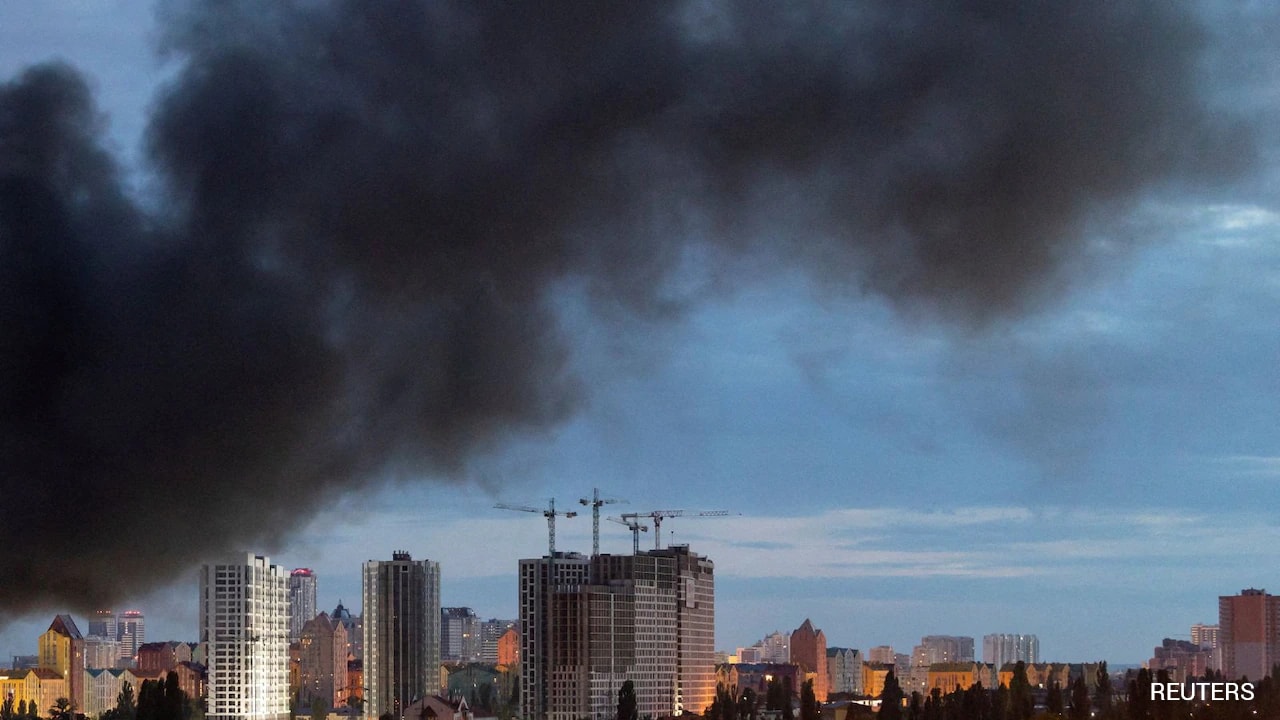
By late afternoon, the sun had shrank to a tiny, blood-red coin in the sky. You could look directly at it without blinking. It was a terrifying beauty.
Elena tried to distract herself by working from her kitchen table, but the air inside was growing heavier. Her eyes watered. The physical discomfort was real, but the psychological weight was heavier. It was a feeling of profound vulnerability. The realization that the very air we rely on to sustain life can, without warning, turn against us.
There is a term coined by philosopher Glenn Albrecht called solastalgia. It describes a form of psychic or existential distress caused by environmental change. It is the homesickness you feel when you are still at home, but your home has been altered beyond recognition.
That afternoon, millions of people across northeastern North America experienced solastalgia. Their familiar streets, parks, and skylines had been rendered alien and hostile.
As the sun finally slipped below the horizon—not with a normal twilight, but with a sudden, dirty gray fade into darkness—the city lights flickered on. They struggled to pierce the gloom, casting long, eerie beams through the particulate-heavy air.
We cannot simply wait for the smoke to clear. Because even when the winds shift and the blue sky returns, the underlying vulnerability remains. The forests are still dry. The temperatures are still rising. The tinderbox is still waiting.
Elena finally turned off her computer. She walked back to the window. Down below, the streetlights illuminated the swirling patterns of the smoke, dancing in the cold air like ghosts of the trees that had perished to create them.
She took a slow, shallow breath, feeling the faint, metallic sting in her chest, and wondered when she would see the stars again.