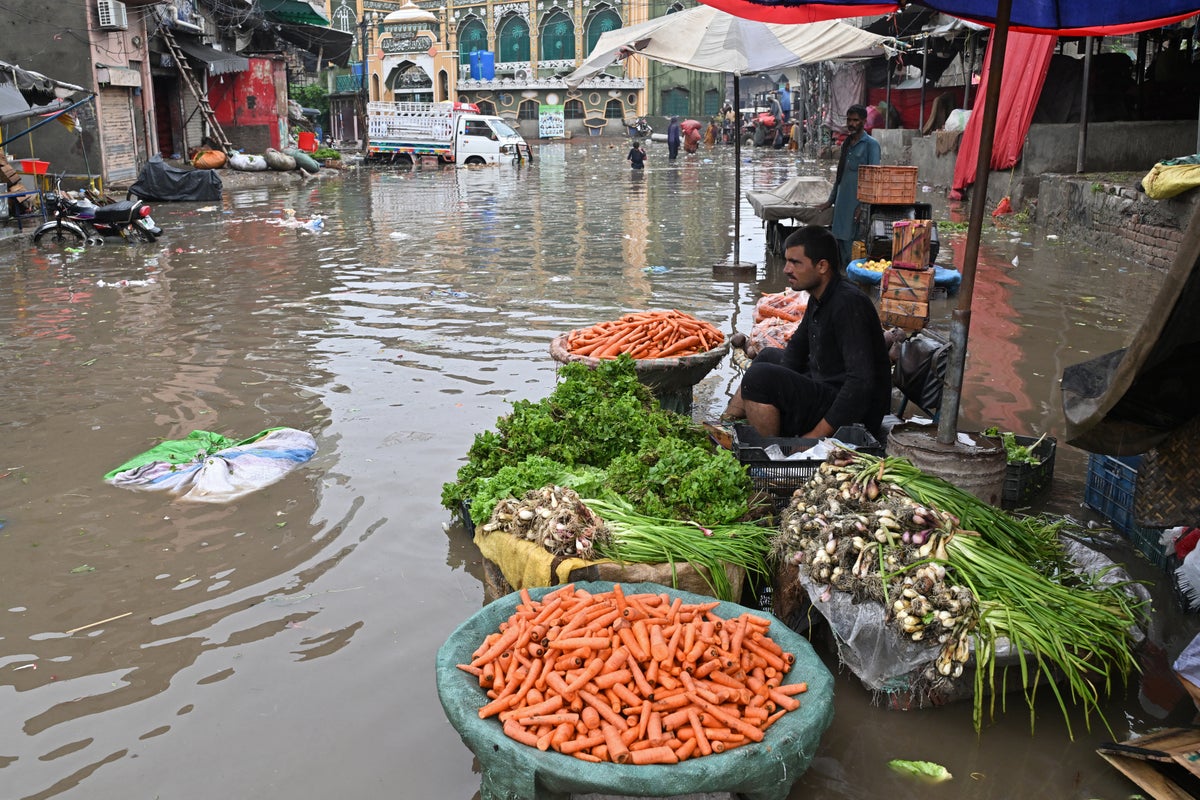
Water does not announce its departure. It simply stops singing.
For most of us in wealthy nations, the sound of water is the white noise of safety. It is the hiss of the showerhead before a Monday morning meeting, the heavy gush of the kitchen faucet rinsing dinner plates, the mindless sprinkler spinning green geometry across a suburban lawn. We treat water like electricity—an invisible, infinite current accessible by the flick of a wrist or the twist of a handle. We assume scarcity is something that happens to other people, in sepia-toned documentaries about distant drought zones, far from the polished granite of our modern kitchens.
We are wrong.
A super El Nino is swelling across the Pacific Ocean right now, a climatic heavy hand shifting global weather patterns into terrifying new shapes. It brings with it a brutal paradox: torrential floods in some regions and scorching, unyielding dry spells in others. But the true danger is not just the immediate heat. The danger is our collective ignorance. While wealthy capitals draft complacent climate blueprints for 2050, millions of people in developing nations are already living in the sharp, unforgiving reality of day zero. They have mastered the architecture of survival. And if affluent countries do not humble themselves enough to learn from them, the coming climate volatility will break our municipal illusions of control.
Consider Elena.
Elena lives in a peri-urban settlement outside Cape Town, South Africa—a city that came terrifyingly close to turning off its municipal taps a few years ago during its historic multi-year drought. When I spoke with her, she didn't talk about parts-per-million or atmospheric rivers. She talked about weight.
Water has mass when you have to carry it.
In Elena’s neighborhood, water arrived through a single communal standpipe during tightly rationed hours. Her mornings began at four o'clock, long before the sun scraped the horizon, marching down cracked dirt paths with two empty twenty-liter yellow jerrycans. The weight of forty liters of water—roughly eighty-eight pounds—is an education. It forces you to calculate every single drop. A cup for boiling rice is a cup that cannot be used to wash a child's hands. Dishwater is captured in a plastic basin and redirected to flush the toilet. Showers are replaced by sponge baths measured in spoonfuls.
To Elena, the luxury of leaving a bathroom faucet running while brushing teeth sounds less like a habit and more like a crime against physics.
When wealthy nations look at water scarcity, they often think engineering will save them. They imagine desalination plants popping up like futuristic mushrooms, or massive pipelines siphoning rivers from the wet north to the dry south. They throw money at hardware while ignoring software—the human software of habit, community management, and absolute reverence for the resource.
Look at what happened in Cape Town. When the reservoirs dipped dangerously low, the city government imposed strict limits: fifty liters per person, per day. Panic rippled through the affluent suburbs. People hoarded bottled water in swimming pools. Finger-pointing spiked. Yet, the crisis was averted not solely by high-tech interventions, but by a cultural pivot. Neighbors formed WhatsApp groups to alert each other when municipal trucks arrived. Schools turned water conservation into a competitive sport for children. Wealthy homeowners learned how to hook up rainwater tanks and gray-water diversion systems to keep their gardens alive. They survived because they were forced to adopt the hyper-vigilant mindset that places like Chennai, Lima, and parts of rural Australia have practiced for generations.
Now, project that crisis onto London, Los Angeles, Sydney, or Berlin.
The infrastructure in the Global North is ancient. Much of it was built in the Victorian era or during post-war booms, designed for a climate stability that no longer exists. Aging cast-iron pipes lose massive percentages of treated water to underground leaks before it ever reaches a tap. When a sudden heat dome settles over a major European city or a protracted dry spell chokes the American West's river basins, the system does not gently adjust. It cracks.
We are dangerously unprepared for the psychological shock of scarcity. We are used to abundance. When abundance vanishes, frustration turns quickly to unrest.
This is where the true lesson lies. The nations and communities currently living on the frontline of water stress have developed a social resilience that transcends technology. They understand decentralized water governance. They know how to harvest morning dew, how to recycle wastewater safely at a household level, and crucially, how to share a shrinking commons without tearing their communities apart.
In rural Rajasthan, women known as jal saheli—water friends—act as community hydrologists, monitoring local water tables and arbitrating disputes over irrigation channels. In parts of Peru, ancient pre-Inca stone canals known as amunas are being revived; these clever systems capture wet-season rainwater, guide it high into the mountains, and slowly infiltrate it into the aquifers to emerge months later during the dry season. It is low-tech, brilliant, and deeply attuned to natural rhythms.
These are not quaint historical footnotes. They are survival manuals.
As the super El Nino accelerates, shifting rainfall belts and supercharging droughts, the division between the resilient South and the vulnerable North is blurring. A wealthy zip code offers no immunity to a dry reservoir. A high credit score cannot manufacture rain when the snowpack in the mountains fails to accumulate over a winter.
We must unlearn our arrogance.
Learning from those already living with water scarcity means shifting our vocabulary from management to stewardship. It means changing building codes today so that every new home comes standard with dual-plumbing for gray water. It means overhauling municipal utility pricing to penalize waste while guaranteeing a baseline human right to water for the vulnerable. It means listening to Indigenous land stewards and urban planners in the Global South who have spent decades navigating the knife-edge of climate volatility.
The tap is still singing for now. The water runs clear and cold at the twist of the wrist. But the pipe is getting thinner. The source is getting quieter.
Listen closely to the silence before it arrives.


