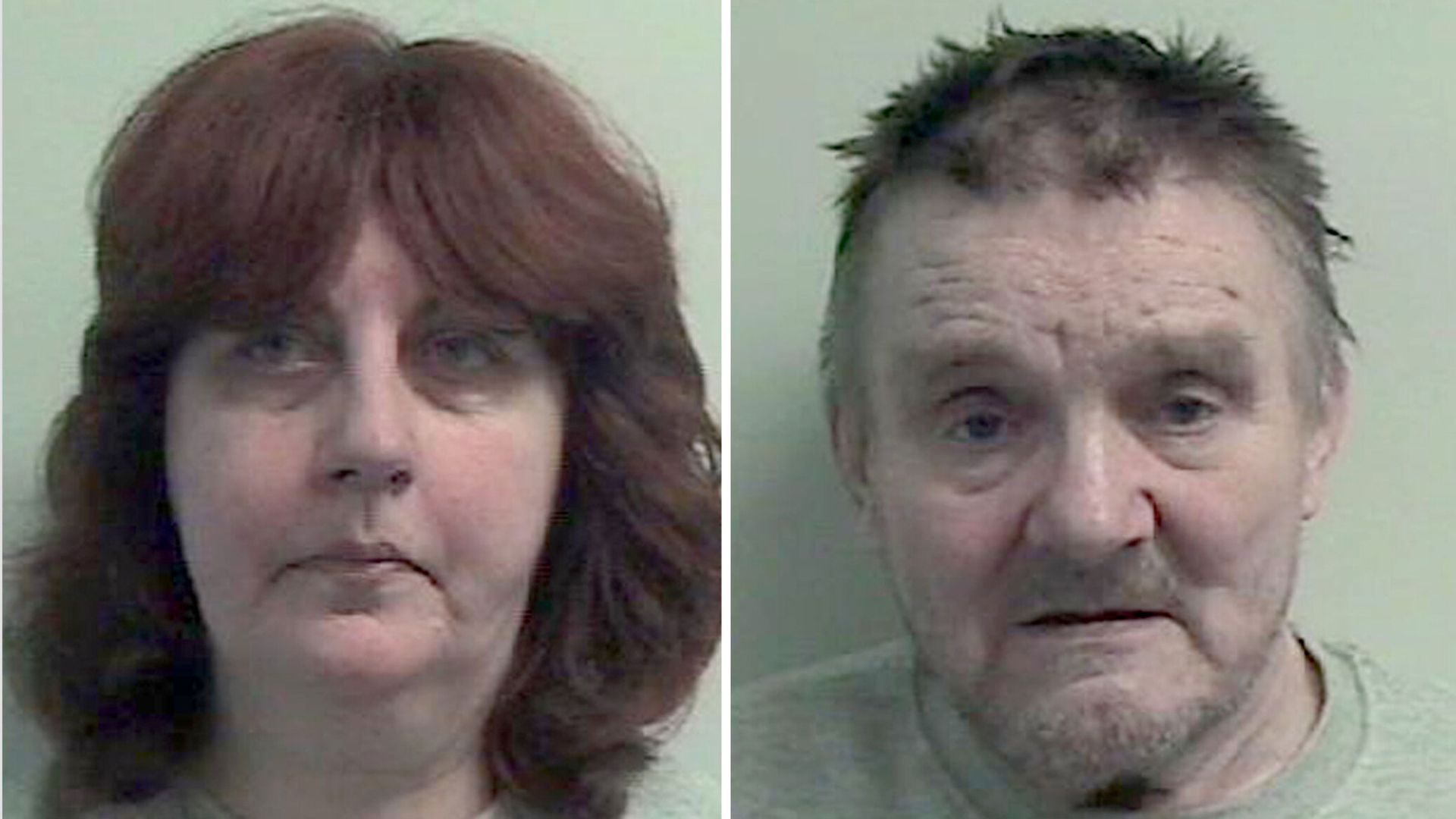
They died, so the mystery dies with them.
That is the lazy, fatalistic fairy tale true-crime media sells you every single time a convicted murderer passes away without drawing a map to the burial site. Look at the standard tabloid headline: Killer couple both now dead and take secret of victim's remains to the grave. It reads like a tragic shrug. A closed door. A convenient excuse for state agencies and cold-case units to pack up their files, offer condolences to a grieving family, and walk away while blaming two corpses for their own institutional inertia.
Here is the reality nobody in criminal justice wants to admit: human beings are terrible at erasing physical evidence, and dead people are the worst secret-keepers on earth.
When a perpetrator is alive, they actively manage the cover-up. They lie to parole boards. They weaponize silence as a final twisted form of control over their victims' families. They lawyer up, stonewall detectives, and feed false leads to keep search teams miles away from the truth. The moment that killer dies, the active defense of the secret ends. Financial records unfreeze. Co-conspirators lose their fear of retaliation. Surviving relatives clean out attics, storage units, and digital accounts without an angry felon monitoring every move.
Saying a dead killer "took a secret to the grave" is an indictment of investigative imagination, not an immutable law of forensics.
The Mythology of the Mastermind
Crime journalism thrives on elevating pathetic, impulsive predators into criminal masterminds. It sells clicks. When a couple commits a homicide and successfully hides a body for decades, reporters frame it as a calculated, airtight conspiracy that outsmarted the system.
I have spent years reviewing cold-case files, forensic audits, and post-mortem investigative breakthroughs, and the pattern is always the same. Bodies stay hidden not because the killers were geniuses, but because early investigators suffered from tunnel vision.
Consider how most "no-body" homicides play out in the first 72 hours. Law enforcement looks for a confession because a confession is cheap, fast, and guarantees a conviction without burning through a county's annual forensic budget. Once a jury convicts the perpetrators without a body—a legal hurdle prosecutors clear far more often than the public realizes—the state's incentive to find the remains drops to zero.
The case is marked "cleared by arrest" or "closed by conviction." The overtime budget evaporates. The search dogs go home. Twenty or thirty years later, when the inmates die of old age or prison illness, a reporter dusts off the press release and declares the secret permanently lost.
That is not a secret taken to the grave. That is a search abandoned at the courthouse steps.
Why Death Actually Breaks the Silence
To understand why the death of a killer is an investigative starting gun rather than a finish line, you have to look at the mechanics of silence.
A living murderer exerts a gravitational pull on everyone around them. Spouses, siblings, drinking buddies, and cellmates stay quiet out of fear, misplaced loyalty, or the hope that the inmate might eventually reward them. Even after sentencing, prisoners manipulate family members from behind bars through monitored phone calls and letters, enforcing strict boundaries around what gets thrown away and who gets to ask questions.
When the last surviving perpetrator flatlines, that control vanishes overnight.
1. The Fear Vacuum
Accomplices after the fact—the brother who loaned out a pickup truck, the neighbor who noticed fresh concrete poured at 2:00 AM, the friend who held onto a toolbox—spend decades terrified of what happens if they talk while the killer is still breathing. Even behind bars, violent offenders have reach. Once the obituary hits the local paper, that existential dread disappears. People who spent thirty years swallowing a guilty conscience suddenly realize nobody is coming after them if they walk into a sheriff's office.
2. The Estate Purge
Prisoners accumulate boxes of mundane paper, and their surviving families inherit properties, vehicles, and storage lockers that were frozen in time. When heirs clean out a deceased relative's garage, they do not know which innocuous-looking receipt, faded Polaroid, or rusty shovel holds forensic value. They just throw things in a dumpster or sell them at an estate sale—unless a sharp investigator beats the junk hauler to the driveway.
In dozens of historical cold cases, the breakthrough did not come from a deathbed confession. It came from an estranged nephew finding a topographical map with a pencil mark in a dead uncle's tackle box, or a daughter handing over a locked safe she was too terrified to open while her father was alive.
3. The End of Legal Shielding
While an inmate is alive, constitutional protections, ongoing appeals, and defense attorneys create thick bureaucratic walls around their personal effects, medical records, and communications. Post-mortem, those legal shields weaken dramatically. Subpoenas face fewer challenges. Third-party witnesses who previously invoked Fifth Amendment privileges or hid behind spousal immunity lose their legal cover.
The Forensic Arsenal Dead Killers Cannot Outrun
Even if a killer never breathed a word to a soul, never kept a souvenir, and never wrote a single note, they left behind a physical and environmental footprint that modern science can read better today than at any point in human history.
Relying on a killer's mouth to find a body is amateur hour. Physical geography and forensic science do not care whether the suspect has a pulse.
Forensic Palynology and Soil Chemistry
Every single shovel of dirt moved to dig a grave alters the local ecosystem forever. When soil is excavated and backfilled, the natural horizons of topsoil, subsoil, and bedrock are permanently scrambled. Decades later, ground-penetrating radar (GPR) and electrical resistivity tomography detect those subterranean anomalies instantly.
More importantly, killers carry the burial site home with them. Microscopic pollen grains, fungal spores, and mineral signatures trapped in the wheel wells of an impounded car, the cuffs of preserved clothing, or the treads of old boots act as a botanical GPS. Forensic palynologists—specialists who analyze trace pollen—have narrowed down clandestine graves from entire state forests to specific three-acre hillsides simply by matching the ratio of pine, ragweed, and rare moss spores found on a suspect's belongings.
The Decomposition Island
A human body does not simply vanish into the earth. Even when soft tissue completely decomposes over twenty or thirty years, the chemical signature remains. Decomposing remains release massive spikes of nitrogen, phosphorus, and specific fatty acids into the surrounding soil.
This creates what forensic taphonomists call a cadaver decomposition island. Initially, the chemical surge kills surrounding vegetation. Years later, that exact nutrient spike causes localized plant growth to explode, altering the chlorophyll density and leaf structure of trees and shrubs directly above the grave.
Hyperspectral imaging mounted on drones can now fly over miles of dense woodland and flag subtle shifts in plant chemistry that are invisible to the naked eye. A killer can die with their lips sewn shut, and the oak tree growing over their victim will still snitch on them from five hundred feet in the air.
The Paper Trail of Alibis
Nobody commits a murder in a vacuum, and nobody disposes of a body without burning time, fuel, and money. When a couple conspires to hide a victim, they leave a negative space in their own timeline.
Cold-case analysts who stop looking for the body and start auditing the killers' mundane routines almost always find the disposal window. Look at what survives decades in archives:
- Fuel and odometer gaps: Old credit card receipts, state inspection records, and mechanic invoices show exact mileage jumps that do not match a suspect's claimed work commute.
- Hardware and agricultural purchases: Buying lime, heavy-duty plastic sheeting, concrete mix, or a specific type of spade three days before a victim disappears creates a physical supply chain.
- Land-use history: Aerial survey photographs taken by the USDA and local county tax assessors every few years since the 1950s allow investigators to compare a property's exact landscape before and after a disappearance. A newly cleared patch of brush, a filled-in well, or a suspiciously timed backyard patio addition jumps right off the historical imagery.
Why "No-Body" Laws Like Helen's Law Miss the Mark
Whenever a killer dies without revealing a burial location, public outrage predictably pivots to legislation. In the United Kingdom, activists fought hard for the Prisoners (Disclosure of Information About Victims) Act—widely known as Helen's Law—which requires parole boards to consider a killer's refusal to disclose the location of a victim's remains before granting release. Similar "no body, no parole" statutes have swept across Australian states and sparked fierce debates in American legislatures.
Politically, these laws are a slam dunk. Nobody wants to defend a murderer who tortures a grieving mother by withholding her child's grave.
Strategically, however, tying location discovery to parole incentives is deeply flawed—and sometimes actively counterproductive.
The False Confession Trap
When you tell a desperate inmate serving a life sentence that their only ticket out of a concrete cell is pointing to a spot on a map, you create a massive incentive to lie. Inmates who genuinely disposed of remains in fast-moving rivers, industrial incinerators, or landfills—places where recovery is physically impossible—will fabricate burial sites just to look compliant for the parole board.
State agencies then burn hundreds of thousands of dollars digging up empty forests, destroying credibility with the victim's family and draining funds that should have gone to forensic lab backlogs.
The Power Dynamic Backfire
For a sadistic offender, withholding the location of remains is the last currency they possess. When the state passes a law explicitly acknowledging how desperate society is for that information, it inflates the value of the killer's silence. Narcissistic offenders feed on that leverage. They realize that as long as they keep their mouths shut, the state, the media, and the victim's family remain orbiting around them.
And what happens when two perpetrators—a killer couple—share the secret? Each assumes the other will eventually crack to save themselves, creating a prisoner's dilemma that often paralyzes both until one dies, leaving the survivor terrified that talking now will make them look like the sole orchestrator.
What Investigators Should Actually Do When a Killer Dies
If you want to recover a victim after the perpetrators are dead, you have to stop treating the case like a homicide interrogation and start treating it like an archaeological dig combined with a corporate fraud audit.
- Re-interview the periphery immediately. Within thirty days of the second perpetrator's death, detectives should knock on the doors of every living relative, ex-spouse, former neighbor, and prison pen pal. The opening line should not be an accusation; it should be a simple statement of fact: "They're gone. They can't hurt you anymore, and they can't go back to prison. Help us give this family a grave to put flowers on."
- Seize and digitize the dead killers' paper lives. Most police departments do not track inmate deaths in closed-conviction cases unless the media calls them. That is an operational failure. Automated alerts from departments of corrections should trigger an immediate request to inspect the deceased inmate's property box, visitor logs, and correspondence lists before the state destroys them or hands them over to next of kin.
- Crowdsource the timeline, not the crime. Law enforcement loves releasing vague appeals asking if anyone saw "suspicious activity" thirty years ago. Nobody remembers suspicious activity from 1994. Instead, release the exact make, model, color, and license plate of the killers' vehicles, along with the specific weekend they were unaccounted for, and ask local hunters, hikers, utility workers, and property owners who lived in the target radius at the time to check old hunting logs, property surveys, and photo albums.
- Bring in non-law-enforcement specialists. Police detectives are trained to build criminal cases against living defendants. They are rarely trained in geomorphology, historical aerial photogrammetry, or forensic botany. Partnering with university earth-science departments costs a fraction of a standard police task force and brings fresh eyes unburdened by the original investigation's blind spots.
The Real Reason Secrets Stay Buried
Acknowledging the downside of this aggressive post-mortem approach is necessary: not every victim can be found. If a body was weighted down in deep ocean currents decades ago, or cremated in an industrial furnace, no amount of drone imaging or family interviews will produce physical remains. Sometimes, a thorough investigation will simply confirm a grim logistical reality.
Even then, establishing how and why recovery is impossible gives families something vastly superior to a sensationalist headline claiming the killers "won" by dying with their secrets intact.
The narrative that dead killers take secrets to the grave is comforting only to the institutions that failed to find the victim while the perpetrators were still breathing. It turns an investigative failure into an act of fate. It absolves agencies of the obligation to re-examine botched initial searches, ignored tips, and unanalyzed physical evidence sitting in basement lockers.
Corpses do not guard secrets. Bureaucracies do. Stop writing obituaries for cold cases just because the monsters finally died, and start digging where the original detectives were too lazy to look.