Stop Calling These Tragedies Accidents
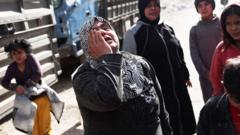
Seventeen dead. A capsized vessel off the coast of Algeria. A list of names that will likely never be read aloud in the halls of power. The standard media playbook is already in motion: express "shock," cite the "dangers of illegal migration," and pivot to the "ruthlessness of human smugglers."
This narrative is a lie. It is a comfortable, bureaucratic mask worn by international observers to avoid admitting a grim reality. These deaths are not the result of "unfortunate circumstances" or "rogue smugglers" operating in a vacuum. They are the logical, mathematical conclusion of a border policy designed to fail at the human level while succeeding at the political one.
When seventeen Somali migrants drown in the Mediterranean, the industry of humanitarian concern treats it as a glitch in the system. It isn't. It is the system functioning exactly as intended.
The Smuggler Scapegoat
Every news cycle following a maritime disaster focuses on the "evil smuggler." By hyper-focusing on the criminals who sell the tickets, we ignore the architects who built the theater.
Smugglers do not create demand; they fill a void left by the total absence of legal mobility. If you are a Somali national, your passport is essentially a ghost. It grants you access to almost nowhere. When the world tells a specific demographic that there is no front door—no matter how hard they work or how much they risk—they will find a window.
The "smuggler" is a convenient villain. They allow governments to frame migration as a criminal justice issue rather than a geopolitical failure. We are told that if we just "crack down" on the networks, the boats will stop. I have seen decades of these crackdowns. They don't stop the flow. They just increase the price of the ticket and the risk of the route.
When you increase the risk without addressing the root cause, you aren't saving lives. You are just raising the stakes of the gamble.
The Myth of the Deterrent
The prevailing logic among European and North African border agencies is that a "tough" stance acts as a deterrent. The idea is simple: if the journey is dangerous enough, people won't come.
This premise is fundamentally flawed because it assumes the migrants are making a choice between a comfortable life at home and a risky journey abroad. For a Somali fleeing a combination of climate-induced famine, Al-Shabaab's relentless insurgency, and a fractured state, the "risk" of the Mediterranean is a secondary concern.
To a person in a desperate situation, a $1%$ chance of a better life is infinitely better than a $100%$ chance of a slow death or stagnation at home. You cannot deter someone who has nothing left to lose.
Let's look at the math of risk:
$$R = P \times V$$
Where $R$ is the perceived risk, $P$ is the probability of a negative outcome (drowning, arrest), and $V$ is the value of what is being lost. When the value of the current life ($V$) approaches zero, the total perceived risk ($R$) also approaches zero, regardless of how high the probability of disaster ($P$) becomes.
The border agencies are trying to manipulate $P$ by making the crossing harder. They are ignoring that $V$ is already at rock bottom for the person on that boat.
The Algeria Pivot
Why Algeria? For years, the focus was on Libya. But as Libya descended into a kaleidoscopic hellscape of competing militias and open-air slave markets—often funded indirectly by "border management" deals—the routes shifted.
Migration is like water. You block one channel, and it finds another. The Algerian route is longer, deeper, and more exposed to the volatile currents of the open sea. By "securing" the easier routes, we have effectively forced people onto the more lethal ones.
The media calls this a "new trend." I call it a forced migration toward higher mortality. We are celebrating "reduced arrivals" in one sector while ignoring the rising body count in another. It’s a shell game played with human lives.
The Humanitarian-Industrial Complex
There is a specific kind of rot in the way we "process" these deaths. NGOs issue press releases. Politicians offer "thoughts and prayers." UN agencies call for "investigations."
It is a performative cycle that changes nothing. These organizations have become part of the very infrastructure they claim to oppose. They manage the fallout so that the underlying policy never has to change. They provide the "human face" to a system that is fundamentally inhumane.
If these organizations were serious about stopping the drowning, they wouldn't just be asking for better search and rescue. They would be demanding the dismantling of the visa regimes that make these boats the only option. But that is "political," and being political risks funding. So, they stay in the "humanitarian" lane, counting the bodies and asking for more blankets.
The Economic Hypocrisy
Europe, and by extension the global north, is facing a demographic collapse. They need labor. They need young, motivated people to keep their social security systems from imploding.
At the same time, they spend billions on high-tech walls, thermal sensors, and naval blockades to keep out the very people who could solve their labor crisis. We are witnessing a civilizational contradiction: a continent that is dying of old age but is too terrified of the "other" to let in the youth it needs to survive.
Instead of a regulated, legal path for migration—where people can fly on a $400$ euro commercial flight, pay taxes, and fill essential roles—we force them to pay $5,000$ euros to a criminal to sit on a rubber dinghy that has a high probability of flipping.
We are literally subsidizing organized crime while depleting our own future workforces. It is a masterclass in self-sabotage.
Stop Asking "How Do We Stop the Boats?"
The question itself is a trap. It implies the problem is the boat. The boat is a symptom.
The real questions are:
- Why is a Somali passport worth less than the paper it's printed on?
- Why does the "global community" spend more on border tech than on stabilizing the regions people are fleeing?
- Why do we tolerate a global apartheid system where your place of birth determines whether you have the "right" to travel or the "privilege" to stay alive?
Until we address the fact that we have built a world where some people are legally "unpersoned" by their geography, the Mediterranean will continue to be a graveyard.
Seventeen people died off the coast of Algeria. They didn't die because of a wave. They didn't die because of a motor failure. They died because we have decided that their lives are an acceptable price to pay for the illusion of a secure border.
If you want to honor them, stop crying about the "tragedy." Start attacking the policy that made the tragedy inevitable.
The system isn't broken. It's working. That's the real horror.