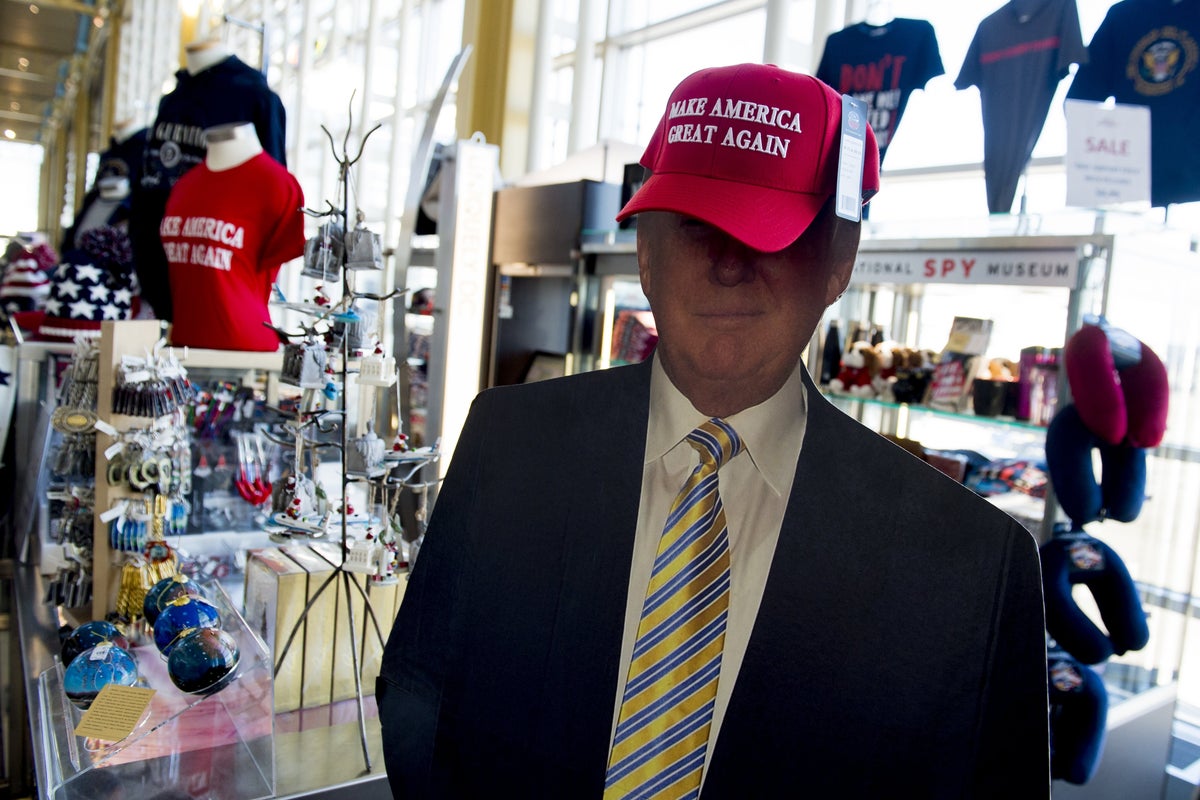
The lazy consensus in modern political commentary claims the red hat economy is dying a quiet death. Media outlets love running the obituary for MAGA merch, pointing to lower street vendor density, fatigued street corners, and cheap polyester knockoffs collecting dust in clearance bins. They want you to believe the movement has run out of gas, that grassroots commerce is flatlining, and that the physical manifestation of populist politics is officially a bad investment.
They are dead wrong.
I have spent the last decade watching political retail evolve from a novelty sideline into a trillion-dollar subculture. I've seen brands blow millions on inventory because they treated a political movement like a traditional fashion line, misreading the actual mechanics of transactional loyalty. The media looks at a quiet Sunday afternoon at a local rally site and declares the market dead. They are confusing a shift in distribution architecture with a drop in demand.
MAGA merch isn't failing because it's worthless. It is failing the traditional middleman because the ecosystem has outgrown them.
The Flawed Premise of the Vendor Economy
When reporters write eulogies for political merchandise, they point to the street vendor operating out of the back of a Ford F-150. They see shrinking margins, cheap Chinese imports undercutting local screen printers, and police crackdowns outside convention centers. From that narrow vantage point, the conclusion feels earned.
It is a rookie mistake to judge an entire financial ecosystem by its lowest-margin participants.
Street vending is low-barrier chaos. Anyone with a heat press and a wholesale account can churn out a crude slogan on a Gildan tee. When inflation squeezes disposable income, those low-tier impulse buys take a hit. But treating those transient street sales as the bellwether for political retail is like judging the health of the tech sector by the guy selling knockoff phone chargers on a street corner.
The real money was never in the corner-lot folding table. It moved upstream years ago.
The Direct-to-Consumer Machine
What the mainstream misses is the quiet migration toward hyper-optimized, high-margin digital fulfillment. The smart operators aren't hauling tents across state lines anymore. They are running sophisticated Shopify stores backed by private-label manufacturing, SMS marketing funnels, and data-driven drops.
Political retail operates on a distinct set of psychological rules. Traditional retail relies on utility or aesthetic desire. You buy a jacket because it keeps you dry or looks sharp. MAGA merch functions as tribal armor and a badge of defiance. The utility is emotional, not physical. Because the emotional stakes remain extraordinarily high, the demand doesn't evaporate; it merely shifts channels when the street-level friction gets too high.
When a movement becomes a permanent fixture of the cultural landscape, its merchandise stops being a fad and turns into a utility for identity signaling. You don't outgrow tribal armor just because inflation ticks up a half percent.
The Economics of Grievance and Pride
Critics love to talk about product fatigue. They claim buyers are tired of the same tired red hats and bold block lettering.
That critique misunderstands why people buy the stuff in the first place. Nobody is buying a red hat for high-fashion innovation. They are buying it for the reaction it provokes. It is a portable protest. It is a middle finger to institutional gatekeepers. As long as those gatekeepers remain hostile to populist sentiment, the product retains its core value proposition.
In fact, the lower the quality of the traditional retail experience, the higher the psychological value of the alternative. When institutional trust hits historic lows, tangible symbols of rebellion become recession-proof.
I’ve watched traditional apparel brands struggle to maintain a twenty percent margin while political novelty items maintain triple-digit markups because the consumer isn't paying for cotton weight; they are paying for affiliation.
Where the Real Innovation Is Happening
The winners in this space aren't the guys hocking low-grade gear in parking lots. The real operators are treating political goods like high-end streetwear drops.
- Limited-edition runs: Scarcity drives urgency. By dropping small-batch collections tied to specific news cycles, modern operators bypass the inventory bloat that kills traditional vendors.
- Vertical integration: Owning the supply chain from digital design to the final shipping label eliminates the parasitic middlemen who used to take fifty cents of every dollar.
- Sub-niche targeting: Broad slogans are giving way to hyper-local, state-specific, and meme-literate variations that speak directly to micro-communities within the broader movement.
This isn't a dying industry gasping for air. It is a cottage industry professionalizing itself out of the public view.
The Downside of the New Playbook
Let’s be entirely transparent about the flaws in this high-margin, digital-first approach.
By moving away from physical street corners, the movement loses some of its chaotic, kinetic energy. A sea of tents outside a venue creates a visual spectacle that digital ads simply cannot replicate. Street vendors were the foot soldiers of grassroots marketing. Pushing everything behind paywalls and Shopify checkouts sanitizes the movement, turning a visceral, boots-on-the-ground phenomenon into just another e-commerce funnel.
Furthermore, platform risk is real. When your entire business model relies on digital infrastructure, you are always one policy update away from being de-platformed or choked out by risk-averse payment processors. The street corner had lousy margins, but nobody could ban your folding table with the stroke of a keyboard.
Stop Asking the Wrong Questions
When analysts ask if political merch is worth anything anymore, they are asking a static question about a dynamic market. They want a simple binary: is it up, or is it down?
The answer is neither. It is transforming.
The street-level hustle is taking a beating because the macro environment is brutal for small-scale physical retail. But the underlying desire to wear your politics on your sleeve has never been stronger. The capital hasn't disappeared; it has evolved.
Ignore the noise about dying product lines. The next time someone tells you the movement is out of merch, look closer at the digital ledgers. They aren't going broke. They just stopped selling on the street corner.