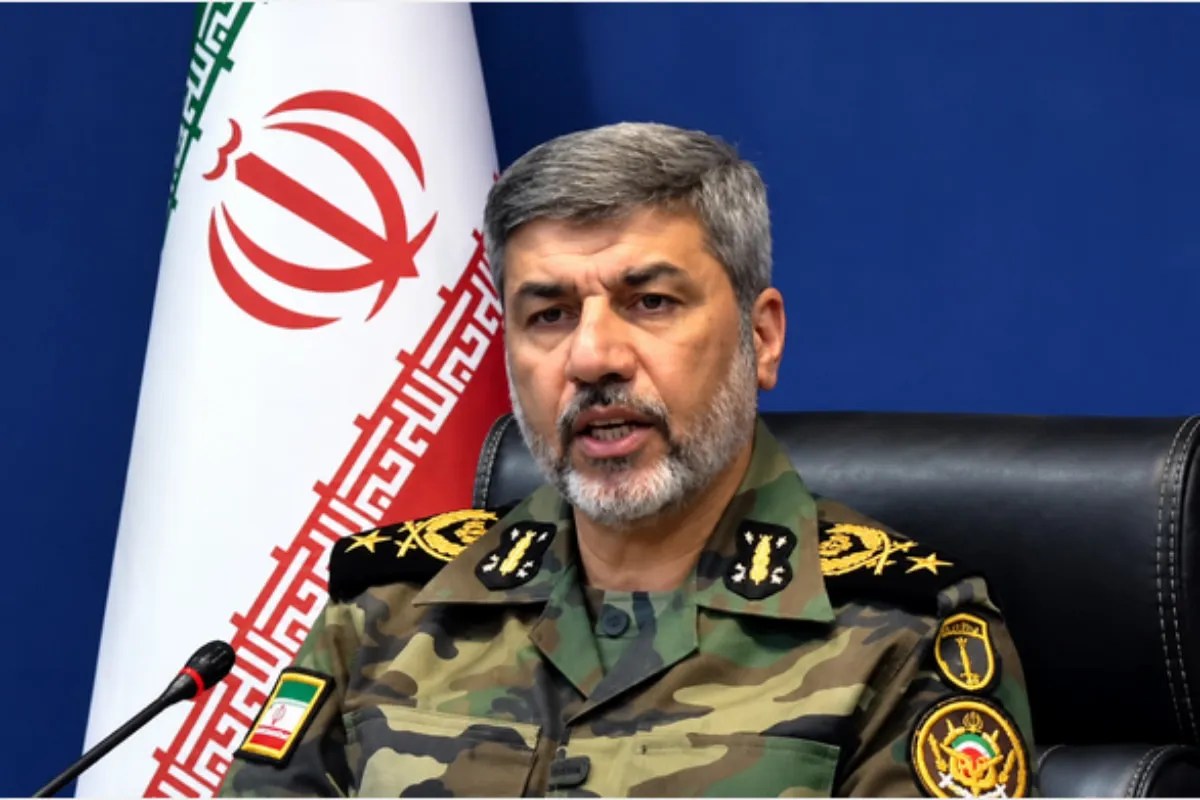
State-level deterrence doctrine relies primarily on retaliatory credibility, yet shifting geopolitical friction points increasingly force military planners toward preemptive signaling. Recent official posturing from senior command elements within the Islamic Revolutionary Guard Corps highlights a strategic transition from purely reactive defense to active threat neutralization. Evaluating this shift requires stripping away diplomatic rhetoric to analyze the underlying mechanics of escalation dominance, regional proxy networks, and the economic variables governing modern asymmetric warfare.
The Structural Mechanics of Preemptive Posturing
Traditional deterrence theory operates on the premise of second-strike capability: a state absorbs an initial blow and inflicts unacceptable costs in response. However, modern asymmetric statecraft introduces structural vulnerabilities that render pure second-strike frameworks obsolete. When a state faces continuous economic strangulation through sanctions alongside forward-deployed adversary force concentrations, waiting for kinetic confirmation of an attack introduces unacceptable tactical latency.
Preemptive signaling serves three distinct operational functions within this security environment:
- Compression of Adversary Decision Loops: Forcing opposing command structures to account for immediate, unannounced friction raises the cost of executing tactical probes.
- Redirection of Strategic Geography: Shifting the theater of potential conflict away from sovereign borders toward integrated regional depth via proxy networks and missile-artillery saturation.
- Threshold Calibration: Redefining what constitutes an actionable threat, lowering the threshold required to initiate defensive or disruptive countermeasures.
By communicating a willingness to strike first upon perceived indicator thresholds, military leadership attempts to re-establish the cost-benefit equilibrium against technologically superior opponents.
Asymmetric Capabilities and Economic Friction Costs
A rigorous analysis of this strategic posture demands an evaluation of actual military utility versus deterrence theater. Direct conventional confrontation against advanced aerospace and naval powers presents a structural mismatch for Iran's conventional armed forces, which face persistent constraints on heavy modernization due to long-term technological embargoes.
To offset this imbalance, military doctrine relies heavily on decentralized force multiplication:
- Ballistic and Cruise Missile Saturation: Utilizing vast subterranean missile arsenals designed to overwhelm multi-layered integrated air defense systems through sheer volumetric density.
- Maritime Chokepoint Interdiction: Maintaining the capacity to disrupt energy flows through the Strait of Hormuz, converting localized regional conflict into a global economic volatility shock.
- Distributed Proxy Integration: Employing synchronized non-state actors across multiple theaters to fix adversary resources across disparate geopolitical vectors.
The economic cost function governing this dynamic is asymmetrical. While an adversary expends high-value interceptor munitions costing millions of dollars per engagement, the deployed counter-assets frequently rely on lower-cost mass production. This disparity forms the backbone of the defensive calculus: make the cost of sustained engagement economically unsustainable for external actors.
Strategic Realities and Escalation Control
The primary limitation of adopting an aggressive preemption threshold lies in the risk of miscalculation. When both sides maintain compressed reaction windows and elevated readiness states, routine operational friction can easily cross the boundary from posturing into unintended total war.
Furthermore, domestic political imperatives frequently amplify public statements by military commanders, complicating the separation of strategic deterrence signalling from actual operational doctrine. Preemptive rhetoric functions simultaneously as an internal cohesion mechanism and an external warning, creating a dual-audience dilemma where localized political messaging risks unintended international escalation.
The Operational Trajectory
Military planners facing comparable strategic asymmetry will continue to compress response timelines and expand forward-defense perimeters. Future stability in the region depends less on diplomatic engagement and more on whether automated warning systems and human decision-makers can accurately interpret threshold triggers without initiating an irreversible spiral of kinetic action. The operational baseline has shifted: deterrence is no longer maintained by the promise of painful retaliation, but by the credible threat of preemptive disruption.


