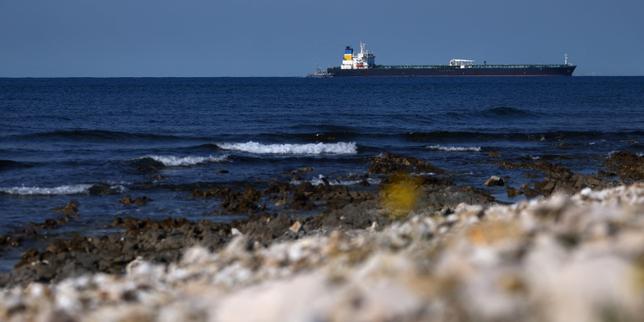
The media is currently patting European authorities on the back because a single, rusting tanker named the Deyna spent a few days detained in French waters. Headlines frame this as a victory for the rule of law and a blow to Russia’s "shadow fleet."
They are lying to you. Or worse, they don't understand how the global energy trade actually functions.
The detention of the Deyna wasn't a masterstroke of maritime enforcement. It was a clerical hiccup that highlights the sheer impotence of current sanctions. While bureaucrats in Paris celebrate a temporary paperwork victory, hundreds of similar vessels are crossing the oceans right now, insured by opaque entities and flagged in jurisdictions that couldn't care less about G7 price caps.
If you think stopping one ship changes the math of the global oil market, you are playing checkers while the Kremlin is playing a very dirty game of 3D chess.
The Myth of the Shadow Fleet
The term "shadow fleet" is a convenient boogeyman designed to make illegal activity sound like a fringe operation. It isn't. We are talking about a massive, parallel infrastructure that has become a permanent fixture of global trade.
Mainstream reporting suggests these ships are "ghosts" operating in the dark. That is nonsense. We know where they are. We have their IMO numbers. We see their transponders flicker on and off. The problem isn't that we can't find them; the problem is that the West lacks the stomach to actually stop them.
The Deyna was intercepted because of a specific technicality regarding its documentation and ownership links. Most of its siblings are smarter. They use "ship-to-ship" (STS) transfers in international waters, often just outside the reach of coastal state jurisdiction. They switch flags like teenagers change outfits. One day it’s the Cook Islands, the next it’s Gabon or Panama.
By focusing on the Deyna, the media ignores the 99% of the volume that moves without a hitch. This isn't a leak in the system. The leak is the system.
Why the G7 Price Cap is a Mathematical Joke
The core of the "shadow fleet" problem is the $60 price cap. It was designed to keep Russian oil flowing (to prevent a global price spike) while limiting Putin’s profits.
It failed.
Here is the reality of maritime economics:
- Risk is a Commodity: When you make it difficult to ship oil, you don't stop the oil. You just create a high-margin opportunity for risk-takers.
- The Insurance Gap: The West thought that by controlling P&I (Protection and Indemnity) clubs, they could control the seas. Russia responded by creating its own insurance entities and finding partners in Dubai and India willing to look the other way.
- Old Iron: The ships being used, like the Deyna, are often vintage vessels that should have been sent to the scrap yard years ago. They are fully depreciated assets. If one gets seized or sinks, it’s a rounding error on a balance sheet, not a catastrophe for the Russian state.
I have seen traders move millions of barrels using shell companies that exist for exactly forty-eight hours. By the time a regulator in Brussels finishes their morning espresso, the oil has changed hands three times and the original seller is legally invisible. The Deyna was simply the one ship slow enough to get caught in the net.
The French Interception: A PR Stunt, Not a Strategy
France "intercepting" the Deyna near Pas-de-Calais makes for a great photo op. It suggests that the English Channel is a guarded fortress.
But look at what actually happened. The ship was held, inspected, and then... it left. It didn't disappear into a scrap heap. It wasn't confiscated and sold to fund Ukrainian reconstruction. It continued its journey.
This reveals the fundamental weakness of maritime law. Unless a vessel is in clear violation of safety standards or immediate environmental threats, holding it indefinitely is a legal nightmare. The Russians know this. They use the West's commitment to "due process" as a shield. They know that if they provide just enough paperwork to satisfy a local port authority, they can eventually sail away.
The Environmental Time Bomb Nobody Admits
The real story isn't the sanctions evasion. It's the fact that the West’s policy is actively incentivizing an environmental disaster.
By forcing Russian oil onto "shadow" vessels, we have ensured that a massive portion of the world’s crude is being carried by ships with:
- Substandard maintenance records.
- Inadequate insurance coverage for oil spills.
- Crews that are often operating under immense pressure to bypass safety protocols.
If a ship like the Deyna spills its cargo in the English Channel, the "shadow" owners will vanish. The Western taxpayers will be the ones paying for the cleanup. We are traded a small amount of geopolitical leverage for a massive amount of ecological risk. It is a terrible trade.
The Hard Truth About Enforcement
If the West were serious about stopping this, they wouldn't be chasing individual tankers through the Channel. They would be sanctioning the ports that accept the oil and the banks that process the payments in third-party countries.
But they won't do that. Why? Because the global economy is still addicted to the volume. If you truly shut down the shadow fleet tomorrow, oil would hit $150 a barrel by Friday. Inflation would skyrocket. Politicians would lose their jobs.
The "interception" of the Deyna is a performance. It is designed to give the public the illusion of control while the oil continues to lubricate the gears of global commerce.
Stop looking at the one ship that stopped. Start looking at the hundreds that didn't. The "shadow fleet" isn't a glitch. It’s the new world order.
The Deyna didn't leave French waters because the problem was solved. It left because the system is designed to let it pass.