Mainstream news outlets want you to believe the biggest story coming out of Yangon’s Kamayut township court is a simple paperwork violation. They are selling you a neat little narrative: a Thai national gets a year in Insein Prison for breaking local immigration codes while a high-stakes murder trial hangs in the balance.
It is a comfortable distraction. It treats a geopolitical and intelligence-adjacent crime scene like a local domestic dispute gone wrong.
The lazy consensus is that bureaucratic red tape and standard penal procedures are grinding away at a straightforward homicide case involving an American security officer and his ex-wife. That perspective misses the entire structural reality of a country torn apart by civil war. In a nation run by a cornered military junta, nothing happens by administrative accident.
The Bureaucratic Convenience of an Immigration Charge
Let us look at the mechanics of how the Myanmar junta operates. When a foreign diplomat turns up dead with stab wounds to the head and neck inside a hotel popular with international operators, standard legal frameworks evaporate.
The State Department plays dead—literally and figuratively. They hide behind privacy citations, refusing to offer clarity on the exact operational profile of Daniel Paul Riva, an assistant regional security officer stationed in one of the most volatile listening posts in Southeast Asia. Meanwhile, local courts slap the suspect, Pavinee Supasirivisan, with a one-year sentence under a blanket immigration provision reserved for foreigners who commit crimes.
Why rush an immigration conviction while keeping the actual murder proceedings in a nebulous legal purgatory? Because a minor immigration charge buys time. It creates a controlled holding pattern.
In intelligence and security circles, administrative convictions are classic holding actions. They lock a person of interest away from consular access, independent legal representation, and international media scrutiny without forcing the regime to present classified evidence in an open murder trial.
The Geopolitical Blind Spot of Western Reporting
Mainstream journalists treating this as a standard true-crime narrative are failing basic geography and political science. Myanmar is not a functioning state with an independent judiciary. It is a crumbling garrison state fighting a multi-front civil war against pro-democracy armed wings and ethnic militias.
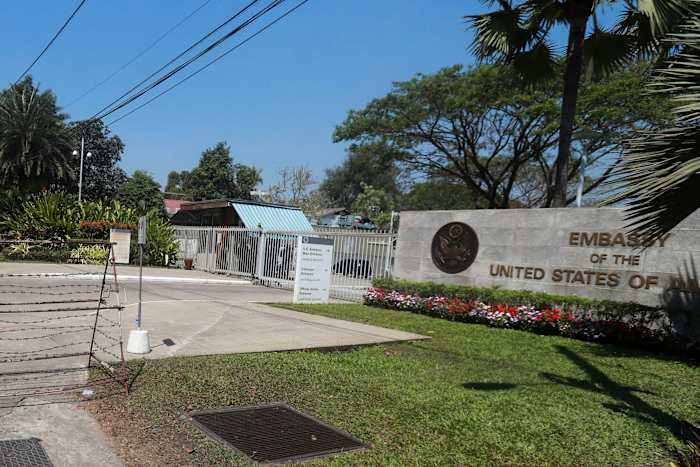
When a U.S. government employee is found murdered a mile from the American Embassy, it triggers a silent panic behind diplomatic walls.
- The Security Void: Yangon is an active zone for regional espionage, sanctions evasion, and back-channel financing for the junta. Security officers do not sit in hotels by coincidence.
- The Information Blackout: The local police, the Thai Embassy, and the township court routinely refuse to comment not because of standard investigative secrecy, but because the case intersects with foreign intelligence sensitivities.
Focusing on the one-year immigration sentence is equivalent to looking at the anchor while the ship is sinking. The immigration violation is a legal fiction deployed to keep the suspect isolated while back-room negotiations happen between Bangkok, Washington, and the generals in Naypyidaw.
What You Should Watch Instead
Stop asking whether she will face a murder trial. That is the wrong question entirely. The real question is what state secrets or operational documents were recovered from that hotel room at the Sakura Residence on May 11.
When a security officer goes down in a hostile theater, the host government moves fast to wrap the narrative in administrative tape. A one-year prison sentence isn't justice. It is a muzzle.