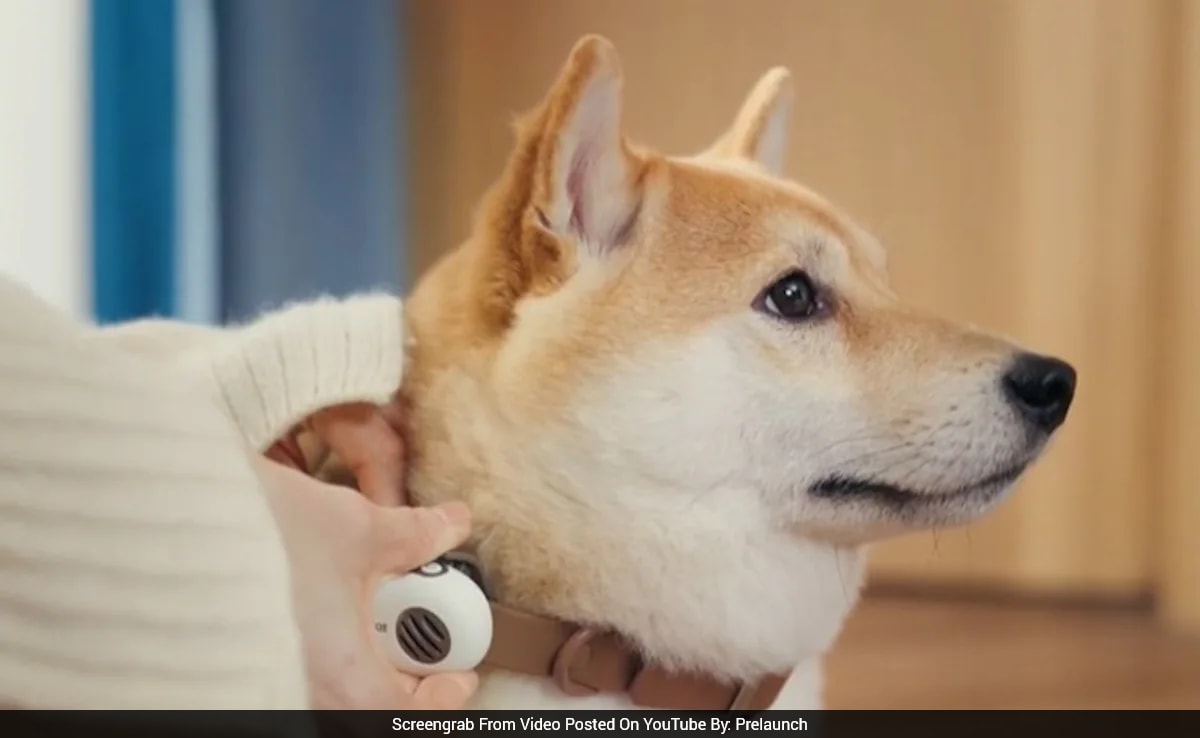
The tech industry has run out of human problems to solve, so it is inventing canine ones.
Lately, venture capital is pouring millions into a delusional premise: that machine learning can decode animal thoughts and hand us a literal Google Translate for our pets. Tech blogs are breathless. They point to neural networks analyzing audio frequencies of barks or computer vision tracking tail wags, claiming we are months away from knowing exactly what Buster thinks about the geopolitical climate.
It is a scam built on human narcissism.
We do not need better algorithms to understand our pets. We need to stop projecting our own psychological baggage onto creatures that are perfectly content living in a world of immediate sensory input. The push for pet-to-human translation software is not a breakthrough in zoology. It is a monument to human loneliness and data-harvesting disguised as empathy.
The Anthropomorphic Trap
The current crop of pet-translation startups operates on a fundamental misunderstanding of linguistics. They gather thousands of hours of acoustic data from dogs and cats, run it through large audio models, and look for patterns. When a dog barks a certain way near the food bowl, the AI labels it "I want dinner."
This is not translation. It is glorified pattern matching of behavior we already understand.
True translation requires a shared conceptual framework. Humans use symbolic language to discuss abstract concepts, past events, and future anxieties. Your dog does not live in that world. A dog does not bark because it is pondering the fleeting nature of youth; it barks because the mail carrier is on the porch.
[Dog Context: Sensory Input] -> [Immediate Reaction: Bark]
[AI Model: Statistical Mapping] -> [Output: "I miss my mother"]
When we build AI to assign complex human emotions and sentences to these actions, we are not uncovering the animal’s mind. We are building a digital mirror that reflects our own desires back at us. I have spent years analyzing how consumer tech companies weaponize data collection under the guise of novelty. This is the same playbook. The goal isn’t to help you bond with your golden retriever. The goal is to get a microphone and an accelerometer strapped to your pet 24/7 so a company can sell aggregated biometric data to pet food conglomerates.
The Biological Reality of Bioacoustics
Proponents of these devices love to throw around the work of legitimate researchers, like Con Slobodchikoff’s studies on prairie dog communication, to validate their commercial gadgets. They argue that if prairie dogs can communicate specific threats via distinct vocalizations, your cat must have a complex syntax too.
This ignores evolutionary biology.
Prairie dogs evolved highly specific vocal warnings because they are a prey species living in dense colonial structures where survival depends on identifying whether a predator is a hawk or a coyote. Domestic dogs and cats have spent thousands of years evolving to communicate with humans through co-evolution. They did not develop a secret linguistic code that requires a GPU cluster to crack. They developed behaviors that already work perfectly well.
- The Tail Wag Misconception: A wagging tail does not equal a happy dog. It signifies emotional arousal. It can mean aggression, anxiety, or excitement. An AI tracking a tail via a collar-mounted sensor misses the pheromones, the pupil dilation, and the muscle tension that a human standing in the room can easily read.
- The Purr Myth: Cats purr when they are content, but they also purr when they are severely injured or terrified as a self-soothing mechanism. A localized sensor interpreting a purr through an audio model without systemic context will misdiagnose a suffering animal as a happy one.
By relying on an app to tell us what a pet feels, we are actively training ourselves to ignore our own observational faculties. We are outsourcing basic empathy to an API.
The Danger of Algorithmic Pet Ownership
What happens when the model gets it wrong? This is where the Silicon Valley ethos of "move fast and break things" becomes dangerous.
Imagine a scenario where a user relies on a smart collar to monitor their rottweiler’s mood. The app, misinterpreting a series of low-frequency growls and specific body posturing due to a flaw in its training data, outputs a reassuring notification: "Buster is feeling playful!" The owner encourages a toddler to approach. The dog, actually displaying resource-guarding behavior, bites.
Who bears the liability? The tech company will hide behind a wall of terms of service agreements stating the app is "for entertainment purposes only." Yet, their marketing campaigns sell the device as a serious tool for animal welfare.
We are looking at the creation of a generation of pet owners who cannot read an animal’s real-time physical cues because their eyes are glued to a dashboard interface dashboarding "canine happiness metrics."
People Also Ask: The Flawed Premise of Animal AI
Can AI tell me if my dog is depressed?
No. AI can tell you if your dog’s activity levels have dropped compared to a baseline of similar breeds. It cannot diagnose depression. Reduced activity usually points to physical ailments like osteoarthritis, dental pain, or thyroid issues. Labeling a lethargic dog "depressed" via an app prevents owners from seeking necessary veterinary care for physical pain.
How do pet translation apps actually work?
They don't translate; they categorize. They use supervised learning to match audio frequencies or movement vectors to a pre-defined list of human interpretations created by the developers. If a cat meows at a specific pitch, the algorithm selects the closest match from a database, usually defaulting to something endearing or quirky to keep you using the app.
Is there any scientific backing to consumer pet translators?
None for the commercial products sold on app stores or crowdfunding platforms. While academic institutions use machine learning to study wild animal vocalizations (like whale clicks or elephant rumbles) to understand migration and social structures, these are macro-level research tools, not individual mind-readers for your living room.
The Uncomfortable Truth About Why We Want This
The obsession with pet translation software exposes a bleak reality about modern human relationships. We are increasingly isolated, yet we are terrified of the friction that comes with genuine human interaction. Pets offer unconditional companionship without the demands of human reciprocity.
But for some, even that isn't enough. We want our pets to talk because we want validation. We want to hear them say, "Thank you for buying the expensive kibble," or "You are a great provider."
Human Insecurity -> Demands Algorithmic Validation -> AI Generates Fake Animal Gratitude
It is a deeply selfish pursuit. A dog’s beauty lies precisely in the fact that it exists outside of human language. They do not gossip, they do not lie, and they do not weaponize words. They communicate through presence, shared rhythm, and immediate action. Forcing them into the constraints of human syntax doesn't elevate them; it diminishes them.
Look at the Animal, Not the Screen
If you want to know what your pet is thinking, close your laptop and take off their smart collar.
Spend a week observing their ears. Watch the positioning of their weight on their paws. Notice how their breathing patterns shift when a stranger enters the perimeter. Animals are constantly speaking a sophisticated language of spatial awareness, scent, and kinetic movement. It is a language humans used to know how to read before we decided that something isn't real unless it is displayed on an OLED screen.
Stop waiting for a software update to fix your relationship with your dog. The data you need isn't in the cloud. It is sitting on the floor right next to you, staring at your face, wondering why you are looking at a glowing box instead of throwing the ball.


