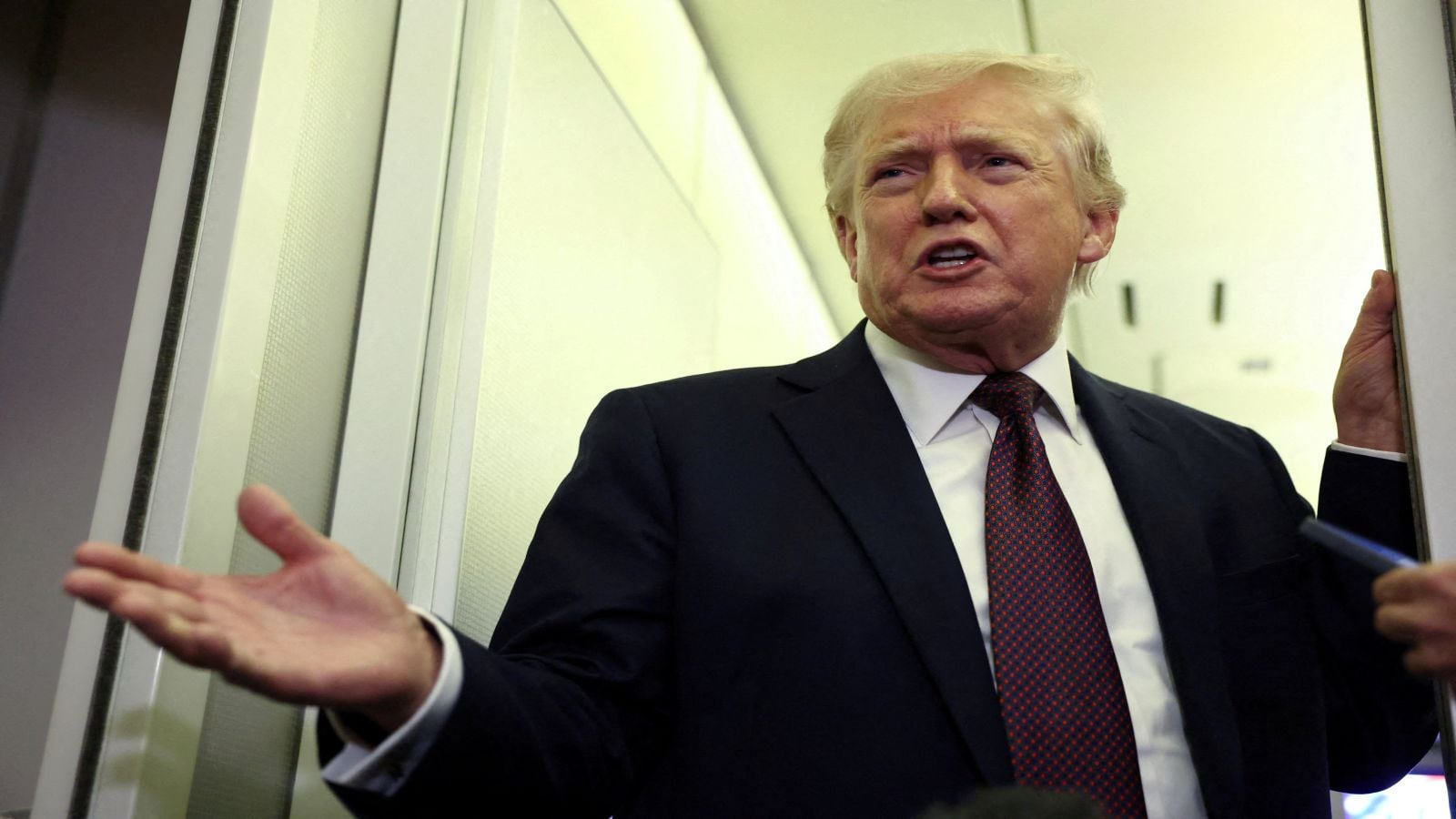
Financial disclosures filed by Donald Trump reveal a personal investment of up to $50,000 in Elon Musk's SpaceX, executed quietly in June. For casual observers, a five-figure equity stake in a privately held aerospace giant looks like a rounding error. Trump routinely trades in multi-million dollar real estate holdings, licensing deals, and media stock valuations that dwarf this amount. Musk manages a trillion-dollar portfolio of enterprises spanning orbital rocketry, neural interfaces, and autonomous transit networks.
Yet money in politics rarely operates on scale alone. It operates on symbolism, alignment, and signal-to-noise ratios.
When a former president holding a commanding lead in national polls channels personal capital into the signature enterprise of the world's most influential technologist, the transaction ceases to be about asset allocation. It becomes a convergence of power centers. Two men who thrive on media oxygen, institutional friction, and personal brand dominance have found a common financial denominator.
Financial disclosures rarely tell the whole truth, but they always expose priorities. To understand why a modest SpaceX stake matters, we have to look past the dollar amount and examine the mechanics of contemporary elite alliances.
The Anatomy of a Micro Stake
Public filings under the Office of Government Ethics do not require exact figures for assets held within broad brackets. Trump’s disclosure listed the SpaceX holding in a category ranging from $1,500 to $50,000.
Skeptics point out that fifty thousand dollars represents pocket change for a billionaire politician. That critique misses the operational reality of how high-net-worth individuals purchase access to private markets. SpaceX shares are famously difficult to acquire. Retail investors cannot buy them on public exchanges. Even accredited investors often face steep secondary market barriers, minimum investment thresholds, and strict internal vetting by SpaceX management.
Securing an allocation in SpaceX requires direct or secondary access to venture syndicates that manage private placements. For Trump, the act of acquiring the asset was more important than the capitalization. It created a legal, reportable financial tie to a company that holds hundreds of billions of dollars in classified government payloads, civilian telecommunications contracts, and national security infrastructure.
Federal regulators and watchdogs immediately noted the structural irony. SpaceX depends heavily on federal largesse. NASA and the Department of Defense award the company launch contracts worth billions of dollars. If Trump returns to the Oval Office, he will command the executive branch agencies that regulate, fund, and litigate against Musk's commercial empire.
Owning a stake in a regulated entity while campaigning for the office that oversees those regulations stretches traditional conflict-of-interest norms. But political norms regarding financial entanglements eroded long ago. Trump and Musk operate outside conventional political etiquette. For them, shared financial exposure signals a mutual defense pact against regulatory overreach.
The Silicon Valley Washington Axis
For years, Silicon Valley and Washington operated in separate orbits. Tech founders built software, disrupted legacy industries, and occasionally visited the capital to testify before confused congressional committees. Politicians viewed tech giants either as cash cows for campaign donations or as monopolies ripe for antitrust dismemberment.
That wall collapsed.
Elon Musk’s evolution from Silicon Valley darling to anti-establishment cultural warrior accelerated this shift. By purchasing Twitter and rebranding it as X, Musk positioned himself as a free-speech absolutist at war with federal censorship bureaucracies. Trump spent years claiming that establishment institutions conspired to silence him.
When two high-profile figures perceive a common enemy in the federal administrative state, financial alignment follows.
The SpaceX investment serves as financial mortar for this political bridge. Venture capitalists and tech executives who once treated Trump with polite disdain now quietly court his inner circle. They watch Musk use his platform to amplify anti-regulatory rhetoric, challenge federal agencies, and question the competence of traditional governance structures.
+-------------------------------------------------------------+
|              THE TECH-POLITICS CONVERGENCE                  |
+-------------------------------------------------------------+
|  Elon Musk              |  Donald Trump                     |
|  - SpaceX / Starlink    |  - Populist Political Movement    |
|  - Federal Contracts    |  - Executive Power Potential      |
|  - Media Platform (X)   |  - Media Ecosystem Control        |
+-------------------------------------------------------------+
               \                               /
                \                             /
                 v                           v
          [ THE SHARED OBJECTIVE: DISMANTLING ]
          [    THE ADMINISTRATIVE STATE        ]
When Musk endorses a political candidate or challenges a federal judge, he is not merely acting as a private citizen. He acts as the prime contractor for American national security payloads. The federal government cannot easily punish Musk or decouple from SpaceX because no domestic alternative exists for heavy-lift rocketry or low-earth-orbit satellite internet.
Trump understands this leverage. By taking a financial stake in SpaceX, Trump anchors his political brand to the most technologically advanced aerospace asset on the planet. He ties his economic fortunes directly to the success of American space dominance.
Regulatory Realities and Conflict
The ethics of presidential investments have always been contentious, but the SpaceX holding introduces novel complications.
Consider the Federal Aviation Administration. The FAA regulates rocket launches, airspace closures, and environmental reviews for SpaceX testing facilities in Texas and California. SpaceX executives have frequently clashed with FAA bureaucrats over launch timelines, arguing that excessive red tape slows down innovation.
If Donald Trump wins another term, the administrator of the FAA will report directly to an executive branch led by a man who owns equity in SpaceX.
Past administrations established blind trusts or divested from sensitive holdings to avoid even the appearance of corruption. Trump’s approach rejects this framework entirely. His supporters argue that a leader with personal business experience understands how markets work better than career bureaucrats. Critics counter that direct equity ownership in government contractors creates an untenable conflict of interest.
Both arguments miss the deeper structural shift. The modern American economy is dominated by corporate monopolies and platform giants whose scale rivals nation-states. When state power and techno-capitalism merge, traditional conflict-of-interest frameworks built for the mid-twentieth century break down.
Musk does not need Trump's $50,000 investment for capital. SpaceX routinely raises billions in private funding rounds at valuations exceeding $150 billion. The transaction was symbolic. It was a handshake executed via SEC disclosures and financial transparency forms.
The Starlink Factor
Beyond rocket launches, SpaceX controls Starlink, the satellite internet constellation providing broadband coverage to remote regions, maritime fleets, and active combat zones. Starlink proved decisive in modern geopolitical conflicts, notably in Ukraine, where the network became the primary communications backbone for military operations.
Control over global communications gives private actors unprecedented geopolitical influence. State departments no longer hold a monopoly on foreign policy communications infrastructure.
When Trump invests in SpaceX, he invests in Starlink’s infrastructure. A future presidential administration would face monumental decisions regarding the subsidization, expansion, or regulation of global satellite networks. Having a financial stake in the parent company introduces a personal incentive structure that previous commanders-in-chief avoided.
Mainstream analysts often treat Trump’s financial disclosures as eccentric footnotes. They analyze the real estate holdings, the licensing royalties from branded bibles and sneakers, and the crypto ventures. They miss the macro picture. Trump is building a portfolio of assets that hedge against institutional decline. By backing Musk, Trump aligns himself with the faction of American capitalism that builds physical infrastructure in defiance of regulatory friction.
The New Rules of Elite Survival
The ruling class in America is fracturing. One faction remains anchored in legacy institutional power, university administrations, legacy media, and federal civil service agencies. The opposing faction emerges from tech monopolies, private aerospace, cryptocurrency networks, and populist political movements.
Elon Musk leads the techno-populist vanguard. Donald Trump leads the political insurgency against the legacy bureaucracy.
A fifty-thousand-dollar investment in SpaceX is the financial equivalent of planting a flag on disputed territory. It signals that the traditional boundaries separating political office from private corporate empires no longer apply.
As the 2026 political landscape accelerates toward high-stakes elections, alliances between tech titans and populist politicians will reshape campaign financing, media narratives, and regulatory policy. The disclosure of Trump's SpaceX stake was not a minor accounting detail. It was a preview of how power will be consolidated in the coming decade, where the men who control the rockets and the men who command the populist base write their own rules of engagement.


