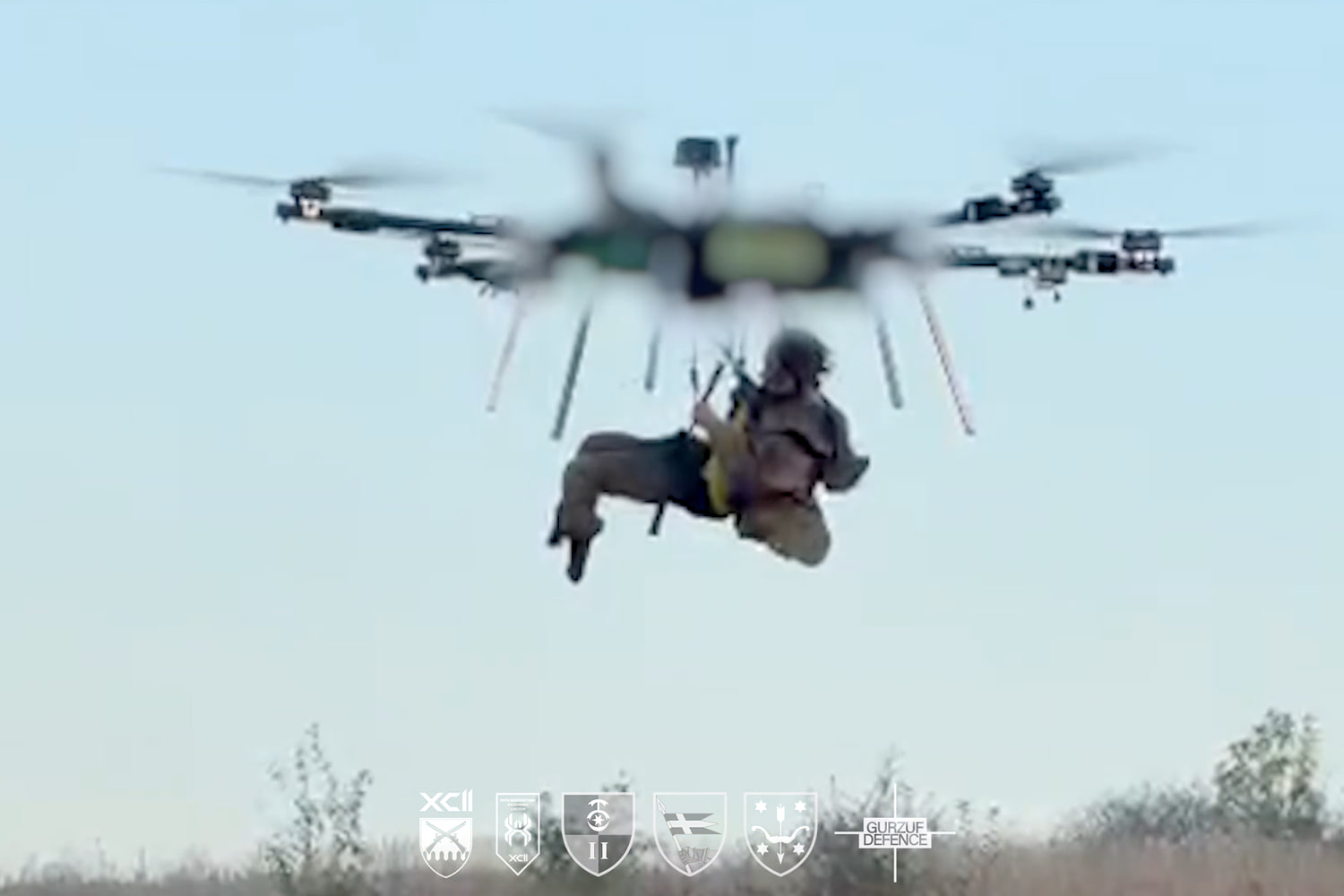
Every desk warrior in the defense tech ecosystem is currently losing their mind over a headline about the first recorded drone evacuation of a wounded soldier. Tech blogs are framing it as a humanitarian miracle. Venture capitalists are updating their pitch decks to include medevac autonomy. Military pundits are declaring that the Golden Hour of trauma care has just been saved by quadcopters and carbon-fiber stretchers.
They are all missing the point, and their collective delusion is going to cost lives. Also making news in related news: Inside the North Sea Fuel Shock Nobody is Explaining Properly.
Let us dispense with the feel-good narrative right now. A remote-controlled basket lifting a single injured infantryman out of a trench is not a revolution in military medicine. It is a desperate, highly constrained band-aid applied to a gaping arterial wound in modern evacuation protocols. Focusing on the delivery mechanism distracts from the brutal mathematical reality of contested airspace. If your evacuation strategy relies on a slow-moving, low-altitude multirotor carrying a live casualty across a frequency-jammed frontier, you do not have a medical system. You have a target practice invitation.
I have spent years watching defense contractors sell shiny objects to ministries of defense that prioritize PR-friendly gadgets over systemic survivability. Every time a new tactical edge case goes viral, procurement officers scramble to acquire the symptom while ignoring the disease. Further insights on this are covered by BBC News.
The Physics of Medevac Cannot Be Patched by Software
To understand why the drone evacuation hype is fundamentally flawed, you have to look at the physics of tactical combat casualty care under electronic warfare.
The standard military medevac model relies on speed, armor, and professional triage teams. A Black Hawk helicopter or an armored ambulance moves fast, carries blood products, and houses medics capable of performing surgical interventions while moving. A heavy-lift cargo drone moving a casualty does none of this.
Consider the payload constraints. A wounded soldier in full kit weighs upwards of 200 pounds. To lift that dead weight out of a contested zone, you need a heavy-lift unmanned aerial system with a massive radar signature and a severe acoustic profile. It is loud. It is slow. And in an environment saturated with electronic warfare units, its control links are constantly vulnerable to signal spoofing and frequency hopping.
When people celebrate a single successful drone extraction, they ignore survivorship bias. They see the one video that made it out of the operational theater and ignore the twenty platforms that were downed by shrapnel, intercepted by directional jammers, or tracked by thermal optics and obliterated by artillery before they even reached the casualty collection point.
The Golden Hour is a Myth in High-Intensity Conflict
We cling to the doctrine of the Golden Hour—the medical consensus that a wounded soldier must reach a surgical suite within sixty minutes to maximize survival rates. That doctrine was forged in the asymmetrical counter-insurgency conflicts of Iraq and Afghanistan, where total air supremacy was assumed and medical evacuation helicopters operated with impunity.
That world is gone. In peer-to-peer or near-peer high-intensity conflict, air supremacy is a fantasy. Skies are contested by integrated air defense systems, shoulder-fired surface-to-air missiles, and millions of cheap first-person view interceptor drones.
When air superiority evaporates, the Golden Hour stretches into hours, sometimes days. No quadcopter is going to fly thirty miles across an active artillery barrage to pick up a casualty, bypass hostile electronic jamming, navigate autonomously through GPS-denied zones, and land safely at a field hospital. The math simply does not support it.
Instead of building fantasy medevac drones that attempt to bypass frontline chaos, military planners should be focusing on what happens before evacuation becomes necessary: radical decentralization of advanced trauma care, automated tourniquet systems, synthetic blood stabilization packs issued to every squad leader, and hardening ground-based protected mobility.
Why the Tech Industry Keeps Missing the Battlefield Reality
Silicon Valley and defense tech startups suffer from a chronic condition: solutionism. They look at a human tragedy and immediately look for a hardware SKU to fix it.
I have watched companies burn millions of dollars developing autonomous flight control algorithms for medical evacuation pods that fail the basic smell test of frontline combat. They test them in pristine desert ranges with zero wind, zero jamming, and zero hostile snipers. Then they wonder why infantry units on the ground refuse to use them when real bullets start flying.
An infantryman under fire does not care about the elegant aerodynamics of your carbon-fiber rescue basket. They care about reliability, redundancy, and weight. If a drone fails halfway through an extraction because an inexpensive electronic warfare rig jammed its GPS, that wounded soldier is now stranded in a dead zone, completely cut off from human intervention.
True innovation in battlefield medicine is rarely glamorous. It looks like better hemostatic agents, lighter intraosseous infusion kits, and training every single rifleman to act as a combat lifesaver. It is about redundancy, not remote control.
The Uncomfortable Truth About Autonomous Rescue
Let us be completely transparent about the trajectory of this technology. Autonomous casualty evacuation will eventually happen, but not the way the tech press imagines. It will not look like an Uber for wounded soldiers. It will look like heavily armored, unmanned ground vehicles grinding their way through mud, craters, and rubble, utilizing local computer vision to navigate when all external signals are jammed to absolute zero.
Ground robotics are boring. They do not make for viral social media clips of a sleek white drone rising silently into a sunrise. But ground vehicles can carry actual blood supplies, heavy armor plating, and mechanical winches that do not fail when a mortar shell detonates fifty yards away.
Until defense innovators stop chasing viral headlines and start respecting the brutal physics of electronic warfare and ballistic threat environments, every shiny new drone medevac announcement is nothing more than a marketing campaign disguised as humanitarian progress.
Stop looking at the sky for a savior. The ground is where the war is won, and the ground is where our wounded will have to be saved the hard way.