Hydrological Baselines and Structural Exposure
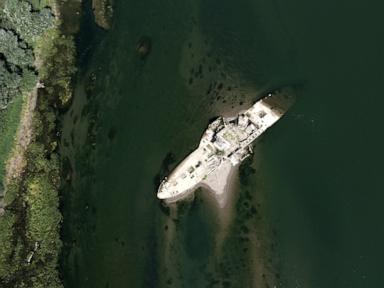
When continental water systems recede past historic mean thresholds, the hidden inventory of centuries becomes exposed. The emergence of ancient vessel hulls in the Danube River basin near Kostolac, Serbia, serves as a physical indicator of severe hydrological stress rather than a mere historical curiosity. Extended meteorological drought combined with elevated thermal evaporation rates strips fluvial systems of their operational depth. This reduction in water volume strips away the protective sediment layers that shield submerged artifacts, modern shipping channels, and municipal intake pipes alike.
Analyzing this phenomenon requires moving past surface-level reporting of weather anomalies to examine the underlying structural mechanics. A river system functions as an interconnected logistical and ecological pipeline. When discharge rates drop below critical minimums, the entire economic and operational cost function shifts. The appearance of sunken craft from past conflicts or commercial eras highlights a systemic vulnerability: water scarcity exposes physical infrastructure limits that remain invisible during normal flow regimes.
The Three Operational Stressors of Depleted Basins
1. Logistical Bottlenecks in Inland Freight
Commercial navigation relies on predictable draft clearances. When prolonged heat waves restrict water levels, cargo vessels must reduce tonnage capacity to prevent grounding on shifting silt beds. This operational adjustment creates an immediate cascading effect across continental supply chains.
- Barge operators face a direct trade-off between payload weight and safe clearance depth.
- Lighter loads require an increased number of transits to move equivalent volume, driving up fuel consumption and labor overhead.
- Secondary freight channels become congested as traffic diverts from shallow trunk lines into narrow bottlenecks.
2. Geotechnical Destabilization of Submerged Assets
Submerged timber and iron hulls achieve a fragile equilibrium under anaerobic sediment layers. Rapid drawdown alters this environment completely.
- Exposure to atmospheric oxygen accelerates timber rot and iron oxidation rates.
- Shifting currents scour away riverbeds, undermining the structural integrity of bridge piers, pipeline crossings, and anchoring points.
- Archaeological assets degrade rapidly once unearthed, presenting an urgent preservation challenge before structural collapse occurs.
3. Thermal and Ecological Thresholds
Water volume reduction directly impacts temperature regulation and aquatic chemistry. Lower discharge volumes absorb ambient heat faster, raising water temperatures and depleting dissolved oxygen. This dynamic disrupts municipal cooling water intake systems, agricultural irrigation channels, and aquatic habitats simultaneously.
The Economic Impact Matrix
Understanding the financial cost of prolonged low-water events demands a quantitative view of the variables at play. The economic damage does not scale linearly with the drop in water level; rather, it follows an exponential curve once critical draft depths are breached.
Water Level Thresholds vs. Economic Friction
Normal Flow     --> Baseline Operations (100% capacity)
Warning Level   --> 20% to 30% payload reduction
Critical Level  --> Total navigation suspension / Infrastructure risk
The primary expenditure shifts from predictable maintenance to emergency dredging and structural retrofitting. Municipalities along major European arteries now face recurring capital outlays to deepen intake pipes that were originally engineered for twentieth-century hydrological averages. The cost of inaction includes industrial shutdowns, power generation cutbacks at thermal plants lacking cooling water, and catastrophic supply chain failures across inland manufacturing hubs.
Strategic Resource Allocation for Chronic Water Deficit
Mitigating the risks exposed by receding riverbeds requires moving away from reactive crisis management toward structural adaptation. Regional authorities must implement a multi-tiered resilience framework.
First, hydrodynamic modeling must be updated to account for non-stationary climate patterns. Historical probability curves no longer reflect contemporary evaporation rates and precipitation schedules. Infrastructure design specifications must incorporate worst-case low-flow scenarios as baseline parameters rather than statistical outliers.
Second, freight transport networks need dynamic modal shifting protocols. When river draft falls below operational thresholds, pre-arranged rail and pipeline capacity must absorb the displaced tonnage automatically, preventing regional bottlenecks before they inflate consumer prices.
Finally, cultural resource management agencies must establish rapid-response survey protocols tied directly to hydrological monitoring gauges. When discharge drops below specific cubic-meter-per-second triggers, archaeological recovery teams should be deployed immediately to document and secure exposed artifacts before ambient exposure destroys them.
Capital investment must target real-time sediment tracking and automated dredging fleets positioned at known choke points, transforming navigation channels from fragile historical vulnerabilities into hardened, adaptable transport corridors.