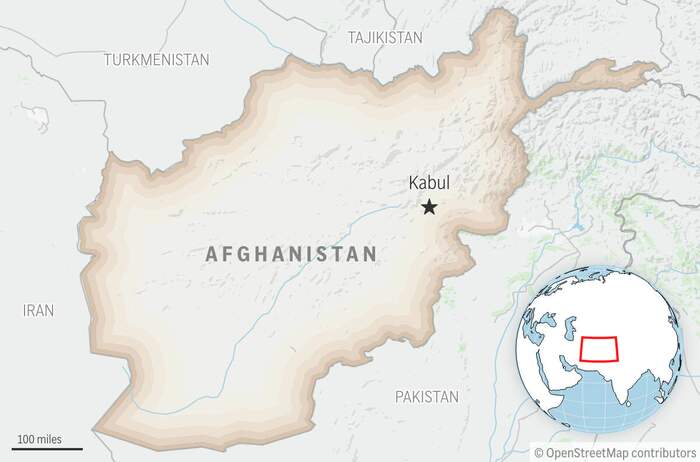
Every single headline on the recent border skirmishes follows a depressingly predictable script. Kabul screams about civilian casualties, Islamabad insists precision munitions vaporized only hardened militants, and international observers shrug while reaching for their standard-issue templates on regional instability. It is a tired theater. Both sides rely on these midnight airstrikes and immediate propaganda spikes because an externalized enemy is the most effective governance shortcut known to modern statecraft.
Stop buying the official narratives. The lazy consensus argues that this is merely about cross-border terrorism or territorial sovereignty. That view misses the structural mechanics driving this perpetual friction. For another perspective, consider: this related article.
The Utility of a Controlled Crisis
When domestic legitimacy evaporates, leaders reach for the national security panic button. I have watched political operators across South Asia manufacture leverage out of border flare-ups whenever domestic inflation, institutional gridlock, or ethnic fracturing threatens their grip on power.
Consider the incentive structures at play. For Islamabad, a restive western frontier provides a convenient justification for internal crackdowns and centralized resource allocation. For Kabul, pointing to nocturnal air incursions rallies a fractured population under a single nationalist banner, instantly drowning out severe economic distress and administrative paralysis. Neither capital actually wants a decisive military resolution or a diplomatic handshake. A permanent state of controlled hostility is vastly more useful than peace. Related reporting on this matter has been shared by USA Today.
The real tragedy is not that intelligence assessments fail or that collateral damage occurs. The tragedy is that these periodic strikes serve as theater to mask structural governance failures on both sides of the Durand Line.
Dismantling The Sovereignty Myth
The conventional discourse treats the border as a traditional international boundary defended by mutual agreement and bilateral treaties. This is an illusion. The frontier has always been a porous, tribal ecosphere that pays zero attention to cartographic lines drawn by colonial bureaucrats in London.
When modern states try to impose Westphalian governance models onto a region defined by centuries of nomadic transit and kinship networks, friction is guaranteed. Islamabad demands that Kabul police territory that Kabul neither fully controls nor culturally dominates. Meanwhile, Kabul resents the physical barrier construction and unilateral enforcement mechanisms that cut through local commerce.
Blaming a lack of border coordination is lazy analysis. The core issue is that the political architecture of both nations relies on the fiction of absolute state control over a terrain that fundamentally rejects it.
Conventional View vs Structural Reality

+----------------------------+-----------------------------------+
| Conventional Narrative     | Structural Reality                |
+----------------------------+-----------------------------------+
| Border dispute over        | Mutual dependence on externalized |
| militant safe havens       | threat narratives                 |
+----------------------------+-----------------------------------+
| Intelligence failures lead | Calculated escalation cycles for  |
| to accidental casualties   | domestic political consumption    |
+----------------------------+-----------------------------------+
| Traditional state defense  | Westphalian models colliding with |
| of sovereign territory     | organic tribal economies          |
+----------------------------+-----------------------------------+
The High Cost of Convenient Amnesia
Ignore the moral posturing from foreign ministries. When civilians die in these exchanges, it is treated by both governments as an acceptable public relations cost. Kabul weaponizes the casualty figures to score diplomatic points in Western capitals, while Islamabad buries the collateral damage reports beneath layers of operational secrecy.
This brings us to the uncomfortable truth that neither side wants to admit. The militant networks operating in the borderlands are not anomalies; they are legacy assets left over from decades of proxy warfare, intelligence outsourcing, and geopolitical gambling. You cannot spend forty years cultivating irregular armed groups as instruments of foreign policy and then express shock when those exact networks domesticate themselves and turn their weapons inward.
The tactical question is never whether an airstrike hit a high-value target or missed by fifty yards. The strategic question is why both establishments continue to treat the symptoms of a self-inflicted wound while pretending they are helpless victims of geography.
What Actually Changes Now
Nothing will change until the ruling elites in both countries find domestic constituencies that punish them for manufacturing border crises rather than rewarding them.
As long as an external enemy remains the cheapest way to buy political survival, the jets will keep flying at midnight, the spokesmen will keep trading accusations, and the border populations will pay the blood tax for elite incompetence. Stop looking for peace accords where both parties profit from the war.