When a hemorrhagic fever index case appears in a megacity, an emergency summit does not contain the pathogen—it merely acknowledges that surveillance latency has exceeded the incubation window. This analysis examines the structural mechanics of cross-border outbreak coordination when Nigeria registers an Ebola case and the Africa Centres for Disease Control and Prevention convenes an urgent response. The central thesis is simple: diplomatic alignment is a necessary precondition for resource pooling, yet outbreak suppression depends on compressing the time between symptom onset, isolation, and contact tracing below the pathogen's serial interval.
A standard news report treats an emergency summit as a decisive turning point. Operationally, a ministerial or agency gathering is a governance reset rather than a field intervention. Without strict separation between political mobilization, epidemiological containment, and supply-chain execution, summits generate communiqués while transmission chains compound quietly in dense urban transit corridors.
The Four Mechanics of Outbreak Escalation
To evaluate how a newly detected Ebola case in Nigeria alters regional risk, separate the dynamics into four distinct mechanisms: transmission geometry, detection lag, institutional jurisdiction, and cross-border mobility. Each mechanism operates on its own clock, and failure in any single one amplifies the burden on the others.
Transmission geometry governs how quickly a single case multiplies. Ebola virus disease spreads through direct contact with blood, secretions, organs, or other bodily fluids of infected individuals, as well as contaminated surfaces and materials. Unlike respiratory pathogens with high airborne dispersion during early mild illness, Ebola transmissibility rises sharply as viral load climbs in later symptomatic stages and during care of severely ill patients or unsafe burials. In a densely populated urban center, the risk profile shifts from isolated household clusters to multi-node exposure across clinics, public transport, and informal markets.
Detection lag measures the elapsed time between the first recognizable symptoms and laboratory-confirmed isolation. Every day of delay expands the cohort of unmonitored contacts. Because early Ebola symptoms—fever, fatigue, myalgia, headache, sore throat—resemble malaria, typhoid, and Lassa fever, initial clinical triage frequently misclassifies cases. Misclassification is not a minor clerical error; it is the primary driver of nosocomial amplification when patients sit in general waiting areas without viral hemorrhagic fever precautions.
Institutional jurisdiction defines who holds authority over budgets, border checkpoints, treatment units, and public messaging. When a national public health agency responds domestically while a continental body convenes a crisis summit, friction can emerge over data sharing, sample transport, cross-border quarantine rules, and surge staffing. Clarity of command determines whether field teams receive personal protective equipment and logistics support in hours or weeks.
Cross-border mobility turns a national event into a regional stress test. Nigeria sits at the center of West African trade, air travel, and informal land movement. Even when formal aviation screening operates at major airports, porous land corridors and high-frequency regional commerce complicate post-exposure tracking if a contact travels across borders while incubating the virus.
Fact Versus Hypothesis in Early Outbreak Reporting
Rigorous outbreak analysis requires separating verified operational facts from working hypotheses. Mixing the two produces false certainty or premature panic.
Known Operational Facts
- Pathogen biology: Ebola virus causes severe viral hemorrhagic fever with high case fatality rates that vary substantially by species, strain, and quality of supportive care.
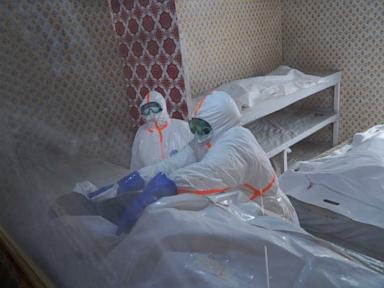
- Transmission route: Human-to-human spread occurs via direct contact with bodily fluids or contaminated fomites, with elevated risk during late-stage illness, clinical care without proper infection prevention and control, and funerary practices involving body contact.
- Summit function: A continental crisis summit convened by the Africa CDC serves to coordinate member states, align technical guidance, mobilize political commitment, and pool or redirect regional resources.
- Containment levers: Rapid case isolation, ring or targeted contact tracing, safe and dignified burials, infection prevention and control in health facilities, and medical countermeasures where applicable remain the core pillars of outbreak control.
Working Hypotheses Requiring Field Verification
- Chain maturity: Whether the recorded case in Nigeria represents a primary spillover event, an undetected local chain of several generations, or an imported case from an active focus elsewhere cannot be assumed without molecular epidemiology and exhaustive backward contact tracing.
- Healthcare exposure: Whether frontline health workers or co-located patients in the initial care facility have already been exposed remains an open question until facility rosters, triage logs, and symptom histories are audited.
- Regional spillover probability: The likelihood of secondary exportation to neighboring states depends on the completeness of contact lists and whether any high-risk contacts traveled prior to identification.
Distinguishing these categories prevents policy overreaction—such as knee-jerk border closures that drive travelers onto unmonitored routes—while preserving urgency where transmission chains are still unmapped.
Why Summits Underperform Without Field Execution
A crisis summit excels at solving coordination failures among ministries of health, national public health institutes, international partners, and regional bodies. It can standardize case definitions, unlock emergency contingency funds, and establish shared situational awareness.
Yet summits routinely underperform when treated as substitutes for tactical bottlenecks on the ground. Consider a hypothetical urban district where a confirmed case is identified three days after hospital admission. Holding a high-level regional meeting does not by itself expand isolation bed capacity, deploy trained contact tracers to congested neighborhoods, or resolve local supply delays for body bags, chlorine disinfectants, or diagnostic cartridges.
The second limitation of summit-centric responses is attention asymmetry. High-level meetings focus heavily on macro-level indicators—total confirmed cases, affected districts, funding pledges, and diplomatic solidarity. Field containment depends on micro-level execution metrics: the percentage of known contacts traced within 24 hours, the time from alert to ambulance dispatch, and the proportion of health facilities enforcing hand hygiene and triage screening. If leadership monitors macro headlines while micro metrics slip, transmission outpaces intervention.
Answering the Core Questions Behind a Nigeria Ebola Alert
When news breaks of a first Ebola case in Nigeria alongside a continental crisis summit, readers and decision-makers typically look for clear answers to four practical questions: how the virus enters a new setting, what a summit actually changes, how health systems stop spread, and what travelers or residents should watch for.
How Does a First Case Emerge in a Previously Quiet or New Setting?
A first recorded case generally arises through one of three pathways: zoonotic spillover from an animal reservoir, human movement from an area with active or recent transmission, or delayed recognition of an already circulating cluster. In urban environments, delayed recognition of an earlier misdiagnosed case is a persistent hazard because routine febrile illnesses mask early presentations. Tracing backward from the confirmed patient—examining travel history, caregiving roles, funeral attendance, and prior clinic visits—is therefore just as critical as tracing forward to find exposed contacts.
What Does a Continental Crisis Summit Change in Practice?
A summit shifts the governance layer. By bringing together technical leads, health ministers, and partner agencies under a unified mandate, it can accelerate cross-border information sharing, standardize surveillance protocols, and rally political backing for rapid deployment of surge teams and diagnostics. Its practical value is measured afterward by concrete outputs: faster cross-border alert protocols, clarified roles between national authorities and regional support teams, and rapid resource allocation rather than broad declarations.
How Do Responders Break Transmission Chains?
Breaking transmission requires compressing the effective reproduction number below one through disciplined operational loops:
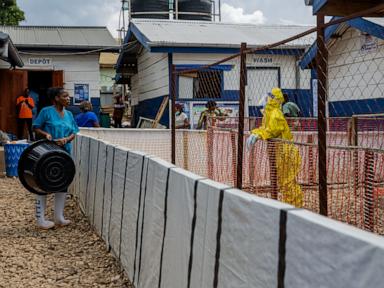
- Rapid isolation and clinical care: Move suspected and confirmed patients immediately into dedicated isolation units with strict infection prevention and control, while providing early supportive care that improves survival odds and reduces high-viral-load exposure windows.
- Active contact identification and monitoring: Map every person who had relevant contact with the case since symptom onset, classify risk exposure, and monitor them daily for the full 21-day incubation period so any fever triggers immediate isolation before onward spread occurs.
- Facility-level triage and protection: Train and equip outpatient clinics and emergency wards to isolate febrile patients with travel or exposure links right at the intake desk, protecting healthcare workers who face disproportionate risk.
- Safe burial and community trust: Ensure high-risk deaths are managed safely with family engagement and cultural respect, because coercive or opaque burial practices drive families to hide illness and push transmission underground.
What Are the Primary Risks for Residents and Cross-Border Travelers?
For the general public in a low-exposure neighborhood, casual everyday proximity in open air carries far lower risk than caring for a sick relative or visiting a clinic where infection control is weak. Risk concentrates among household caregivers, healthcare workers, individuals attending traditional or high-contact funerals of sick persons, and travelers moving along active transmission corridors without symptom awareness. Public health guidance emphasizes monitoring for unexplained fever and compatible symptoms after potential exposure and seeking designated evaluation rather than moving between multiple general clinics.
Operational Trade-Offs and Limitations of Containment Playbooks
Even well-resourced outbreak responses face hard trade-offs and structural limits. Pretending containment is frictionless erodes public trust when setbacks occur.
Surveillance sensitivity versus false-alarm overload is a constant tension. Broadening case definitions captures more potential Ebola patients early, reducing missed cases, but floods isolation beds and laboratories with non-Ebola febrile illnesses such as malaria or Lassa fever. Narrowing definitions protects capacity but risks missing atypical early presentations. Operations teams must calibrate screening thresholds dynamically as epidemiological intelligence matures.
Border controls versus informal movement present another constraint. Strict movement bans or abrupt flight suspensions can trigger economic retaliation, strand supply chains, and push travelers across unstaffed border paths where health screening is impossible. Targeted exit/entry screening, real-time cross-border contact sharing, and corridor health posts generally outperform blanket closures, though no screening regime catches individuals in the asymptomatic incubation phase who have no fever at the checkpoint.
Community cooperation cannot be commanded from a podium. Rumor, stigma, fear of isolation facilities, and economic loss from quarantine all push symptomatic people to delay care. Effective risk communication requires local leaders, transparent updates, clear distinction between confirmed facts and ongoing investigations, and practical support—such as food, income protection, and clear family visitation protocols—for households under movement restrictions.
The Strategic Play for Crisis Response
To turn a crisis summit into measurable containment rather than a media milestone, decision-makers should enforce a 72-hour operational conversion rule after the summit concludes. Every high-level commitment must translate within three days into named owners, funded field movements, and daily tracking of three non-negotiable metrics: time from alert to isolation, percentage of priority contacts reached daily, and infection prevention readiness at frontline triage points. Pair continental coordination with radical local execution at the ward and clinic level, publish transparent daily updates that separate verified counts from pending investigations, and treat every hour saved in contact tracing as the single highest-return investment in stopping the outbreak before it scales.