Washington is moving beyond simple sanctions. By targeting the physical infrastructure of Iranian trade—specifically the ports that serve as the lungs of the Islamic Republic’s economy—the United States aims to halt the flow of oil and illicit goods that fund Tehran’s regional influence. This strategy is not merely about trade restrictions anymore; it is a calculated attempt to induce a state of economic paralysis by severing the maritime arteries that keep the regime solvent.
For decades, the back-and-forth between D.C. and Tehran has followed a predictable pattern of diplomatic friction and financial blacklisting. However, the current pivot toward a "maritime chokehold" represents a significant escalation in non-kinetic warfare. It shifts the pressure from the ledger to the pier.
The Strategy of Total Maritime Isolation
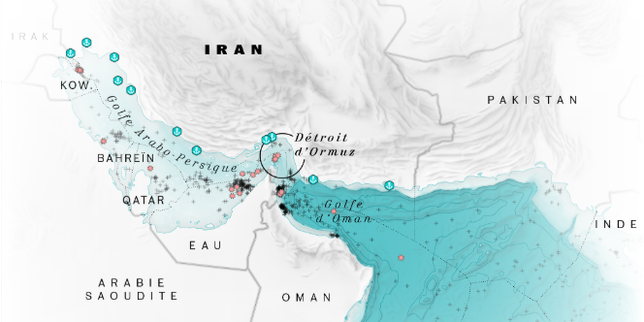
The logic behind blocking Iranian ports is rooted in the fundamental reality of Iran’s geography. Despite its vast land borders, the overwhelming majority of Iran’s wealth—specifically its crude oil exports—moves through the Persian Gulf and the Gulf of Oman. If you control the water, you control the survival of the state.
The U.S. Treasury and State Departments are no longer content with just sanctioning shipping companies. They are now focusing on the insurance providers, bunkering services, and port operators that allow Iranian vessels to function. When a port is effectively "blocked," it doesn't necessarily mean a line of destroyers is sitting across the harbor entrance. Instead, it means the port becomes a pariah zone. International shipping lines, fearing secondary sanctions, refuse to dock. Cargo sits rotting. The cost of logistics skyrockets until the trade itself becomes a net loss for the regime.
This is a war of attrition. By making it physically and financially impossible to move oil out of terminals like Kharg Island, the U.S. is betting that the internal pressure within Iran will reach a breaking point.
The Shadow Fleet and the Limits of Enforcement
Sanctions are only as good as their enforcement, and Iran has become a master of the "gray market." To counter the blockade of its formal trade routes, Tehran utilizes a massive shadow fleet of aging tankers. These vessels often operate under flags of convenience, frequently change their names, and disable their AIS (Automatic Identification System) transponders to "go dark" while transferring oil in the middle of the ocean.
Ship to Ship Transfers and Ghost Trade
The primary mechanism for bypassing a port blockade is the ship-to-ship (STS) transfer. An Iranian tanker meets a middleman vessel in international waters. The oil is pumped from one to the other, often disguised with fraudulent paperwork that claims the cargo originated in Iraq or Malaysia.
- Financial Laundering: The money for these transactions rarely touches a Western bank. It moves through a labyrinth of exchange houses in Dubai, Hong Kong, and Istanbul.
- Safety Risks: Many of these shadow vessels are poorly maintained and uninsured. A major spill in the Strait of Hormuz would be an ecological catastrophe, but for the regime, the risk is a secondary concern to the need for hard currency.
The U.S. strategy acknowledges this cat-and-mouse game. Recent moves suggest that the blockade is expanding to target the very ships involved in these "ghost" transfers, effectively trying to sink the shadow fleet's profitability even if they can't physically stop every vessel.
The China Factor and the Failure of Uniformity
Any discussion of an Iranian economic blockade is incomplete without addressing Beijing. China remains the largest buyer of Iranian "teapot" crude—oil sold to small, independent refineries. For China, this trade is a win-win. They get oil at a steep discount, often paid for in yuan or through barter for industrial goods, while simultaneously undermining American foreign policy.
Washington’s challenge is that it cannot easily block Chinese ports or sanction major Chinese state banks without triggering a global economic meltdown. This creates a massive leak in the "dry up" strategy. As long as China is willing to provide a financial vent for Iranian energy, the regime can maintain a baseline of survival. The blockade becomes a sieve rather than a wall.
Internal Collapse versus Regional Aggression
The stated goal of these maritime restrictions is to force Iran back to the negotiating table. The unstated hope is often regime change triggered by economic despair. But history shows that cornered regimes often become more dangerous, not less.
When the ports are blocked and the money stops flowing, the first things to be cut are not the budgets for the Islamic Revolutionary Guard Corps (IRGC) or regional proxies. Instead, the government cuts subsidies for bread, fuel, and medicine. This hits the Iranian middle and lower classes the hardest. We have seen this play out in the "Water Protests" and the "Woman, Life, Freedom" movement.
The IRGC, conversely, actually benefits from a black-market economy. When formal trade dies, the IRGC’s control over smuggling routes becomes more valuable. They are the ones with the muscle to move goods across the border from Iraq or through illicit piers along the coast. In a paradoxical twist, a total port blockade might actually solidify the IRGC’s grip on the internal Iranian economy by eliminating their legitimate competitors.
The Strait of Hormuz as a Counter Weapon
If the U.S. moves to physically prevent Iranian ships from leaving their docks, Tehran has one ultimate trump card: the Strait of Hormuz. Approximately 20% of the world's total oil consumption passes through this narrow waterway.
Iran has spent years developing a "mosaic defense" designed to shut down the strait. This includes:
- Swarm Boats: Hundreds of fast, small craft armed with missiles and torpedoes.
- Smart Mines: Sophisticated underwater explosives that are difficult to detect and clear.
- Coastal Missile Batteries: Mobile launchers hidden in the rugged terrain of the Iranian coastline.
A blockade that feels too much like an act of war could trigger an Iranian response that spikes global oil prices to $200 a barrel overnight. The U.S. is walking a razor's edge. They want to starve the regime without starving the global economy, a feat of financial engineering that has never been successfully pulled off at this scale.
The Infrastructure of Influence
To understand why port blockades are the chosen weapon, one must look at the "Resistance Axis." Iran’s ability to fund Hezbollah in Lebanon, the Houthis in Yemen, and various militias in Iraq depends on liquid cash. This cash is generated at the loading docks.
By targeting ports like Bandar Abbas, the U.S. is trying to break the logistical chain of the entire Middle Eastern security architecture. If the money doesn't reach the port, the rockets don't reach the borders. It is a clean theory, but the reality on the ground is messier. The Houthis, for instance, have shown that they can operate with relatively low-cost weaponry and local manufacturing, meaning that even a significant drop in Iranian funding might not immediately result in regional stability.
The Tech of Modern Interdiction
The blockade of 2026 is not about wooden frigates. It is about satellite imagery, AI-driven pattern recognition, and blockchain tracking.
Maritime authorities are now using synthetic aperture radar (SAR) to track ships even through cloud cover or at night. They can detect the slight change in a ship's buoyancy—the "draft"—to determine if a tanker has secretly taken on oil during an unmonitored STS transfer. Financial intelligence units are mapping the ownership structures of shell companies in real-time.
The U.S. Treasury is increasingly acting like a global high-tech detective agency. They are not just looking for Iranian flags; they are looking for the digital footprint of the money that fuels the ships.
The High Cost of Success
If the U.S. succeeds in effectively closing Iran's ports, the result will be a humanitarian crisis of unprecedented proportions in the region. Sanctions supposedly have "humanitarian carve-outs," but in practice, banks are so terrified of fines that they refuse to process payments even for food and medicine.
The Iranian rial has already lost the vast majority of its value. Inflation is rampant. A total port blockade would likely push the country into hyperinflation. For the veteran analyst, the question isn't whether the blockade will hurt the Iranian economy—it clearly will. The question is whether that hurt leads to a new nuclear deal or a desperate, violent lashing out that drags the entire region into a hot war.
Governments in the West are betting on the former, but the IRGC is betting on its ability to outlast the pressure through a combination of repression at home and chaos abroad. The port of Bandar Abbas is no longer just a place where ships dock; it is the center of a global game of chicken where neither side can afford to blink.
The sheer volume of Iranian oil still reaching international markets despite these efforts suggests that the "noose" still has plenty of slack. Until the U.S. can convince or coerce China into closing its side of the tap, the Iranian regime will continue to find a way to breathe. The blockade is a powerful tool, but it is currently an incomplete one, leaving the world in a dangerous state of semi-escalation.
Monitor the insurance markets in London and the bunkering hubs in Singapore. Those are the true front lines. When the "shadow" insurers stop covering these vessels because the risk of U.S. seizure outweighs the massive premiums, that is when you will know the blockade has finally transitioned from a policy goal to a physical reality. Until then, the oil will continue to flow through the cracks in the system.