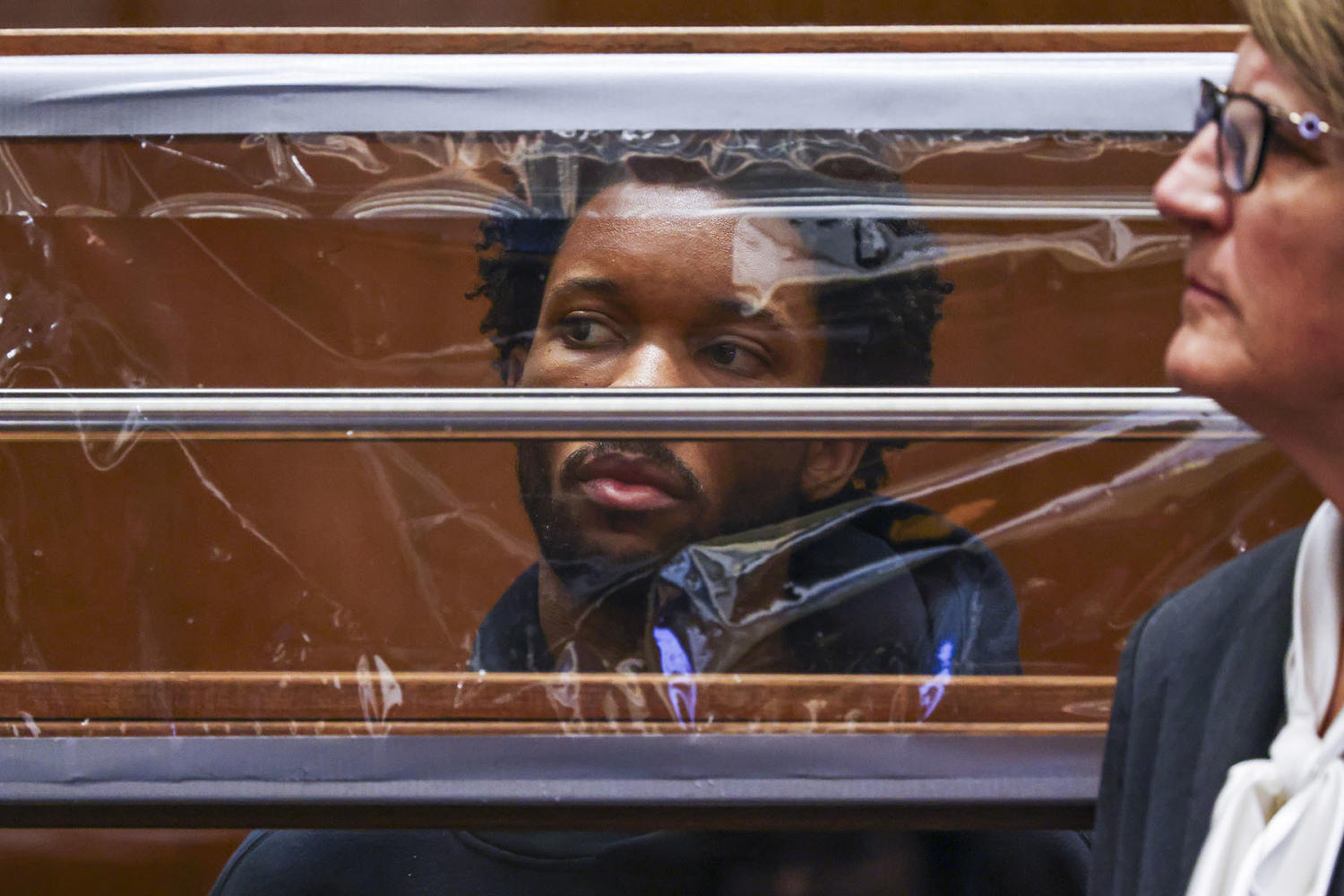
The withdrawal of high-profile defense attorneys Blair Berk, Marilyn Bednarski, and Regina Peter from the criminal case of American singer David Anthony Burke, known professionally as D4vd, exposes the brutal intersection of capital depletion and heavy criminal litigation. Facing severe charges including first-degree murder, desecration of human remains, and sexual assault of a child, Burke transitioned from private counsel to the Los Angeles County Public Defender’s Office after a judicial determination of indigency. This shift highlights a fundamental operational reality in the American legal system: private defense is an ongoing financial burn rate, and when capital reserves hit zero, the constitutional right to counsel forces a structural handoff regardless of trial phase complexity.
To understand how an artist tied to an eleven-million-dollar Interscope Records deal reaches a state of court-determined indigency requires examining the capital-allocation lifecycle of modern musicians. Major label contracts provide gross advances, not net liquidity. Out of an initial headline figure, immediate subtractions occur across multiple vectors:
- Talent agency commissions ranging between 10 to 15 percent.
- Business management and legal retainer fees taking 5 percent or flat retainers.
- Federal, state, and local tax liabilities stripping up to 37 to 50 percent of upfront cash if mismanaged or immediately spent on career infrastructure.
- Ongoing overhead costs, including production teams, touring support, and living expenses during active recording cycles.
When an artist faces an acute, catastrophic legal emergency, the capital drain accelerates exponentially. Capital expenditure for a high-stakes capital or major felony trial in Los Angeles involving elite private defense counsel requires continuous cash flow. Retainers for top-tier trial lawyers do not operate on contingency or deferred payment plans. They demand massive upfront trust account deposits, followed by rolling replenishment invoices based on billable hours, forensic expert witnesses, private investigators, digital forensics extraction, and independent pathologists.
The financial burn rate of a murder defense dwarfs standard business overhead. Private investigators charging hourly rates, expert witnesses specializing in DNA, cell tower mapping, or pathology, and daily trial preparation build a cash consumption model that can easily exceed hundreds of thousands of dollars per month. When an artist's primary revenue stream—touring, streaming royalties, and brand partnerships—halts entirely due to incarceration, zero incoming cash meets a compounding outgoing liability.
The legal mechanism enabling this transition is California Penal Code provisions regarding appointed counsel. When private attorneys determine they can no longer continue representation—frequently precipitated by an exhausted retainer and the client's inability to pay—they must petition the court for leave to withdraw. The court then evaluates the defendant's liquid assets, liabilities, and current income to establish indigency status. Once the court verifies that the defendant lacks the liquid capital to secure private representation without substantial hardship, the Los Angeles County Public Defender’s Office is mandated to step in.
While public perception often incorrectly equates public defenders with inferior legal capability, the structural reality in high-volume jurisdictions like Los Angeles County differs significantly. The institutional offices feature specialized homicide units equipped with staff investigators, forensic specialists, and institutional knowledge of local courtrooms that rival elite private firms. However, the transition introduces friction. Private counsel who spent months building case files, pre-trial motions, and defense theories must transfer institutional memory and data repositories to a newly assigned public defender. This administrative handoff frequently triggers timeline disruptions, procedural reviews, and potential trial continuances as the new defense team gets up to speed.
The financial collapse of an artist accused of a capital offense serves as a cautionary study in asset management. Initial label revenue does not insulate an individual from the hyper-inflationary costs of defending against life-imprisonment charges. Without liquid reserves segregated from career overhead or protected by structured trusts, defendants facing prolonged litigation inevitably exhaust their private liquidity, leaving the state-funded public defense apparatus as the final structural safety net of the judicial system.