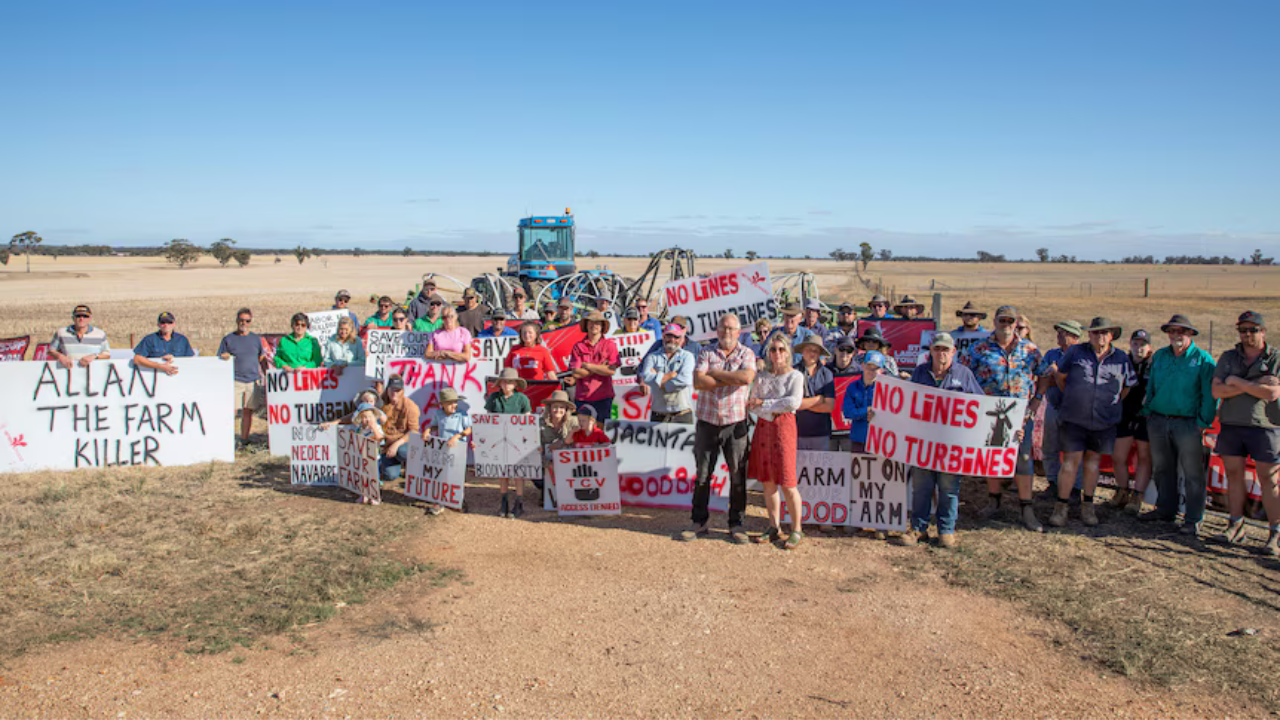
The collision between large-scale renewable energy infrastructure development and private land tenure highlights a recurring friction point in modern state planning. When twelve agricultural families in regional Victoria received eighty-four-dollar infringement notices—totaling an $814 penalty per household—for denying state-backed surveyors entry to their properties, the event transcended a localized dispute. It exposed the structural limits of statutory access powers when they intersect with the operational realities of primary production.
At the center of the conflict is the statutory mechanism governing high-voltage transmission projects, specifically the legal framework that permits state bodies and designated developers to enter private land for environmental and technical assessments. Understanding why this friction occurs requires examining the systemic misalignment between macro-level energy transition mandates and micro-level agricultural risk management.
The Statutory Authority and the Access Dilemma
Infrastructure planning for multi-billion-dollar transmission corridors relies on predictable timelines. Developers must complete environmental assessments, geotechnical drilling, and route mapping to secure planning approvals. To facilitate this, statutory provisions under utility legislation grant survey teams rights of entry.
However, private agricultural land is an active industrial workplace. Landholders operating livestock enterprises face biosecurity risks, operational disruptions, and animal welfare vulnerabilities that external parties often fail to quantify. For instance, unauthorized or poorly timed vehicle movement in a paddock during sensitive biological windows—such as lambing season—introduces distinct economic risks through stock stress and mortality.
When landholders deny entry to mitigate these operational risks, they trigger statutory non-compliance mechanisms. The issuance of fixed-penalty infringement notices represents the state's attempt to enforce project velocity, bypassing individualized negotiations in favor of blanket administrative compliance.
The Cost Function of Grid Expansion
Large-scale transmission projects, such as the proposed multi-hundred-kilometer interconnector links designed to integrate regional renewable generation into metropolitan grids, generate localized negative externalities that are unevenly distributed.
The economic equation facing individual landholders involves several distinct cost vectors:
- Asset Depreciation: The placement of high-voltage transmission towers, permanent access tracks, and statutory easements across arable land can alter property valuations and restrict future agricultural intensification.
- Operational Friction: Physical infrastructure bisecting a property creates long-term inefficiencies in machinery operation, aerial spraying, and irrigation management.
- Biosecurity Vulnerability: Unvetted vehicular traffic across property boundaries compromises farm-gate biosecurity protocols designed to protect against weed seed transfer and livestock disease.
While project proponents argue that compensation frameworks and statutory payments mitigate these impacts, affected landholders often contend that financial compensation fails to capture the perpetual drag on operational productivity.
Regulatory Enforcement Versus Voluntary Alignment
The deployment of punitive measures to secure survey access highlights a fundamental divergence in negotiation strategies between infrastructure authorities and rural communities.
When statutory bodies rely on compulsory access powers backed by fines, they shift the engagement model from collaborative negotiation to adversarial compliance. This dynamic alters the stakeholder environment in measurable ways:
- Erosion of Trust: Imposing penalties for protecting livestock or demanding advance coordination destroys the social capital required for long-term project coexistence.
- Litigation Escalation: Rather than streamlining access, penalization frequently prompts collective legal challenges, turning routine administrative surveys into protracted court battles.
- Information Asymmetry: Landholders who feel marginalized by top-down directives withhold localized environmental and topographical knowledge that could otherwise optimize route placement.
Project developers face a strategic choice between enforcing rigid statutory timelines through administrative penalties and investing the time required to establish binding voluntary access agreements. While the former preserves immediate schedule milestones, it introduces systemic legal and operational risks that can stall capital works downstream.
Strategic Outlook for Linear Infrastructure
The resolution of grid-access disputes depends on reconciling statutory expediency with property rights. As long as national decarbonization mandates require thousands of kilometers of new transmission infrastructure across private agricultural holdings, friction will persist wherever the state treats land access as an administrative formality rather than an operational negotiation.
Future project frameworks must internalize the cost of operational coordination. By replacing punitive enforcement with structured, compensation-backed scheduling that respects agricultural cycles, developers can minimize legal bottlenecks and secure the baseline social license required to build out the energy transition.