Competitive horticulture operates on a rigid input-output model where yield is constrained by biological and
The Economics of Giant Pumpkin Cultivation and Competitive Yield Maximization
agriculture, business
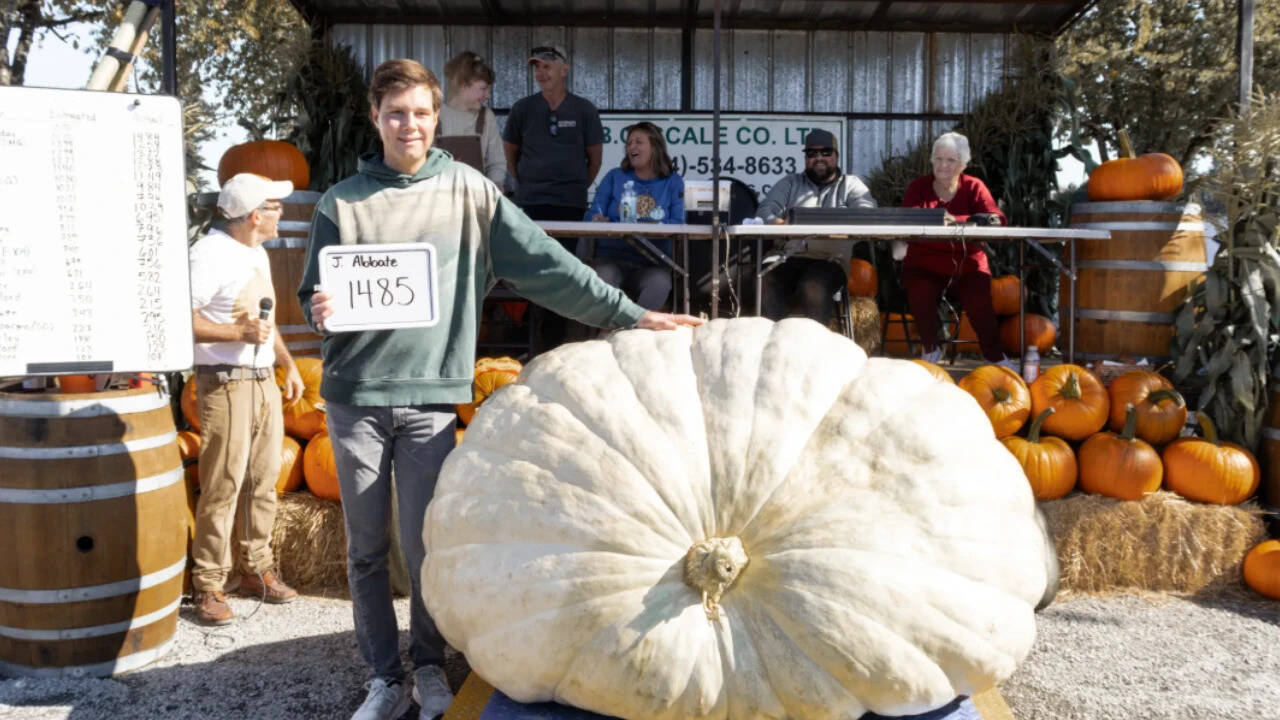
Competitive giant pumpkin cultivation is an exercise in extreme agricultural optimization, where growers operate under severe physiological and biological constraints to maximize mass within a compressed growing season. When a cultivator achieves a harvest weighing 1,485 pounds, as demonstrated by the British Columbia contest winner, the outcome is not the result of random chance or passive care. It represents a precise calibration of genetics, soil biome management, resource allocation, and daily physiological monitoring. To understand how such mass is achieved, one must deconstruct the biological supply chain that feeds a single Cucurbita maxima specimen over a roughly 100-day window.
The foundation of any competitive pumpkin is genetic lineage. Growers do not plant generic seeds; they utilize controlled crosses derived from proven heavy-yielding strains, primarily the Atlantic Giant variety. These seeds carry genetic markers selected for rapid cell division, high photosynthetic capacity, and structural resilience against internal splitting under massive hydraulic pressure. The biological mechanism relies on indeterminate vine growth and an expansive vascular network capable of transporting hundreds of gallons of water and dissolved nutrients daily. Without this genetic baseline, environmental inputs yield diminishing returns, as ordinary phenotypes lack the cellular receptor density required to process high-volume nutrient solutions.
The second critical vector is the rhizosphere and soil nutrient architecture. A giant pumpkin vine requires an uninterrupted, highly optimized flow of macronutrients and micronutrients to sustain growth rates that can exceed thirty pounds per day during peak expansion phases. This demands an intensive soil preparation protocol executed months before planting. Growers engineer root zones rich in mycorrhizal fungi to maximize surface area absorption, paired with a continuous fertigation schedule that balances nitrogen, phosphorus, and potassium dynamically. Nitrogen drives initial vegetative mass, while phosphorus and potassium shift priority toward root development and fruit expansion. The primary bottleneck in this phase is nutrient lock-up; growers must maintain precise soil pH levels, typically between 6.5 and 6.8, to ensure optimal mineral availability without inducing root toxicity.
Once the vine is established and pollinated, the grower manages a singular sink-source relationship. The fruit acts as the ultimate physiological sink, drawing photosynthetic sugars produced by the broad leaves of the main vine and secondary lateral vines. To maximize this flow, high-performing growers implement strict pruning regimens. Every leaf is treated as an individual solar panel, and its orientation, shading, and structural integrity are managed to prevent chlorosis or damage. The structural mechanics of the fruit itself present a permanent engineering challenge. As the pumpkin expands exponentially, the outer skin must harden while stretching to accommodate internal fluid pressure. Micro-fissures or rapid environmental shifts, such as sudden temperature drops or over-watering, can cause catastrophic splitting, rendering the specimen non-competitive. Consequently, shading devices and protective covers are deployed to regulate thermal radiation and skin elasticity.
The operational economics of this pursuit involve high labor and capital inputs relative to traditional agriculture. The return on investment is measured strictly in competitive prestige, seed distribution rights, and localized market premiums for winning genetics. The cost function includes specialized greenhouse infrastructure, soil testing equipment, automated drip irrigation systems, and intensive manual labor required for vine burial and daily measurements.
Scaling these yields beyond current thresholds requires addressing the primary physiological ceiling: internal vascular transport capacity. As fruits approach and exceed the fifteen-hundred-pound mark, the sheer hydraulic resistance within the stem begins to restrict fluid intake, creating a natural growth plateau. Future gains in competitive horticulture will depend less on raw fertilizer volume and more on genetic selection for enhanced vascular conduit diameter and resistance to late-stage vine senescence. The margin between a winning specimen and a split failure remains exceptionally narrow, governed by the precision with which the grower manipulates environmental variables against the biological limits of the plant.