The Arithmetic of Survival
At 2:00 AM, the sky over Tel Aviv does not simply turn dark; it turns heavy.
You sit in a stairwell, listening to the muffled wail of sirens outside, feeling the subtle vibration of concrete against your spine. High above the Mediterranean, a mechanical eye locks onto a streak of fire cut across the upper atmosphere. In less than three seconds, math takes over. An algorithm calculates speed, trajectory, and potential impact zones. It decides to launch.
With a deafening roar, a missile leaves its canister, tearing into the darkness to intercept an incoming threat.
The threat is neutralized. A flash of light, a dull thud that shakes the windows, and then silence returns to the street. To anyone watching from a balcony, it looks like a victory.
It is a victory. But if you look at the balance sheet, it looks like something else entirely.
The incoming drone cost roughly twenty thousand dollars to assemble in a small factory using off-the-shelf electronics and fiberglass. The interceptor missile that obliterated it cost over one million dollars.
Multiply that equation by dozens of incoming targets a night, night after night, week after week. The math becomes brutal. War has always been an engine of attrition, but modern aerial warfare has introduced a terrifying new asymmetry: defending life has become exponentially more expensive than threatening it.
Israel is now confronting this quiet, mathematical reality. Behind the headlines of tactical success lies an urgent strategic pivot. The nation is rushing to rewrite the financial rules of air defense before the sheer arithmetic of conflict outpaces the capacity to sustain it.
The Weight of the Shield
To understand how we arrived at this precipice, consider the physical mechanics of intercepting a falling object.
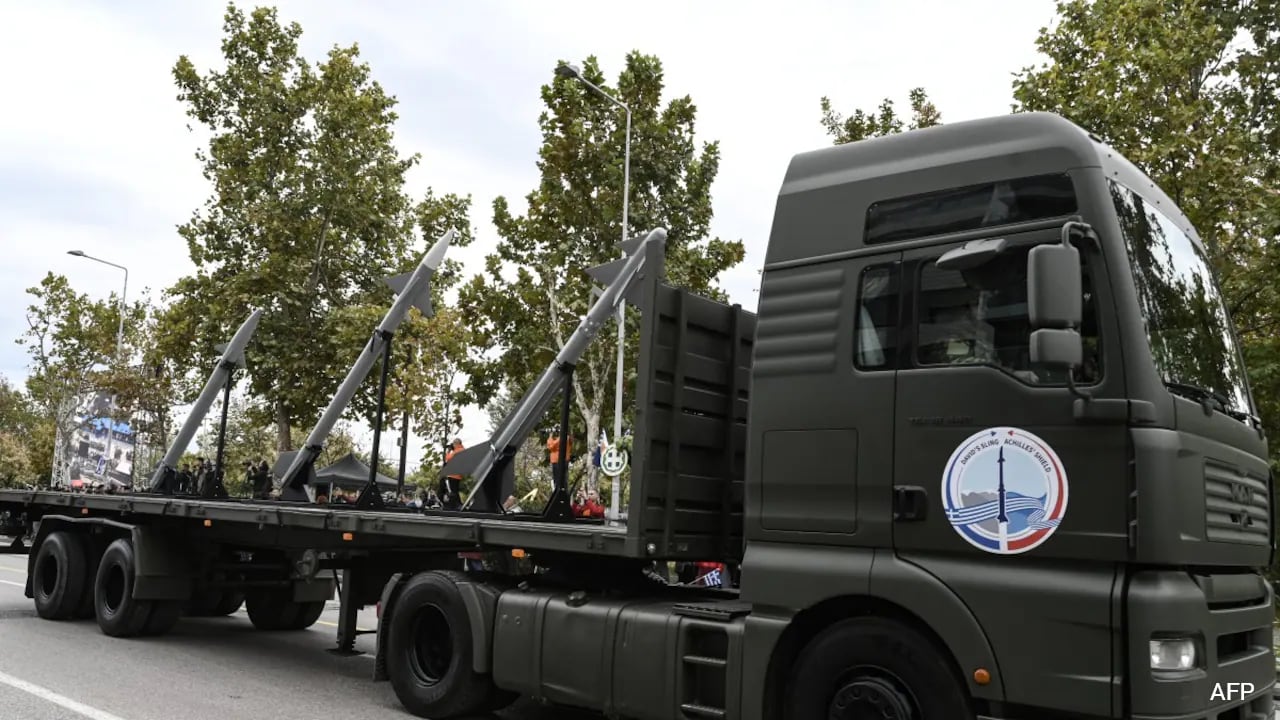
Imagine trying to hit a speeding rifle bullet with another rifle bullet, while standing on a moving platform, in the dark. Now imagine doing it while thousands of lives depend on absolute precision. That was the engineering puzzle solved decades ago with the deployment of advanced defense networks like the Iron Dome, David’s Sling, and the Arrow systems.
These networks are marvels of modern engineering. They do not merely fire rockets; they deploy flying supercomputers. Each interceptor carries high-resolution radar seekers, thrust-vectoring engines, and complex guidance computers capable of making thousands of micro-adjustments per second.
When an Iron Dome Tamir interceptor hits a rocket, it costs between forty thousand and fifty thousand dollars. When a David’s Sling interceptor takes out a heavy artillery rocket or medium-range missile, the price tag jumps to roughly one million dollars. If an Arrow 3 missile climbs into the exo-atmosphere to destroy a ballistic threat outside Earth's air envelope, the cost per launch reaches up to three million dollars.
For years, this cost was treated as an acceptable tax for security. The logic was simple: a million-dollar interceptor is cheap compared to the loss of human lives, the destruction of critical infrastructure, or the economic paralysis of a country forced into bomb shelters for months.
Then came the saturation strategy.
Adversaries realized they did not need to out-engineer the shield. They simply had to out-spend it by making their weapons cheap enough to flood the sky. By launching swarms of low-cost, slow-flying attack drones alongside cheap artillery rockets, an attacking force forces the defender into a tragic dilemma: let the target fall, or drain its treasury to stop it.
During high-intensity barrages, defense expenditure can swallow hundreds of millions of dollars in a single 24-hour window. Munition stockpiles, no matter how vast, take time to manufacture. Precision components require specialized supply chains, rare earth minerals, and intricate testing. A drone can be built in days; an advanced interceptor takes months.
The shield was holding, but the weight of bearing it was growing unbearable.
The Speed of Light
In a brightly lit laboratory, far removed from the dust of missile silos, a beam of light focuses on a steel plate. There is no loud explosion, no smoke, no launching roar. There is only a quiet hum, a shimmer of heat in the air, and then a clean, glowing hole burned straight through the metal.
This is the sound of a paradigm shifting.
The defense establishment has recognized that chemical propulsion—firing a metal tube filled with explosive fuel to knock down another metal tube—has hit its economic limit. The future of defense relies on directed energy.
Enter high-powered laser systems, most notably the Iron Beam.
The concept sounds like science fiction, but its underlying principles are grounded in basic physics. By combining multiple fiber laser beams into a single, focused ray, the system targets an incoming projectile, heating its shell until structural failure occurs or its explosive warhead detonates in mid-air.
The contrast between traditional interceptors and laser defense is stark:
- Cost per Interception: Traditional kinetic missiles range from tens of thousands to millions of dollars per firing. A laser strike costs roughly the price of the electricity used to power the generator—often estimated at just a few dollars per shot.
- Magazine Capacity: A missile battery has a limited number of interceptors before it must be reloaded through a slow, hazardous logistical chain. A laser system has an essentially infinite magazine, limited only by its power supply.
- Time to Target: Missiles must accelerate and maneuver. A laser travels at the speed of light—186,000 miles per second—eliminating the latency between detection and engagement.
Yet light is not without its flaws. Lasers struggle with line-of-sight constraints and environmental interference. Heavy rain, dense fog, sandstorms, and atmospheric turbulence scatter energy, reducing the beam's range and effectiveness.
Because of these physical limitations, light will not replace iron overnight. Instead, military planners are building a layered defense architecture: lasers act as the first line of low-cost defense against low-altitude threats like small drones, preserving expensive kinetic interceptors for heavy, high-altitude ballistic missiles that light cannot yet destroy.
The Cost of Waiting
Strategic shifts on paper sound clean and logical. On the ground, transition periods are filled with friction and risk.
Pivoting an entire national defense apparatus toward lower-cost technologies while actively managing ongoing conflict is akin to swapping out an airplane engine in mid-flight. Manufacturing facilities must be reconfigured. Operators must learn new doctrine. Software engineers must continually update algorithm parameters to identify decoys from real threats in milliseconds.
The financial pressure is not merely an abstract government budget concern; it ripples directly into society. Resources diverted to sustain costly defense stockpiles are resources withheld from civil infrastructure, healthcare, education, and long-term economic recovery.
Every dollar spent on an interceptor missile is a choice made under extreme duress. It is the price paid to preserve tomorrow, bought at the expense of investing in today.
The shift toward cheaper, scalable defense technologies is more than an upgrade in military hardware. It is an act of economic self-defense. In modern warfare, endurance depends as much on fiscal durability as it does on tactical courage.
The Unseen Sky
Back in the stairwell, the silence holds. Outside, the clear night air shows no trace of the heat, light, and mathematical chaos that unfolded moments ago thousands of feet above the ground.
The siren fades, replaced by the mundane sound of traffic returning to the streets and doors opening down the hallway. Life resumes its normal rhythm. Children are put back to bed; morning routines are quietly planned.
Above it all, the invisible architecture of defense remains on guard, listening, calculating, watching the horizon. The sky looks empty and calm, but beneath that calm, a quiet revolution is underway. The battle to protect human life is no longer just a test of strength or technology—it has become a race to make safety sustainable, one photon at a time.