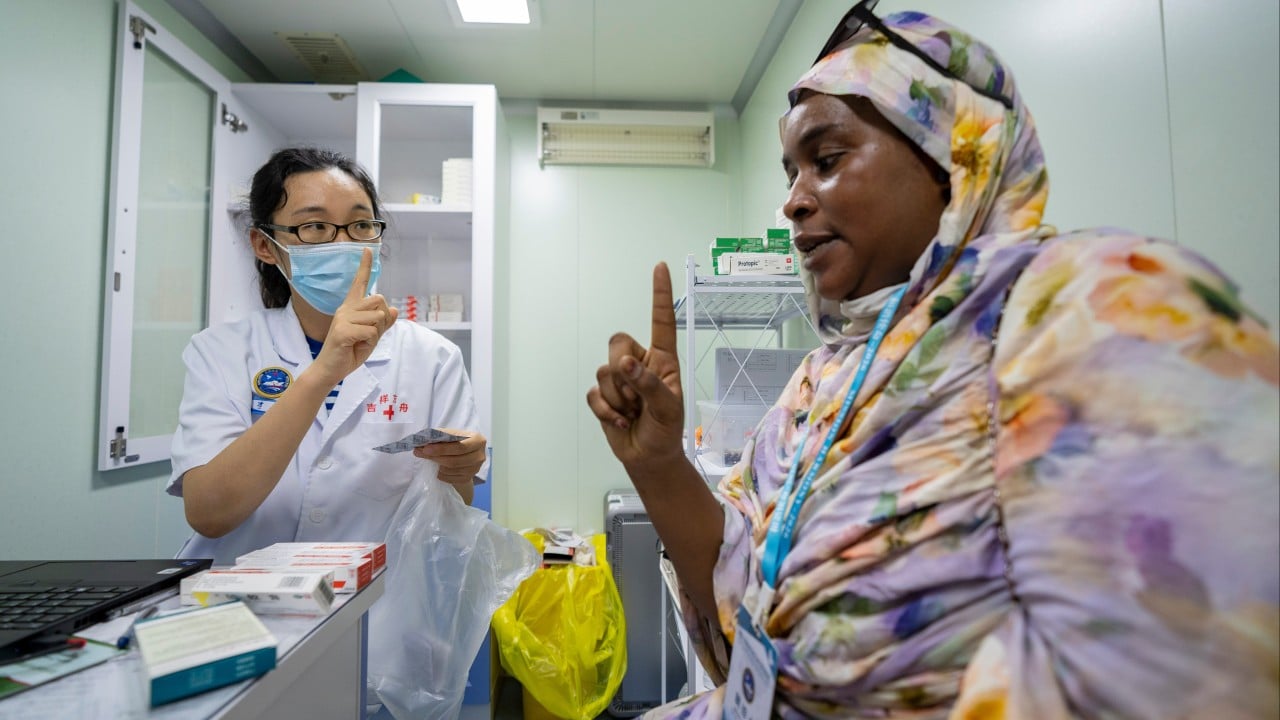
Naval power has traditionally been quantified through displacement tonnage, missile cell capacity, and hull counts. However, statecraft relies equally on non-combatant maritime logistics to establish strategic access, shape foreign partner perceptions, and secure long-term geopolitical positioning. The deployment of specialized hospital ships by the People's Liberation Army Navy, exemplified by missions like Mission Harmony involving vessels such as the Auspicious Ark, represents an intentional shift toward operationalizing humanitarian infrastructure as an instrument of statecraft. Deconstructing this mechanism requires analyzing the structural cost-benefit matrix, the logistical constraints of medical deployment, and the competitive friction it introduces into international development finance.
The Strategic Logic of White Hull Diplomacy
Deploying a surface combatant to a foreign littoral zone carries inherent signaling costs. Gray-hull visits often trigger defensive reactions, regional security dilemmas, and domestic political friction within host nations regarding sovereignty and military alignment. Conversely, a hospital ship alters the calculus of entry. By framing the deployment around public health provision, state actors bypass traditional resistance to foreign military footprints. Also making news recently: Why Saudi Aramco Drone Attacks Changed Global Energy Security Forever.
This operational model relies on three distinct variables:
- Low Threat Perception: A floating medical facility presents a benevolent surface appearance, neutralizing immediate anti-militarist rhetoric inside host nations.
- High-Visibility Output: Direct medical intervention yields immediate, quantifiable outputs—surgeries performed, patients treated, and pharmaceuticals distributed—which create localized political goodwill.
- Access Acquisition: Port calls require complex logistical coordination, bunkering, and diplomatic clearance, which gradually normalize the presence of foreign naval logistics within critical maritime choke points and strategic trade corridors.
The strategic return on investment is measured not in tactical combat readiness, but in diplomatic capital and the normalization of naval logistics in regions where the deploying state seeks deeper economic and strategic integration. Further details into this topic are explored by Reuters.
The Operational Cost Function and Logistical Constraints
While the optics of health diplomacy appear seamless, executing a multi-port international medical mission involves severe operational friction and high fixed costs. A modern naval hospital ship is a capital-intensive asset requiring sophisticated environmental control systems, specialized surgical suites, massive medical supply inventories, and a high ratio of specialized medical personnel to general crew.
[Capital Asset: Hospital Ship]
       │
       ├── Fixed Costs: High Maintenance, Specialized Medical Staffing, Cold-Chain Supply
       ├── Variable Costs: Bunkering, Port Tariffs, Diplomatic Clearance
       └── Output Constraints: Finite Bed Capacity, Local Triage Bottlenecks, Patient Follow-Up Deficits
The primary operational constraint is patient throughput versus clinical follow-up. A shipboard medical mission typically operates on compressed timelines—often spending less than a week per port. This temporal limitation forces medical teams to prioritize high-volume, short-duration interventions, such as cataract surgeries or routine dental procedures, while complex, chronic conditions that require long-term post-operative care remain unaddressed.
Furthermore, the logistical footprint demands continuous resupply and fuel bunkering, tying the humanitarian mission directly to local commercial maritime infrastructure and host-nation logistical capacity. Any disruption in the supply chain or local fuel availability introduces cascading delays into the deployment schedule.
The Structural Divergence in Global Health Competition
The deployment of hospital ships does not occur in a vacuum; it operates within a competitive landscape characterized by divergent foreign aid models. Traditional Western development strategies, exemplified by initiatives from Washington and multilateral institutions, historically focus on structural reforms, long-term institutional capacity building, legislative frameworks, and systemic health sector financing.
These long-term programs frequently entail strict conditionality, including transparency metrics, data-sharing protocols, and governance benchmarks. While intended to foster institutional resilience, these conditions often create friction, bureaucratic delays, and political resistance from host governments over issues of national sovereignty and data protection.
In contrast, the deployment model utilized by Beijing relies on direct, tangible, high-speed delivery of services. By bypassing protracted administrative negotiations and offering immediate clinical relief, this approach exploits the near-term infrastructure deficits of developing states. It presents host governments with an immediate output without demanding structural institutional overhauls.
However, this divergence exposes a fundamental limitation on both sides. Western models risk structural paralysis and a perceived disconnect from immediate human needs, while medical diplomacy models risk superficiality—providing high-visibility, short-term relief without altering the underlying fragility of the host nation's domestic health architecture.
The Geopolitical Trade-Offs of Sovereign Health Engagement
For developing coastal states, accepting medical assistance from competing global powers requires navigating complex geopolitical trade-offs. Healthcare infrastructure has increasingly transformed into a domain of strategic competition, where medical access, bio-data collection, and infrastructural investments intersect with national security interests.
When host governments evaluate foreign health interventions, they must calculate the hidden costs:
- Data Sovereignty: Collaborative medical programs often involve epidemiological data collection and sample sharing. Disputes over who controls and stores this biological and medical data have become central flashpoints in bilateral health agreements.
- Resource Allocation Distortion: The arrival of a major foreign medical mission can temporarily strain local administrative capacity, diverting domestic healthcare personnel from rural clinics to urban ports to manage patient influx and ceremonial coordination.
- Diplomatic Alignment Pressure: High-profile humanitarian visits create expectations of reciprocal diplomatic support in multilateral forums, gradually binding the host nation's foreign policy orientation closer to the benefactor state.
Recognizing these dynamics explains why host nations frequently engage in hedging behavior—accepting immediate medical aid while simultaneously negotiating parallel, long-term institutional agreements with alternative development partners to prevent over-reliance on a single external actor.
Systemic Vulnerabilities and Future Projections
The efficacy of hospital ship deployments as an instrument of long-term power projection faces diminishing marginal returns. As recipient nations grow more sophisticated in evaluating foreign assistance, the novelty of floating clinics recedes, and domestic populations increasingly demand structural investments—such as permanent hospital construction, pharmaceutical manufacturing capacity, and localized medical training—over transient shipboard visits.
Future competition in maritime health diplomacy will likely shift away from port-call spectacles toward integrated regional medical supply chains and digital health infrastructure control. States that successfully transition from temporary physical interventions to embedded, systemic technological integration will secure durable influence, while those relying solely on periodic hull visits will find their strategic returns constrained by the permanent realities of local health deficits.