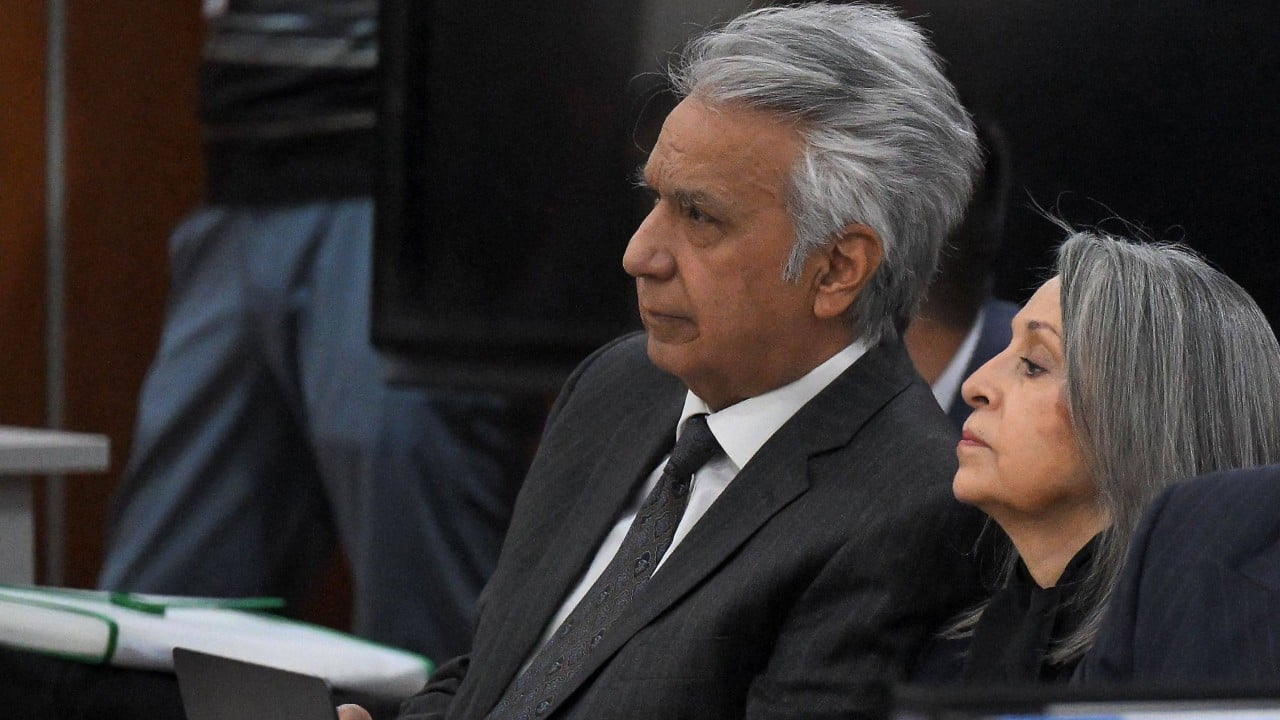
Big infrastructure projects rarely fail by accident. When a court in Quito hands down prison sentences over a flagship hydroelectric dam, it forces everyone to look at the messy reality behind international financing. Former Ecuadorian President Lenín Moreno just picked up a five-year sentence for bribery. Alongside him, former Chinese ambassador Cai Runguo and several executives from state builder Sinohydro received identical terms.
This isn't just a local legal drama. It pulls back the curtain on how massive global deals actually work, where billions flow, oversight vanishes, and the bill eventually lands on ordinary taxpayers. If you want to understand how Beijing's global infrastructure push runs into legal walls, look right here. If you enjoyed this post, you should check out: this related article.
The 76 Million Dollar Question Behind Ecuador's Biggest Dam
The core of the issue involves the Coca Codo Sinclair hydroelectric plant. It is Ecuador's largest energy project, designed to supply roughly a quarter of the nation's electricity. Back when the deal came together, the arrangement looked like a win-win on paper. China needed to export industrial capacity and secure resource ties, while Ecuador desperately needed power.
Prosecutors claim that arrangement came with heavy strings attached. Investigators tracked roughly $76 million in kickbacks, equating to about four percent of the total contract value. Money allegedly flowed through complex international networks, landing in accounts linked to intermediaries and family members. Moreno denies taking a single cent, blaming political vendettas from his former mentor and rival, Rafael Correa. For another angle on this event, see the latest coverage from NBC News.
Yet the court didn't buy the defense. Twenty out of twenty-one defendants were convicted, turning a showcase engineering marvel into a monument of institutional graft.
Cracks in the Concrete and Financial Fallout
The legal trouble didn't materialize out of thin air. Long before judges started handing out prison terms, the physical infrastructure itself began showing severe warning signs. Engineers documented thousands of cracks in the facility's machinery and structures shortly after construction wrapped up. On top of that, aggressive river erosion started threatening the stability of the site.
Ecuadorian authorities eventually took legal action against Sinohydro over those structural defects, leading to a massive $400 million settlement earlier this year. Add the court's recent order for over $163 million in financial reparations, and the true cost of the project spirals far beyond the original price tag.
When you build critical national infrastructure under a cloud of compromised oversight, you end up paying twice. First for the crooked contracts, and later for the structural repairs.
What This Means for Global Mega Projects
International development deals are changing. For years, massive foreign-backed projects moved forward with minimal transparency, shielded by diplomatic immunity and cozy political alliances. Convicting a former ambassador alongside a former head of state sends a jarring signal. Diplomatic passports don't offer permanent shelter when local courts decide to dig into the ledger.
Countries accepting foreign investment are learning hard lessons about accountability. Governments are realizing that fast-tracking capital without rigorous domestic checks leaves the door wide open for systemic corruption. Projects meant to modernize a country end up hollowed out by middlemen taking cuts.
You can expect tighter scrutiny on international financing moving forward. Lenders and contractors will face steeper compliance hurdles, and recipient nations will find themselves under intense pressure to audit every phase of construction. The era of writing blank checks for signature foreign projects is hitting a wall of legal reality. Look for governments to demand absolute transparency before breaking ground on the next generation of global energy grids.