The sheet metal of a modern automobile is designed to bend. It is an intentional surrender. For nearly a century, automotive engineers have understood a fundamental truth about kinetic energy: when a massive object moving at high speed meets an immovable wall, something has to absorb the blow. So, they built crumple zones. They engineered steel to accordion, to fold, to sacrifice its own structural integrity so that the human body inside might survive the violence of deceleration.
Then came the wedge.
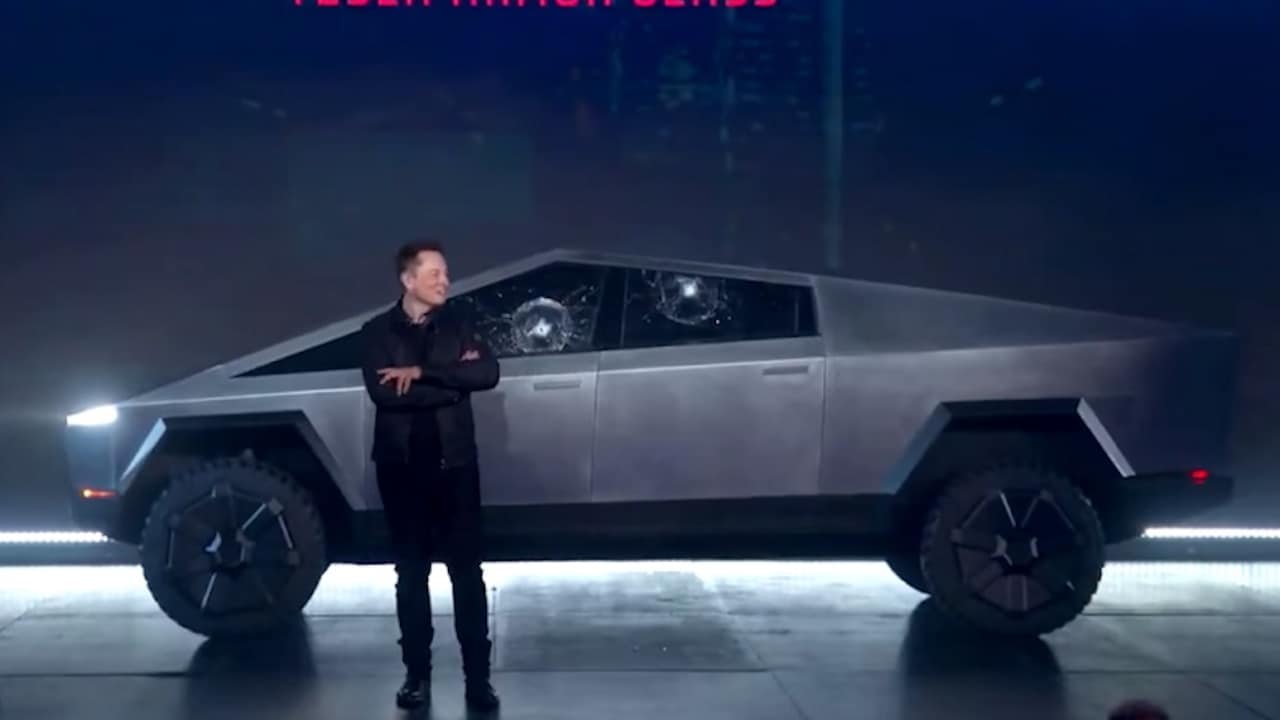
When the Cybertruck first rolled onto a stage under the harsh glare of Las Vegas spotlights, it rejected the fundamental philosophy of modern automotive safety. It wore an exoskeleton of cold-rolled stainless steel. It looked like a prop from a dystopian science fiction film, an artifact brought back from a future where beauty was measured in sharp angles and impenetrable plates. People cheered. The internet convulsed with excitement and mockery in equal measure. But out on the asphalt, away from the smoke machines and the bass drops, a different kind of reality was beginning to take shape.
Physics does not care about marketing.
To understand why the National Highway Traffic Safety Administration recently turned its bureaucratic eye toward Tesla's polarizing pickup, you have to look past the headlines and into the physics of everyday collisions. Imagine standing on a suburban street corner on a Tuesday afternoon. A child chases a rolling soccer ball off the curb. Now imagine the vehicle that fails to stop in time is not a sedan with a yielding, sloping hood, but a three-ton wedge of unyielding steel moving at thirty miles per hour.
This is where the invisible stakes of automotive design reveal themselves.
For decades, international safety regulators have enforced strict guidelines regarding pedestrian protection. Hoods are engineered to lift slightly upon impact, creating a cushion of air between the sheet metal and the hard engine block beneath. Bumpers are calibrated to catch a person's legs and sweep them upward, rather than trapping them underneath or shearing through them. These regulations are written in the blood of past tragedies. They are the quiet guardrails of modern civilization.
The stainless steel exoskeleton bypassed that entire evolutionary lineage.
When federal investigators opened their probe, they were not simply looking at a software glitch or a faulty latch. They were examining a profound philosophical clash between tech-industry disruption and regulatory caution. The core issue centers on how the vehicle's exterior interacts with the outside world during a crash. Without traditional crumple zones designed to yield progressively, the force of an impact is transferred differently. Either the vehicle absorbs less energy, translating more shock into the cabin, or it acts as a rigid hammer against anything unfortunate enough to cross its path.
Let us be entirely transparent about what a hypothetical scenario looks like in the real world. Note that this is a behavioral projection based on crash-test mechanics, not a record of a specific past incident. If a vehicle with a rigid, high-yield structural skin strikes a stationary barrier or another car, the deceleration forces spike sharply. The human brain, floating inside cerebrospinal fluid within the skull, continues moving forward at the vehicle's initial speed until it slams against the bone of the skull. A fraction of a second later, it bounces back. The stiffness of the frame dictates the sharpness of that curve. When the frame refuses to bend, the human body must absorb the delta of that sudden stop.
Owners will tell you they love the truck. They love the feeling of invincibility it provides. There is a primal, intoxicating comfort in driving something that feels impervious to the petty hazards of the commute—the rogue shopping carts, the kicked-up gravel, the careless drivers in smaller sedans.
I understand that attraction. We all carry a quiet, persistent fear of vulnerability on the highway. We wrap ourselves in airbags and steel cages, hoping to cheat the statistics every time we turn the ignition. When a manufacturer offers a machine that looks like a tank, it whispers a seductive promise: You are safe here.
But safety is never a solitary metric. What protects the driver often endangers the neighbor.
The regulatory machinery of the federal government moves with deliberate, sometimes agonizing slowness. It relies on data, on mathematical models, on thousands of hours of destructive testing where million-dollar vehicles are smashed into concrete blocks at precise angles. When regulators issue a probe, they are signaling a fracture in the unspoken contract between the automotive industry and the public. That contract states that innovation cannot outrun accountability.
Consider what happens next in the quiet rooms where engineers and bureaucrats meet.
Tesla now faces a familiar crucible. The company built its empire on the premise that traditional automakers were slow, bloated, and trapped in legacy thinking. They disrupted the powertrain by proving electric motors could rival combustion. They disrupted the dealership model by selling direct to consumers. But disrupting safety standards is a different beast entirely. You cannot patch a skull fracture with an over-the-air software update. You cannot recall a lost life.
The probe into the Cybertruck is more than a bureaucratic nuisance. It is a cultural test. It asks us to decide what kind of public spaces we are willing to share. Do we want our streets populated by vehicles optimized for aesthetic aggression and martial styling, or do we demand a return to collective responsibility in design?
The stainless steel panels will not change overnight. The angular silhouette will remain a polarizing fixture of the American highway for years to come. Yet every time one of these vehicles pauses at a crosswalk, a silent negotiation takes place between the pedestrian on the curb and the driver behind the electro-tinted glass.
We built these machines to conquer the road. Now the road is asking us if we remember how to share it. The twilight catches the brushed metal of a parked truck, casting a stark, uncompromising reflection of the world around it, sharp enough to draw blood.