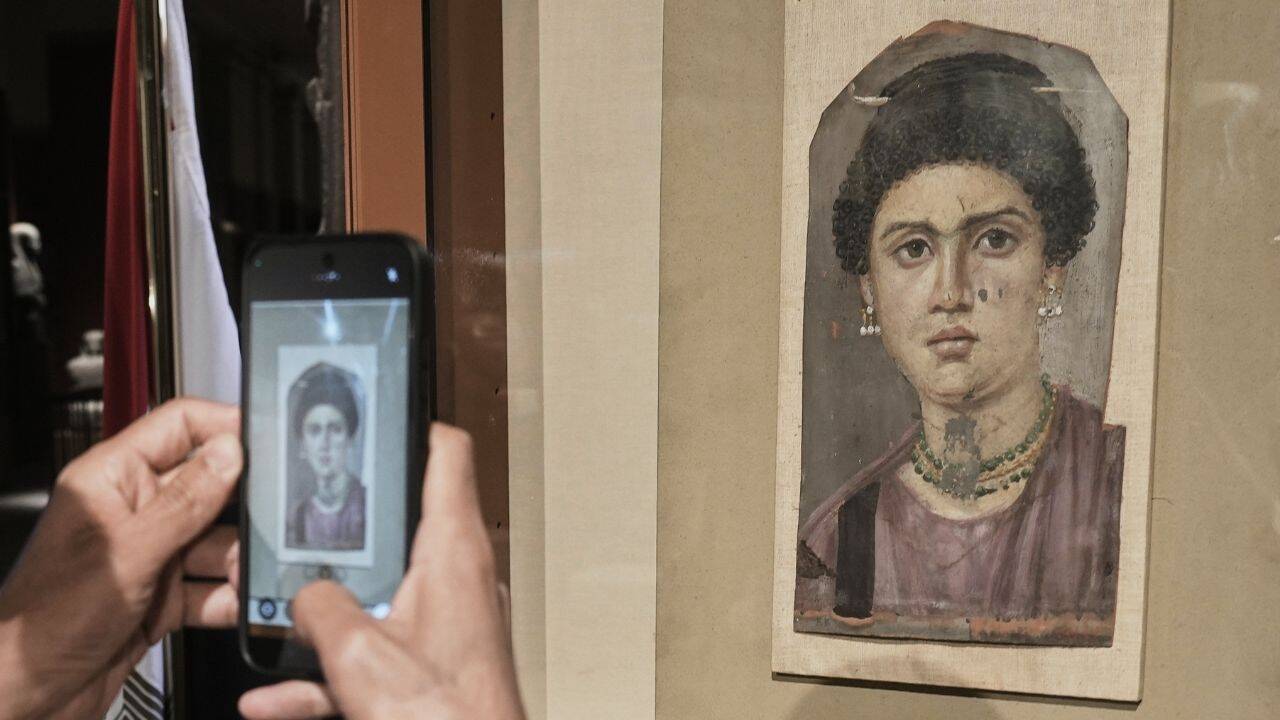
You’ve probably seen standard Egyptian burial masks—rigid, stylized golden visages designed for eternity. But look closer at the Fayoum mummy portraits, and you're staring straight into the eyes of real people who walked the earth two millennia ago. Painted on thin wooden panels using tempera or hot wax encaustic techniques, these stunning funerary portraits capture individual gazes with a realism that feels entirely modern. For the first time in history, a selection of these priceless Egyptian artifacts has left home for a major international exhibition.
If you think ancient art is universally stiff and uniform, the Fayoum collection shatters that illusion completely.
Breaking Decades of Strict Conservation Rules
Egypt’s antiquities authorities are notoriously protective of their heritage, and for good reason. Organic materials like the wooden panels and linen substrates used in Fayoum portraits degrade easily. Handling them requires meticulous care. Yet, a collaborative restoration effort between Italian specialists and conservators at the Egyptian Museum in Tahrir changed the equation. After a grueling three-week joint conservation project, select masterworks were deemed stable enough to travel.
They landed at Rome's Ara Pacis Museum for an exhibition titled "The Power of the Portrait: Egypt and Rome, Faces of Fayum". Running through May 2027, the showcase bridges two ancient superpowers by displaying these fragile pieces alongside complementary Roman antiquities. This marks a massive shift in how Cairo manages cultural diplomacy, balancing preservation with global accessibility.
What Makes Fayoum Art Different
Most people assume classical Egyptian art is all about idealized profiles and divine pharaohs. The Fayoum Oasis portraits throw out that rulebook. Crafted during the Roman period in Egypt—roughly from the late 1st century BC to the 3rd century AD—these panels were placed directly over the faces of mummified individuals.
The subjects aren't gods or kings. They are everyday citizens, merchants, women, and children of a multicultural society where Greek, Roman, and Egyptian traditions collided. You can see distinct hairstyles, jewelry, and clothing trends that tell us exactly how provincial Romans and Egyptians dressed. It’s basically an ancient Instagram feed carved in wax and wood.
The Technical Genius Behind the Faces
The artists behind these pieces mastered mediums that modern painters still find challenging.
Encaustic painting involved mixing pigments with molten beeswax, then applying the warm mixture swiftly to wood using specialized tools. The result is a vibrant, luminous texture that traps light and gives the eyes an uncanny depth. Alternatively, water-soluble tempera offered sharp, matte precision. Because Egypt's desert climate kept these organic materials dry and intact for centuries, the original pigments retain a striking brilliance that museum-goers in Rome are witnessing firsthand today.
Catching this exhibition means seeing artifacts that may not travel again for generations due to their extreme fragility. If you find yourself in Italy before May 2027, make time for the Ara Pacis Museum. Otherwise, keep a close eye on the Egyptian Museum in Tahrir, where the rest of this irreplaceable collection awaits your visit.