Cold fluorescent light has a specific hum. It does not warm the skin, and it certainly does not comfort the nerves. Instead, it flattens everything beneath it, turning a standard airport interrogation room into a stage where time loses its shape.
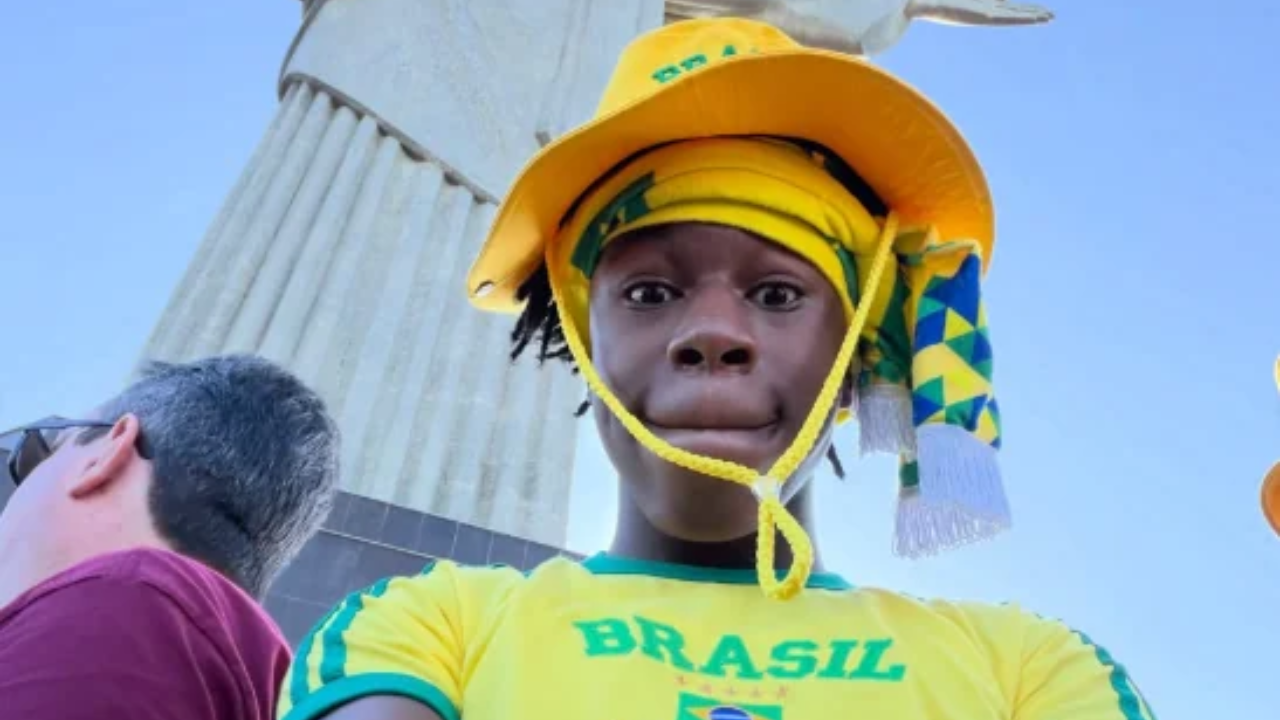
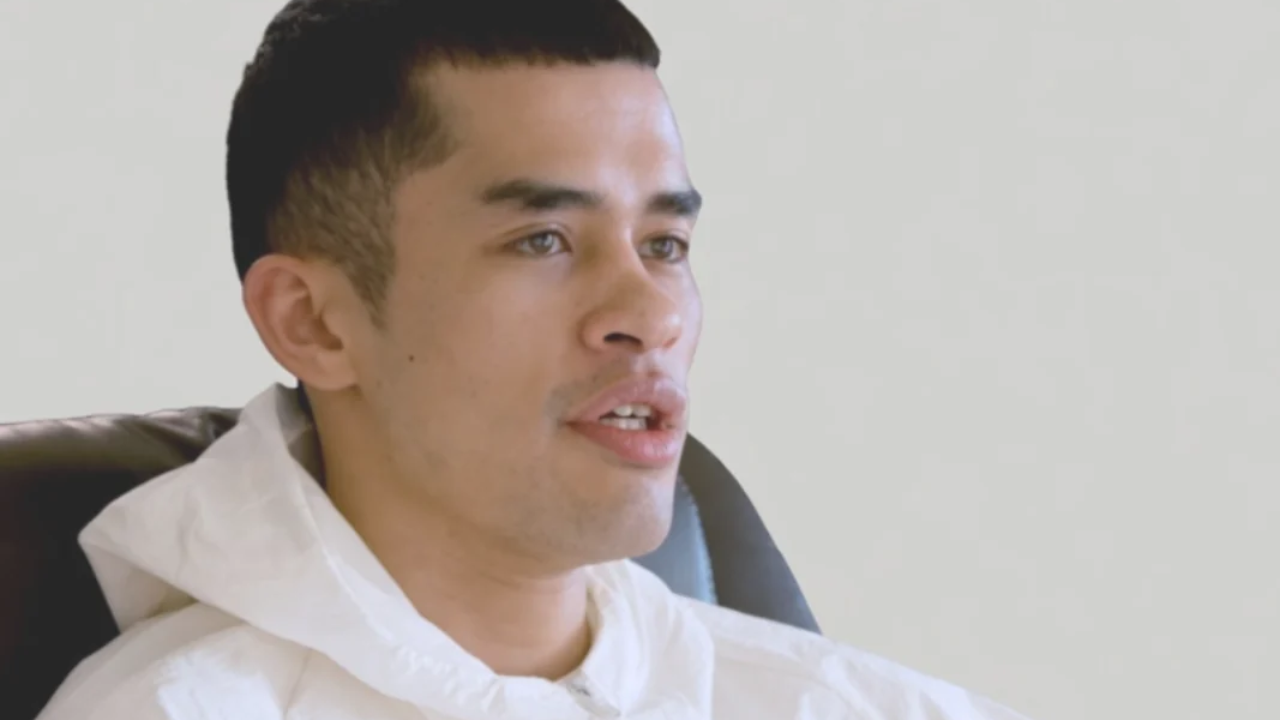
For eight hours, that hum was the entire universe for Nicolas Kenn De Balinthazy, the controversial livestreamer known online as Sneako.
He had just stepped off a long-haul flight, returning to the United States after a heavily publicized, deeply polarizing trip to Afghanistan. In his mind, perhaps, the trip had been another chapter in a career built on pushing boundaries, courting outrage, and broadcasting the unfiltered edges of modern internet culture to hundreds of thousands of viewers. To the federal agents waiting for him at the border, however, it was not content. It was a national security question mark.
We live in an era where the camera lens acts like a shield. Creators walk into war zones, disaster sites, and politically volatile regions armed with little more than a gimbal, a portable Wi-Fi router, and the invincible confidence of youth. They treat geopolitical fault lines like backdrops for thumbnails. Yet when the livestream ends and the plane touches down on American soil, the digital armor vanishes. What remains is a citizen standing in front of federal law enforcement, suddenly forced to explain why their passport bears the stamps of a country governed by the Taliban.
The Illusion of the Digital Passport
To understand how a twenty-something internet personality ends up in an eight-hour standoff with the FBI, you have to understand the economy of modern attention.
Clicks require escalation. If yesterday’s stream featured a heated debate in a Miami apartment, tomorrow’s stream demands higher stakes. A shocking location. A forbidden interview. An aesthetic of danger that separates a creator from the millions of others shouting into the void. Afghanistan, following the 2021 withdrawal of American forces and the return of Taliban rule, became the ultimate forbidden fruit for a certain breed of travel vlogger and livestreamer. It offered instant shock value. Look at me, the thumbnails seemed to say, walking through Kabul while you sit safely on your couch.
Consider a hypothetical creator we will call Marcus. Marcus has half a million subscribers, a thriving merchandise line, and an audience that expects him to constantly outdo his last stunt. When Marcus books a ticket to a region flagged with a Level 4 "Do Not Travel" advisory by the U.S. State Department, he does not think about counterterrorism databases or intelligence sharing protocols. He thinks about retention metrics. He thinks about how the footage will look edited to a moody bassline. He views his press pass—or simply his status as an entertainer—as an invisible force field that exempts him from the grim realities of international statecraft.
Sneako operated inside that exact mindset. Throughout his trip to Afghanistan, he broadcast his experiences, interacting with locals and Taliban members alike, presenting a raw, unvarnished look at life under the regime. To his fans, it was fearless journalism—a middle finger to mainstream media narratives. To critics, it was reckless tourism that sanitized a brutal regime for clout.
Neither side, however, was sitting in the room when he came home.
Behind the Closed Door
When Sneako finally went live after his return to recount what happened at the airport, the bravado that usually defines his broadcasts was noticeably tempered by the sheer exhaustion of the ordeal. He described being pulled aside immediately upon arrival. Not for a routine customs check, and not for a quick fifteen-minute question-and-answer session about souvenirs, but for an eight-hour interrogation conducted by the Federal Bureau of Investigation.
Eight hours.
Pause and measure that span of time against your own life. Eight hours is a full workday. It is the length of a cross-country flight. Inside a secondary inspection room at an international port of entry, where constitutional protections regarding search and seizure operate under vastly different rules than they do on a city street, eight hours feels like an eternity.
Agents did not just ask him how his flight was. According to Sneako’s own account, they pressed him relentlessly on the mechanics of his trip. Who funded it? Who arranged his travel? Whom did he meet while he was on the ground? Did he have contacts inside the country prior to arriving? They wanted to know every detail of his itinerary, every name in his phone, and every motivation behind his decision to travel to a nation where the U.S. government has no active embassy and virtually zero ability to rescue citizens in distress.
His electronic devices were confiscated. Think about what your smartphone contains right now. Every text message sent in frustration, every half-baked joke in a group chat, every saved video, every financial transaction, and every location ping over the last five years. Now imagine handing that unlocked archive over to federal investigators whose entire job is to look for patterns of radicalization, illicit funding, or hostile foreign influence.
To the streamer, a direct message from a local fixer in Kabul is just logistics for a vlog. To an FBI counterterrorism analyst, that same message is a potential node in an intelligence network.
The Asymmetry of Power
There is a profound, terrifying asymmetry that happens the moment an internet celebrity collides with the national security apparatus.
Online, creators are kings. They control the frame. They control the chat. If someone asks an uncomfortable question, a moderator bans them in half a second. If a narrative turns sour, the creator can pivot, issue an apology video, or drown out the noise with another viral clip. Power in the creator economy is loud, fast, and entirely performative.
Power in a federal interrogation room is quiet, slow, and absolute.
You cannot mute an FBI agent. You cannot end the stream when the questioning gets repetitive. In fact, repetition is the entire point of an eight-hour interview. Investigators ask the same question in six different ways across four different hours, watching for the micro-expressions, the slight shifts in timeline, the tiny inconsistencies that reveal whether a subject is telling a rehearsed story or the truth.
During his broadcast detailing the experience, Sneako admitted to the surreal nature of trying to explain internet culture to government officials. How do you explain "doing it for the content" to people whose worldview is shaped by geopolitical threats, hostage negotiations, and intelligence briefings? You tell an agent that you flew halfway across the world to a destabilized nation just to walk around with a camera and talk to strangers on the internet, and you watch their eyes narrow. To them, that sounds like the flimsiest cover story ever invented. Nobody risks kidnapping, arbitrary detention, or death just for digital tips and subscriber counts.
Except, of course, in 2026, people do it every single day.
The Invisible Tripwires of Extreme Tourism
Sneako’s experience is far from an isolated anomaly; it is a warning flare for an entire generation of digital nomads and thrill-seeking creators. Over the past few years, a distinct subgenre of travel content has exploded across YouTube, Kick, and TikTok. Young men with cameras have turned conflict zones—from Ukraine to Haiti, from the Darién Gap to Kabul—into content farms.
They often rely on a dangerous logical fallacy: the idea that because other vloggers went there and came back unscathed, the path is safe.
They miss the invisible tripwires. First, there is the immediate physical danger on the ground. In places like Afghanistan, foreign nationals are high-value bargaining chips. Several Americans have been detained by the Taliban over the last few years, held in grim conditions while diplomats work quietly behind the scenes for months or years to negotiate their release. When a streamer walks down a street in Kabul broadcasting their exact real-time location to thousands of viewers, they are effectively painting a target on their own back.
Second, and far less discussed, is what happens when you successfully make it out.
Returning to the United States from a high-risk jurisdiction triggers automated flags across multiple federal agencies. Customs and Border Protection, the Department of Homeland Security, and the FBI share data seamlessly. Your name goes onto a list. Your future international travel becomes a permanent obstacle course of secondary screenings, delayed flights, and invasive baggage searches—a status known colloquially among frequent flyers as getting the dreaded "SSSS" printed on every boarding pass for the next decade.
Even more sobering is the legal gray area surrounding interaction with designated groups. While the Taliban is distinct from certain other terrorist organizations on specific U.S. sanctions lists, navigating financial transactions, paying local guides, or platforming officials in sanctioned territories carries immense legal peril. Handing a few hundred dollars in cash to the wrong local coordinator for "security" or "access" can look, on paper, dangerously close to providing material support to prohibited entities.
When the Camera Turns Off
Watching Sneako recount those eight hours, one is struck not just by the intensity of the questioning, but by the lingering paranoia it leaves behind. When federal agents seize your devices, they don't always hand them back at the end of the shift. Forensic extraction takes time. Months can pass while copies of your digital life sit on government servers, analyzed line by line by people you will never meet.
Suddenly, every past edgy joke made on a livestream feels heavier. Every controversial guest you ever hosted takes on a different hue when viewed through the cold, humorless lens of a federal background check.
This is the hidden tax of the attention economy. The algorithms reward extremity. They push creators toward the cliff edge because the audience loves the thrill of watching someone lean over the abyss. Platforms profit from the ad revenue generated by millions of views on daring travel vlogs, and viewers consume the spectacle over lunch before scrolling on to the next distraction.
The creator, however, bears the consequence alone.
No subscriber is sitting beside you in that windowless airport room at three in the morning. No algorithm steps in to pay your legal fees if an investigation escalates, or to explain to a federal agent why your rhetoric online does not match your intentions in the real world. The internet moves on within forty-eight hours, already hungry for the next shock, the next scandal, the next daring stunt.
Meanwhile, the hum of the fluorescent lights stays in your ears long after you walk out the terminal doors. And somewhere in a database, a digital file remains open, waiting to see where you decide to buy a ticket to next.