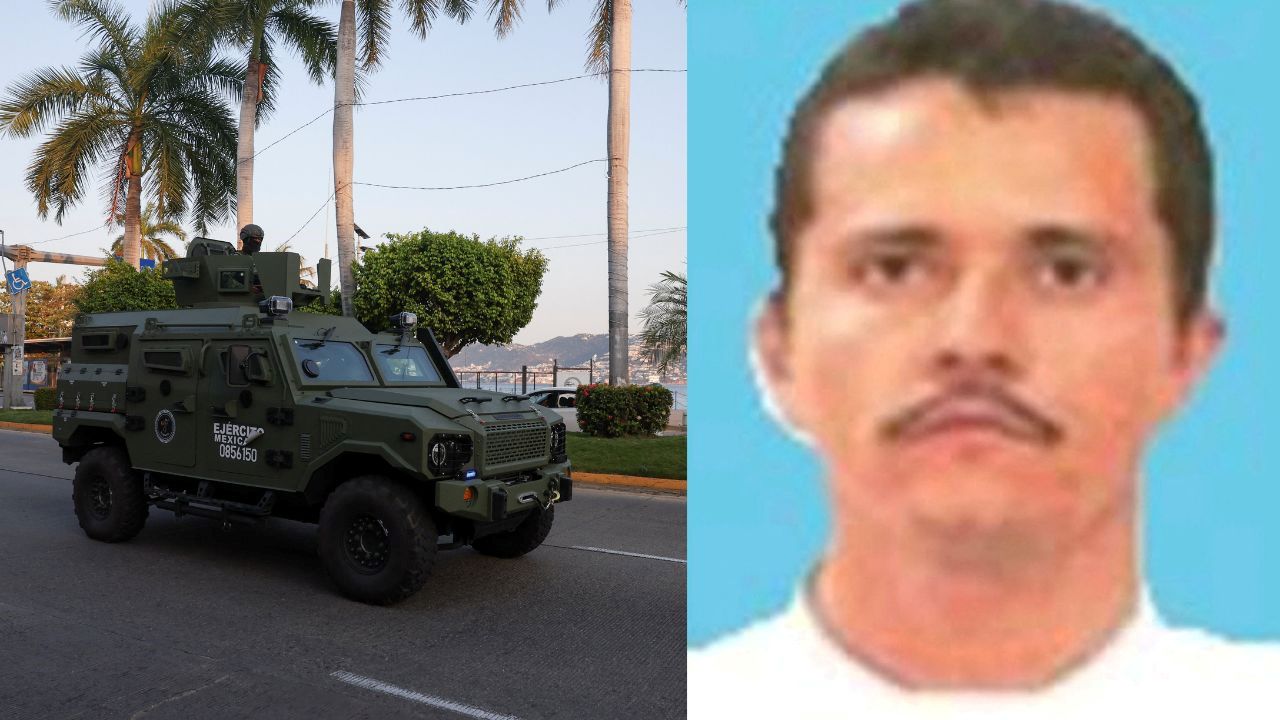
The headlines are predictable. They scream about a "military raid," "high-value targets," and the "fall of an empire." When news breaks that Nemesio Oseguera Cervantes, known as El Mencho, has supposedly been neutralized, the media treats it like the final boss in a video game has been defeated. They imply the Jalisco New Generation Cartel (CJNG) will now crumble into the dust of history.
They are dead wrong. Don't miss our recent post on this related article.
We have spent four decades chasing the "Kingpin Strategy," and it has failed every single time. From Miguel Ángel Félix Gallardo to Pablo Escobar to El Chapo, the script never changes. We cut off the head, and the body doesn't die—it grows five more, each more rabid and less predictable than the last. If El Mencho is gone, Mexico isn't safer. It’s about to get much more violent.
The Corporate Darwinism of the CJNG
The CJNG is not a traditional Mafia family; it is a hyper-aggressive, decentralized franchise model. While the media paints El Mencho as an omnipotent sun around which all planets orbit, the reality is a sophisticated logistical machine. If you want more about the background here, Associated Press provides an in-depth breakdown.
Think of the CJNG as the Amazon of narcotics. If Jeff Bezos steps down, does Amazon stop delivering packages? No. The infrastructure—the warehouses, the drivers, the algorithmic efficiency—remains. The CJNG has spent a decade perfecting "horizontal integration." They don't just move product; they control the ports (Manzanillo and Lázaro Cárdenas), the precursor chemicals from China, and the retail distribution in over 20 U.S. states.
When a leader like El Mencho is removed, it doesn't create a vacuum. It creates an internal promotion cycle. In the business world, we call this "succession planning." In the underworld, we call it a bloodbath. The middle managers—the plazas bosses—who were kept in check by Mencho’s iron fist now have two choices: submit to a new, unproven leader or carve out their own kingdom.
Why "Stability" is a Dirty Word for the DEA
The most dangerous lie told by security analysts is that "dismantling" a cartel is the goal. If you actually talk to the people on the ground in Michoacán or Jalisco, they will tell you that the most peaceful times occur when one cartel has a monopoly.
Monopolies are bad for consumers but great for lowering the murder rate. When one group controls the territory, they don't need to hang bodies from bridges to send messages. They just tax the local businesses and move their product. Violence is a business expense; it’s expensive and draws heat.
The "Kingpin Strategy"—championed by the DEA since the 1990s—is the primary driver of Mexican instability. By removing the top tier, the state inadvertently triggers "atomization."
- The Vacuum Effect: Rival groups (like the Sinaloa Cartel) move in to test the fences.
- The Fragmentation: Sub-units of the CJNG splinter, lacking the discipline of the central command.
- The Professionalization of Violence: These smaller groups can’t compete on global logistics, so they pivot to kidnapping, extortion, and fuel theft (huachicoleo) to make ends meet.
If you think the CJNG was bad, wait until you see the six "Mini-CJNGs" that emerge, each led by a 25-year-old with a TikTok account and something to prove.
The Myth of the "Military Raid" Success
The competitor's narrative loves the "Military Raid" trope. It’s cinematic. It suggests the state is winning. But look at the data. Mexico’s homicide rate has remained at staggering levels regardless of how many leaders are captured or killed.
$Homicide Rate \propto \frac{Number of Competing Factions}{Centralized Control}$
This isn't just a fancy formula. It’s a sociological reality. When the Mexican military kills a leader, they aren't "restoring order." They are performing "market disruption." In any other industry, market disruption leads to innovation. In the drug trade, innovation looks like fentanyl and improvised explosive devices (IEDs).
The CJNG was the first to widely use drone-dropped explosives and narco-tanks (monstruos). They didn't do this because they were "powerful"; they did it because they were in a constant state of evolution driven by military pressure. By attacking the leadership, the government forces the cartel to become more technologically advanced and militarily capable.
The Fentanyl Pivot: Why Leaders Don't Matter Anymore
The era of the "Cocaine Kingpin" is over. Cocaine required massive land holdings, thousands of farmers, and complex international flights. It required a "King" to manage the diplomacy of the supply chain.
Fentanyl changed the math.
You can cook 50,000 doses of fentanyl in a bathroom in Culiacán using chemicals bought on the open market. The "barrier to entry" has collapsed. Because the production is so easy and the product is so small, you don't need a Mencho to oversee a grand strategy. You just need a chemist and a mailbox.
The media's obsession with El Mencho is a relic of 20th-century thinking. We are looking for a "head" to cut off when we are actually dealing with a mycelium—an underground network where every cell is capable of regenerating the whole.
Stop Asking "Who is Next?"
The question "Who will lead the CJNG now?" is the wrong question. It’s the "lazy consensus" question. The real question is: "What does the CJNG become when it no longer has a face?"
When a cartel goes "dark" and loses its central figurehead, it becomes harder to track, harder to negotiate with, and much more prone to indiscriminate violence. The CJNG's power wasn't Mencho; it was the brand. The "CJNG" logo on a vest or a brick of cocaine is a franchise mark that commands fear and loyalty. That brand doesn't die with a man.
If the reports are true and Mencho is dead, don't look for a decline in drug flows. Don't look for a drop in overdoses in Chicago or Los Angeles. Look for the rise of "insurgent cartels"—groups that stop acting like businesses and start acting like warlords.
The military raid didn't solve the problem. It just removed the person who was keeping the chaos organized.
Pack your bags and prepare for the splintering. The king is dead; long live the anarchy.


