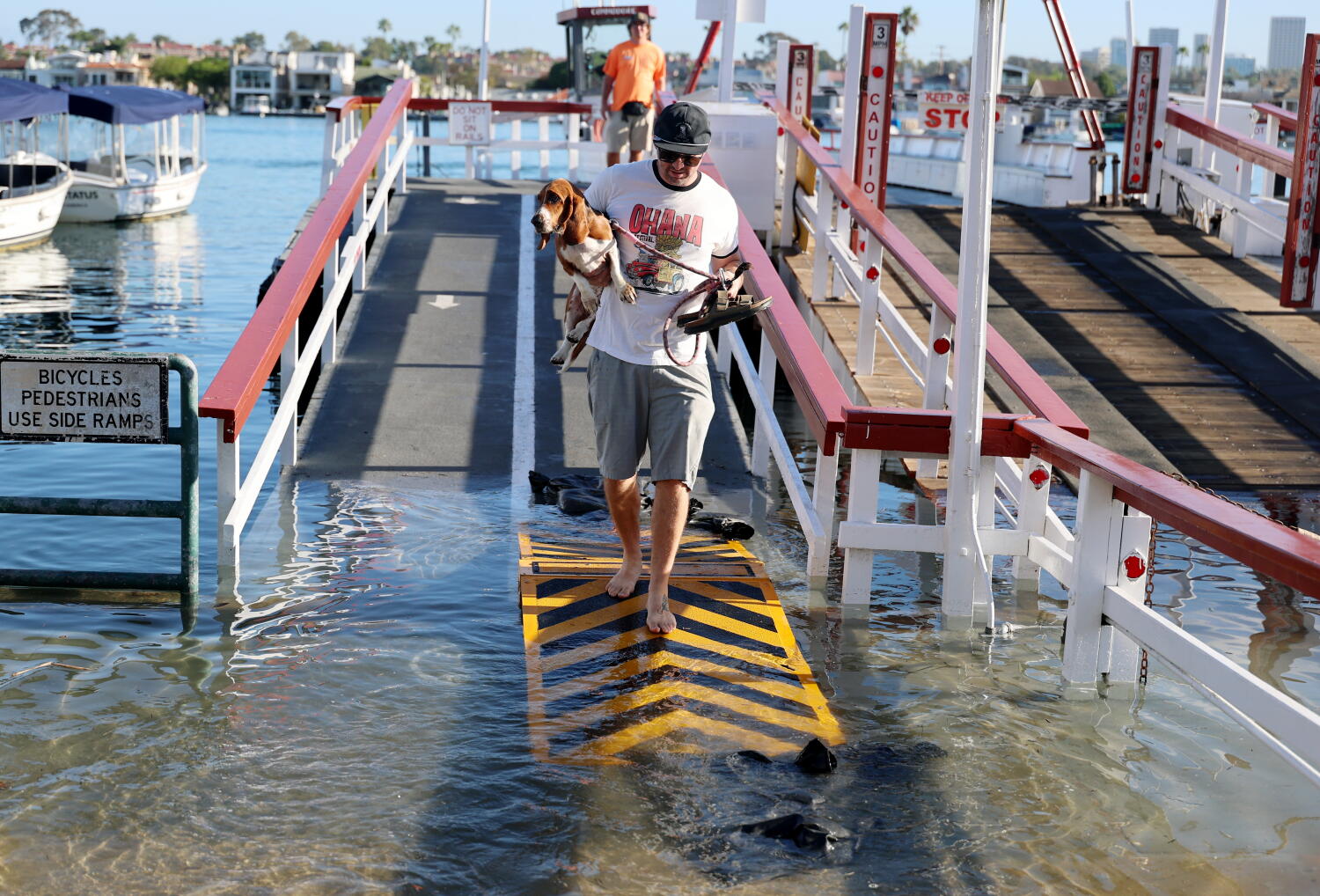
Ocean water doesn't care how much your beachfront house costs. When a strong El Niño pattern stacks swell energy on top of high astronomical tides, low-lying streets and yards along Newport Beach turn into shallow lagoons fast.
I've watched coastal storm responses play out around Orange County long enough to know that people treat El Niño flooding like a freak accident. It isn't. It's basic physics meeting a built-up shoreline. A storm surge hits. King tides peak. Bay water backs up through storm drains. Suddenly, saltwater is lapping at patios, garages, and alleys that look totally dry on a sunny Tuesday. Learn more on a related topic: this related article.
That's the real bite behind the phrase "Mother Nature comes to collect some tax." When you build right at the water's edge, the ocean eventually charges interest.
How El Niño Flooding Works in Newport Beach
El Niño is a climate pattern in the tropical Pacific where sea surface temperatures warm and shift atmospheric circulation. For Southern California, a classic strong El Niño often brings a more active southern storm track, bigger Pacific swells, and periods of elevated coastal water levels. More analysis by Reuters delves into related views on the subject.
Newport Beach has a unique geography that makes it especially vulnerable when those ingredients line up. You've got two distinct water fronts colliding: the open Pacific Ocean and the sheltered waters of Newport Harbor and Upper Newport Bay.
The Double Squeeze of Swells and High Tides
Coastal flooding here rarely comes from just one thing. Usually, it's a timing collision.
When long-period west or southwest swells arrive during a spring tide or winter king tide, the baseline water level is already high. Add a coastal low-pressure system or a passing storm front, and wave run-up pushes water farther up beaches and onto bulkheads, seawalls, and low-lying roads like Balboa Peninsula streets.
Even without massive rain right over the city, high ocean levels can keep water from draining freely. Storm drains empty toward the bay or ocean. When the receiving water is elevated, runoff slows down or backs up, leaving puddles and standing water in low spots.
Why Bayfront Streets Flood Differently Than the Beach
People often picture waves crashing over a seawall when they think of coastal flooding. That happens, sure. Yet a lot of the mess in Newport Beach shows up on the bay side or along low-lying channels and alleys where wave action is minimal.
In a semi-enclosed harbor and bay system, wind stress, barometric pressure changes, and high tides can push water levels up and hold them there across multiple tidal cycles. If a storm brings heavy rain inland or locally at the same time, water coming down the watershed meets high bay water on the way out.
I've seen homeowners focus entirely on the ocean side while ignoring low drain grates, backyard grades, and bay-facing bulkheads. Water is sneaky. It finds the lowest path, not the most dramatic one.
Real Examples From Past El Niño Winters
You don't need to guess what happens when El Niño conditions align with Southern California winter storms. Historical El Niño winters—most famously the major 1982–83 and 1997–98 events, along with the 2015–16 event that brought heavy hype and mixed local impacts—offer clear lessons.
During the 1982–83 and 1997–98 El Niño winters, powerful Pacific storms, large swells, and high tides battered the Southern California coast, causing severe beach erosion, damaged coastal structures, and flooded properties. According to the National Oceanic and Atmospheric Administration (NOAA), El Niño events alter jet streams and storm tracks, though local rainfall and flood impacts in any single event still depend on the exact path and timing of individual storms.
The 2015–16 El Niño was a huge reminder of a nuance many people miss. Forecasters called for a strong El Niño, and many residents braced for a repeat of 1982–83 or 1997–98. Southern California did get notable storm systems, yet seasonal rain totals in parts of the region ended up far less catastrophic than the worst-case headlines suggested.
That gap between hype and reality matters. Every El Niño has its own fingerprint. Treating every El Niño like a guaranteed mega-disaster makes people cynical when a storm underperforms, and treating a mild start like a free pass leaves people exposed when one big swell and high tide finally line up.
Common Mistakes Coastal Property Owners Make
Living near the coast teaches you a lot of habits, and honestly, some of them are pretty bad when water starts rising.
- Waiting for sandbags at the last minute: When a swell advisory and high tide warning hit the local news, sandbag distribution lines get long and soggy fast. Getting caught without dry sandbags or barrier boards when water is already pooling is a classic rookie mistake.
- Assuming seawalls or bulkheads are invincible: Hard structures help hold back waves and soil, yet water can still overtop low sections, flank around edges, or seep through joints and poor drainage behind the wall.
- Ignoring drainage around the house: A yard that drains fine in July can turn into a retention pond in January if leaves clog grates, downspouts dump near the foundation, or planters sit higher than thresholds.
- Confusing flood insurance rules: Many homeowners still assume standard homeowners insurance covers rising water from storms, tides, or overflowing bays. It typically doesn't. Flood coverage generally requires a separate policy, often through the National Flood Insurance Program (NFIP) or a private flood insurer, and policies frequently carry a waiting period before taking effect.
Let's be real about one more thing: sand berms built by cities or property owners are temporary speed bumps, not permanent armor. A single set of heavy winter swells can chew through fresh sand in hours.
What Experts and Agencies Watch During Storm Weeks
If you want to stop reacting to rumors and start reading the actual signals, pay attention to what coastal meteorologists and agencies track. The National Weather Service (NWS) San Diego issues coastal flood advisories, warnings, and high surf alerts when astronomical tides, swell height and period, and storm surge threaten low-lying areas.
Pay close attention to swell period (the time between wave crests), not just wave height. Longer-period swells carry more energy and can push water surprisingly far up beaches and into harbors even when local winds are calm.
Also watch tide charts alongside storm timing. A moderate rainstorm or modest surge arriving at low tide is a completely different story from the exact same event hitting near a morning or evening high tide.
There is also real debate among coastal planners, engineers, and residents about long-term adaptation in low-lying beach towns. Raising elevations, upgrading pump and drainage infrastructure, hardening edges, and adjusting rebuilding rules all carry steep price tags and tough trade-offs. Nobody has a magic button that makes tidal water disappear, and pretending adaptation is cheap or easy doesn't help anyone.
Practical Steps Before the Next High-Tide Swell
If you live, work, or own property in or around Newport Beach, you don't need to panic. You do need a simple, realistic checklist you can actually follow.
- Check your exact elevation and flood zone: Look up your parcel's flood zone status and ground elevation relative to mean higher high water and king tide projections using official local and federal mapping tools.
- Audit your flood coverage early: Call your insurance agent or check flood coverage options well ahead of storm season so you aren't stuck behind a waiting period right before a major swell arrives.
- Clear every drain and scupper: Walk your yard, patio, driveway, and roof gutters before winter storms hit. Remove leaves, sand, and debris that slow water movement.
- Stage flood barriers ahead of time: Keep pre-filled sandbags, flood panels, or water-activated barriers stored somewhere dry and accessible, along with plastic sheeting and towels for garage doors and low thresholds.
- Move low-level valuables up: Get electronics, tools, stored boxes, and chemicals off garage floors and lower shelves before a coastal flood advisory is issued.
- Plan around flooded streets: Know which low-lying roads, alleys, and parking areas near you tend to pond first during high tides so you aren't driving through saltwater—saltwater is brutal on vehicles and electrical components.
The ocean always collects its due eventually. A little preparation keeps the bill a lot smaller.