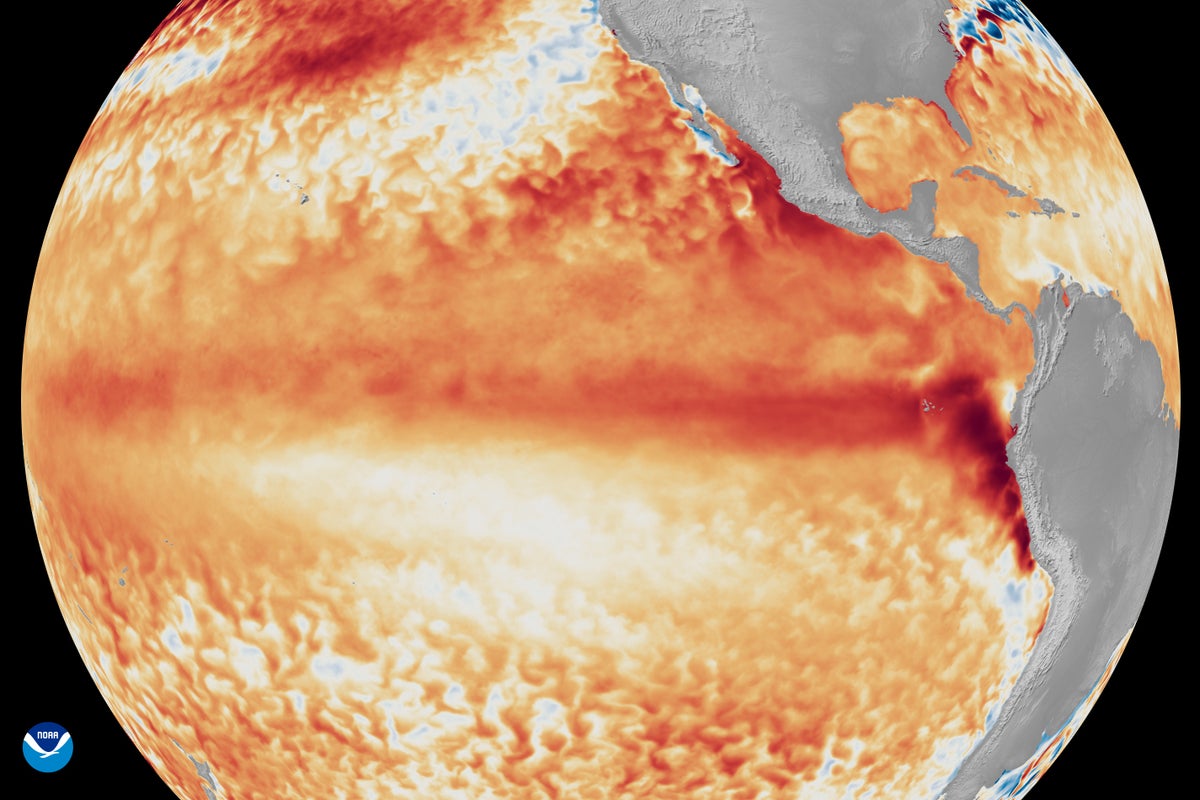
Every six months, the meteorological industrial complex rolls out the same tired ritual. Flashy graphics hit the screen, headlines shriek about impending atmospheric doom, and analysts panic over the latest El Nino bulletin. The consensus says we are heading for a specific weather pattern, so businesses brace for floods, droughts, or mild winters based on a broad seasonal average.
It is all absolute noise.
I have watched logistics firms, agricultural syndicates, and supply chain executives blow millions redesigning operations because some probabilistic model predicted a wet winter across the southern tier. They treat a continental forecast like a localized guarantee. Then reality hits, the jet stream wobbles three degrees to the left, and their multi-million-dollar hedge turns into a punchline.
Stop planning for El Nino. Start planning for localized volatility instead.
The Flawed Logic of Macro Meteorology
The fundamental error people make when reading seasonal forecasts is confusing a statistical trend with a deterministic event. When meteorologists say an El Nino phase increases the probability of wet conditions in a region by sixty percent, corporate boardrooms hear a weather report. They do not hear statistics. They hear a command to change operations.
This is a catastrophic misread of risk.
Probability is not a promise. A sixty percent chance of rain means forty percent of the time, your entire premise fails. More importantly, macro indexes like the Oceanic Nino Index smooth out spatial and temporal variations to the point of uselessness. They aggregate massive geographic zones over three-month rolling averages.
Imagine a scenario where a freight operator cancels shipping routes across the Midwest because a strong El Nino suggests blizzards. Meanwhile, the actual weather manifests as a series of isolated, violent micro-storms separated by weeks of dry air. The macro model was technically correct on paper, but operationally, the business lost a fortune preparing for a ghost.
I spent ten years managing supply chain logistics through volatile climate cycles, and I learned one hard lesson early: aggregate indices do not pay your overhead. Localized hyper-variability does. When you build a business strategy around a headline-grabbing climate phenomenon, you are outsourcing your decision-making to a glorified weather vane.
Dissecting the People Also Ask Fallacy
If you type seasonal weather shifts into any search engine, the secondary questions reveal a collective delusion. People want to know which months will be the worst, how much money crop yields will lose, or which specific states will freeze.
The premise of every single one of those questions is flawed.
They assume a linear relationship between a Pacific Ocean temperature anomaly and your local bottom line. It does not work that way. The atmosphere is a chaotic, non-linear system. Energy injected near the equator does not translate into a neat, predictable domino effect across North America. It scatters, amplifies, and crashes against regional topography, urban heat islands, and competing pressure systems.
Asking which month will be the worst during an El Nino cycle is like asking which specific hand of blackjack you will win based on the shuffle of the deck. You can know the general composition of the shoe, but the micro-events remain entirely unpredictable until the cards hit the felt.
Instead of asking how El Nino will treat your industry, ask a better question: Where are my operational blind spots if the seasonal average is completely wrong?
That is the question that separates companies that survive climate noise from the ones that write press releases explaining why their quarterly earnings missed projections because it rained too much, or not enough.
The Cost of Blind Compliance
I've seen companies blow millions on reactive mitigation strategies that solve yesterday's statistical ghost while ignoring today's operational friction. They hire consultants to interpret NOAA bulletins, build redundant inventory for weather events that never materialize, and lock themselves into rigid supply chains based on a three-month rolling average.
The downside of my contrarian approach is obvious: it requires constant vigilance. You cannot set it and forget it. You cannot buy a seasonal forecast report, hand it to the board, and check out for the quarter. You have to build adaptive, high-frequency operational rhythms that respond to real-time telemetry rather than speculative seasonal outlooks.
Admitting that you cannot accurately predict regional weather six months out makes executives uncomfortable. It strips away the illusion of control. But illusions are expensive.
Unconventional Playbook For Real Operations
If you want to stop bleeding cash on seasonal panic, you need to tear up the standard playbook. Here is how you actually operate when the weather channels start screaming about atmospheric anomalies.
- Treat seasonal forecasts as historical trivia, not operating inputs. Use climate indices to understand long-term structural risks, never for tactical execution or inventory positioning.
- Decouple your logistics from regional weather assumptions. Build optionality into your transportation network so you can pivot within forty-eight hours, regardless of whether a drought or a deluge hits.
- Invest in hyper-local data sensors instead of macro reports. Ground-truth telemetry beats satellite-level probabilities every single time when you are trying to protect physical assets.
- Stress-test your margins against volatility, not averages. If your business model collapses because a winter is ten degrees warmer than the historical median, your business model is broken.
The next time a major outlet publishes a terrifying headline about the latest oceanic shift, close the tab. Look at your inventory turns. Check your route diversification. Make sure your operational muscle can handle whatever reality throws at it tomorrow morning.
The weather does not care about your forecast. Neither should you.