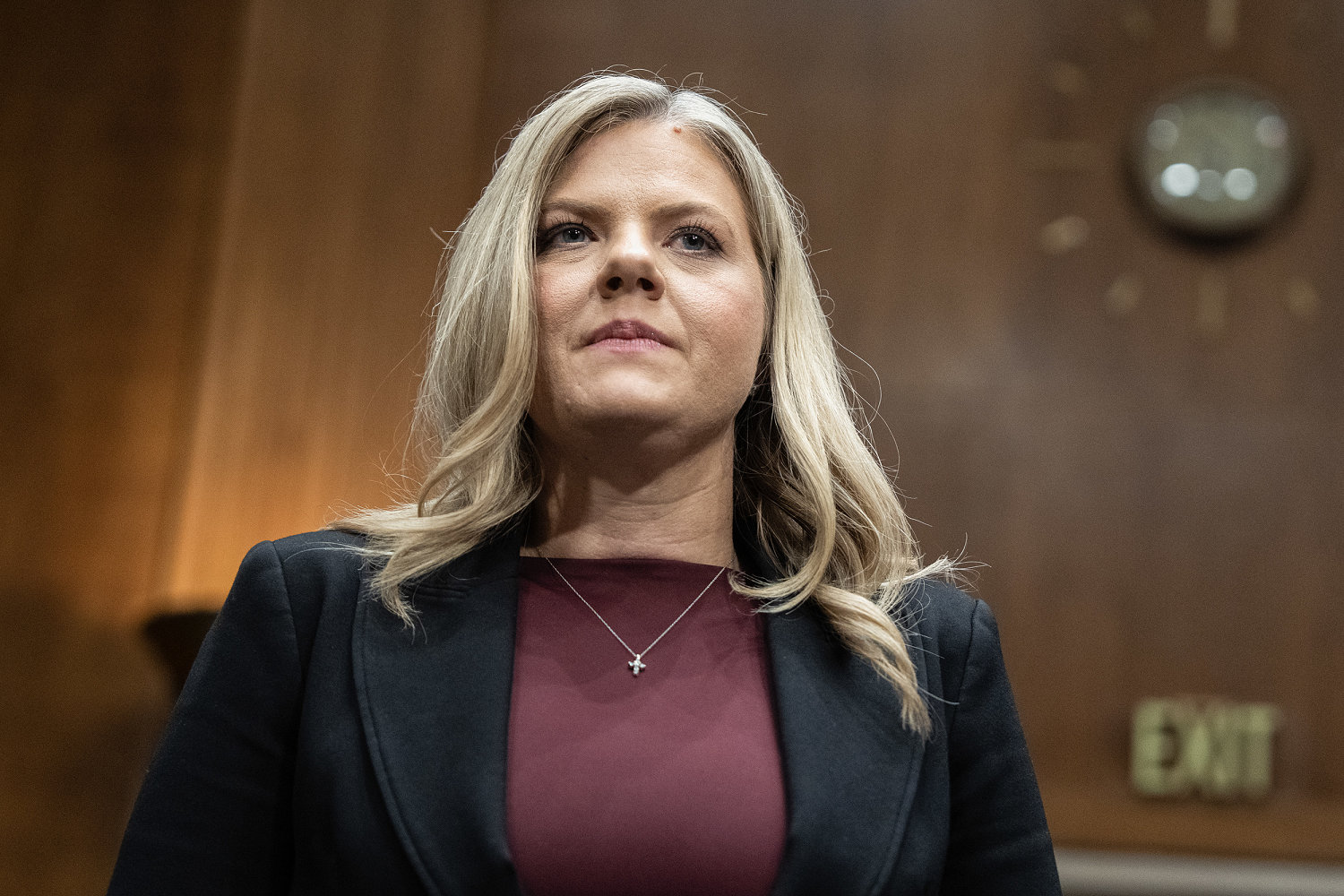
Every election cycle, political commentators fall for the exact same fairy tale. A handful of physicians, nurses, and pharmacists win seats in the House of Representatives, and suddenly the pundit class declares that salvation has arrived on Capitol Hill.
The logic sounds seductively simple. Healthcare is broken. Therefore, we should put people who actually practice medicine in charge of fixing it. They know what it feels like to fight an insurance company over a prior authorization form at 6:00 PM on a Friday. They understand the crushing weight of medical school debt, the absurdity of hospital chargemasters, and the burnout hollowing out our emergency rooms.
Here is the cold reality nobody in Washington wants to admit. Treating a patient and restructuring a four-trillion-dollar economic cartel require completely opposite skill sets.
Putting clinicians in Congress to fix healthcare is like hiring a brilliant commercial airline pilot to untangle global aviation antitrust law and rewrite aerospace manufacturing subsidies. Their bedside experience is real. Their empathy is genuine. Their ability to dismantle the structural rot of American medicine from a congressional committee seat is almost zero.
The Myth of the Clinician Savior
If having medical degrees in the legislature automatically produced rational health policy, the United States would already have the most efficient medical system on earth. Dozens of doctors, dentists, nurses, and pharmacists have served in Congress over the past two decades. The GOP Doctors Caucus alone has routinely boasted over fifteen members at a time.
What happened during their tenure?
Prescription drug prices continued their vertical climb. Administrative bloat swallowed an even larger share of every healthcare dollar. Private equity firms bought up emergency room staffing agencies and dermatology practices at record speed. Hospital monopolies consolidated regional markets while charging patients facility fees for basic outpatient visits.
Why did the presence of actual healthcare workers fail to stop any of this? Because the American medical crisis is not a clinical problem. You cannot stethoscope your way out of statutory monopoly pricing. You cannot prescribe your way around the Employee Retirement Income Security Act of 1974.
When a newly minted representative steps onto the House floor, they do not enter a hospital ward where evidence-based medicine rules the day. They enter an arena governed by campaign finance math, committee seniority, and entrenched lobbying infrastructure. A freshman representative with a stethoscope gets placed on a subcommittee where bills go to die unless they satisfy the pharmaceutical lobby, the hospital associations, and the insurance giants simultaneously.
Why Clinical Intuition Fails in Legislative Policy
To understand why healthcare workers struggle to reform the system from within Congress, you have to look at how medical training wires the human brain.
Clinicians are trained to optimize outcomes for the individual human being sitting directly in front of them. In a clinical setting, cost is secondary to survival and recovery. If a patient needs an expensive diagnostic scan or a novel biologic therapy, a good doctor fights to get it approved. They view barriers to care—whether insurance denials or hospital budget constraints—as moral obstacles to be overcome.
Health policy operates on the exact opposite plane. Policy is about population-level trade-offs, actuarial math, and incentive design. Every dollar spent on a low-value intervention in one zip code is a dollar stripped from primary care infrastructure or public health sanitation in another.
I have sat in strategy rooms where brilliant physicians proposed sweeping legislative fixes that collapsed within ten minutes of basic economic scrutiny. They proposed mandating insurance coverage for expensive treatments without realizing that commercial insurers simply pass those costs directly back to workers through higher deductibles and stagnant wages. They demanded price caps on specific procedures without accounting for how hospital systems instantly shift those lost margins onto uninsured trauma patients or inflate ancillary facility charges.
Good intentions do not override basic economics. When you force a system to absorb costs without changing the underlying payment architecture, the system does not become more generous. It just finds a sneakier way to extract the money.
The Real Villains Are Hidden in Plain Sight
Mainstream media coverage loves framing healthcare reform as a battle between compassionate caregivers and heartless bureaucrats. That framing misses the structural machinery driving the crisis. If newly elected healthcare workers actually want to disrupt the status quo, they have to stop talking about bedside empathy and start attacking three specific statutory distortions.
1. The Fee-for-Service Treadmill
Most American healthcare is still paid for on a piecework basis. Hospitals and doctors get paid when they do things to you, not when they keep you healthy.
- An orthopedic surgeon gets paid thousands of dollars to perform a spinal fusion. They get paid almost nothing to spend forty-five minutes convincing a patient that physical therapy will yield better long-term results.
- A hospital system generates massive revenue from a preventable diabetic amputation. It loses money on a community nutrition program that prevents the diabetes from progressing in the first place.
If a congressperson with a medical license spends their term fighting to increase Medicare reimbursement rates—which is what medical associations lobby for relentlessly—they are not fixing the system. They are simply demanding a bigger slice of a broken pie. True reform requires dismantling the Relative Value Scale Update Committee, the opaque group dominated by specialists that heavily dictates how Medicare values medical procedures over cognitive, preventative care.
2. Vertical Integration and the PBM Shell Game
While voters focus on doctors versus insurance companies, the biggest financial players have quietly merged into vertically integrated behemoths. Today, a single corporate conglomerate can own the health insurer, the Pharmacy Benefit Manager (PBM), the specialty pharmacy, and the urgent care clinics.
Consider what this does to the Medical Loss Ratio (MLR) rules created under the Affordable Care Act. The law requires insurers to spend at least 80 to 85 percent of premium dollars on actual medical care, limiting administrative overhead and profit to the remaining 15 to 20 percent.
It sounds clever on paper. In practice, corporate giants bypassed it effortlessly. If an insurer owns its own pharmacy chain and physician groups, it can simply pay inflated rates to its own subsidiaries. On paper, that money counts as "medical care" satisfying the federal mandate. In reality, the corporation keeps the profit margin inside its own corporate umbrella while premiums continue to rise.
3. Artificial Supply Restrictions
Ask a freshly elected nurse or doctor in Congress how to solve staffing shortages, and they will usually demand federal grants for nursing schools and expanded residency funding. That treats the symptom while ignoring the artificial chokepoints throttling supply.
- Certificate of Need (CON) Laws: In dozens of states, you cannot build a new outpatient surgery center, add hospital beds, or even buy a new MRI machine without getting permission from a state board—often influenced by the very hospital monopolies that stand to lose business from the new competition.
- Scope of Practice Cartels: State licensing boards routinely block nurse practitioners, pharmacists, and physician assistants from practicing to the full extent of their training. Meanwhile, qualified international physicians who have practiced for decades abroad are forced to repeat entire residency programs in the United States just to treat basic primary care patients.
What People Actually Get Wrong About Healthcare Reform
When voters search for answers on how Congress can fix healthcare, they usually ask variations of the same flawed questions. Let us dismantle the most common ones.
Does having more doctors in Congress lower healthcare costs?
No. Historically, physicians in Congress vote overwhelmingly along party lines rather than forming a unified reform bloc. Furthermore, because physician lawmakers maintain deep ties to state medical societies and specialty associations, they frequently protect provider reimbursement rates and oppose policies that would inject price competition into specialized medicine.
Can Congress pass a single law to fix insurance denials?
Passing legislation that forces insurers to approve more claims without addressing underlying provider pricing will bankrupt small businesses and explode federal deficits. Insurance companies are ruthless gatekeepers largely because hospitals and pharmaceutical manufacturers charge unchecked monopoly prices. If you remove the gatekeeper while leaving the monopoly pricing intact, premiums skyrocket.
Why do bipartisan healthcare bills rarely change anything for patients?
Bipartisan consensus in Washington usually means finding a compromise that offends none of the major campaign donors. That is why Congress loves passing transparency rules that require hospitals to post unreadable machine-readable price files, while refusing to touch the tax exclusions or antitrust exemptions that allow those hospitals to price-gouge in the first place.
The Uncomfortable Downside of Real Disruption
I am not arguing that clinical experience is worthless in Washington. Having representatives who understand the daily reality of electronic health record (EHR) fatigue or emergency department boarding adds necessary texture to floor debates.
However, relying on their professional identity as a shortcut for policy competence is dangerous. And there is a massive caveat to the aggressive, market-disrupting approach I am advocating here: real structural reform will hurt people in the short term.
If Congress aggressively strips away Certificate of Need laws, breaks up vertically integrated hospital monopolies, and forces true site-neutral payments—meaning Medicare pays the exact same price for a routine chemo infusion whether it happens in a glittering hospital tower or a standalone clinic—rural and safety-net hospitals will face immediate financial shockwaves. Many struggling hospitals rely on inflated commercial outpatient fees to cross-subsidize money-losing emergency rooms and trauma centers.
Anyone promising you a painless fix where doctors in Congress wave a legislative wand, lower your premiums, preserve every local hospital, and keep every pharmaceutical innovation pipeline running at full speed is lying to you. Every genuine solution involves a brutal trade-off.
What Actually Works Instead
If newly elected healthcare workers want to prove me wrong and actually dismantle the machine, they need to abandon the standard legislative playbook. They do not need to sponsor twenty symbolic resolutions honoring frontline workers. They need to weaponize their clinical credibility to pass ruthless, unglamorous structural reforms:
- Enforce Strict Site-Neutral Payments: Stop paying hospitals double or triple for the exact same outpatient procedure simply because they slapped their corporate logo on a local clinic building. This single policy shift removes the primary financial incentive driving hospital consolidation.
- Ban Anti-Competitive Contracting Clauses: Outlaw "all-or-nothing" and "anti-tiering" clauses in insurer-hospital contracts. Currently, dominant hospital systems tell insurers: If you want our flagship trauma center in your network, you must include all twelve of our overpriced suburban clinics at our demanded rates. Outlawing these clauses immediately restores price competition.
- Delink Health Insurance from Employment: The employer-sponsored insurance model is a historical accident born out of World War II wage controls. It traps workers in jobs they hate, hides the true cost of healthcare from consumers, and deprives individuals of the right to shop for coverage that fits their actual lives. Expand direct-to-consumer tax-advantaged accounts so individuals own their coverage, not their bosses.
- Strip Away Patent Thicketing: Reform patent laws so pharmaceutical companies cannot tweak an inactive ingredient or alter a delivery syringe to extend monopoly pricing on a twenty-year-old drug for another decade.
Stop Worshiping the White Coat
Voters love a good narrative. We want to believe that if we just send enough virtuous insiders into a corrupt institution, their sheer moral clarity will force the gears to turn in the right direction.
Washington does not work that way. The healthcare-industrial complex generates over four trillion dollars a year precisely because every single inefficiency, opaque billing code, and administrative bottleneck is somebody else's profit center. It is not broken by accident. It is functioning exactly as it was designed to function by the lobbyists who wrote the rules.
Seven new healthcare workers in Congress will give great floor speeches. They will tell heartbreaking stories from the ICU and the pharmacy counter. They will generate viral clips for cable news.
And unless they are willing to declare war on the very hospital associations, medical societies, and corporate lobbies that fund congressional campaigns, your medical bills will look exactly the same four years from now.